

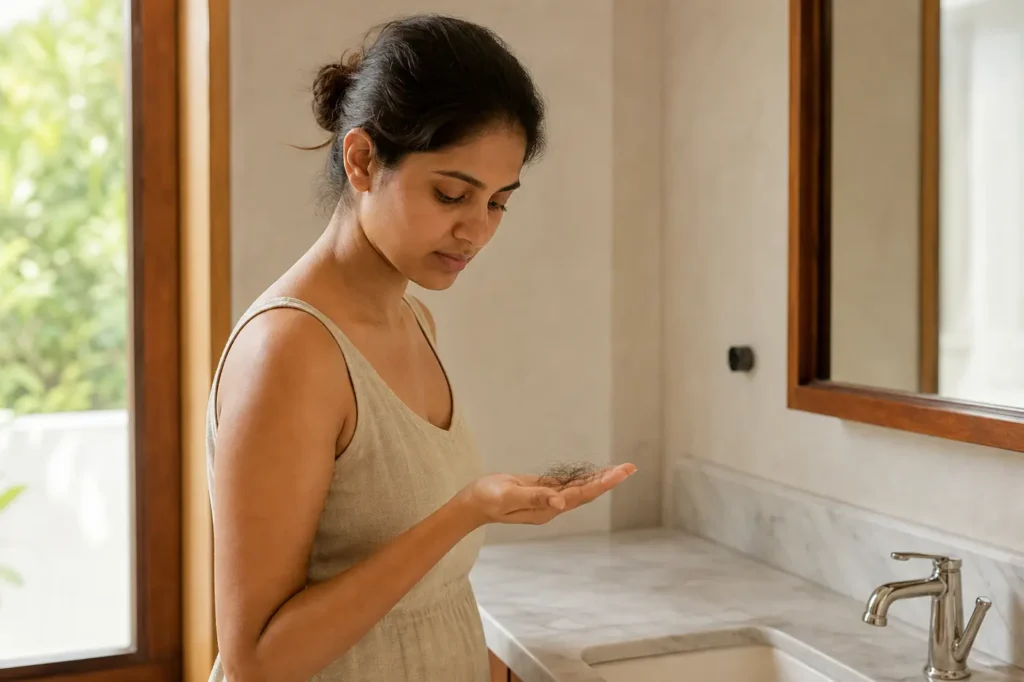
The best shampoo for hair fall in India depends on the cause: ketoconazole or zinc pyrithione for dandruff-driven loss, caffeine or biotinoyl tripeptide-1 for follicle-support marketing, and gentle sulphate-free formulas for postpartum or hormonal shedding. No single shampoo stops all hair fall. Matching the active ingredient to the cause is what changes results.
Key takeaways
- Shampoos cannot reverse androgenetic alopecia or postpartum telogen effluvium. They reduce scalp inflammation and mechanical breakage, which are secondary contributors, not primary causes.
- Ketoconazole 1 to 2% is the shampoo active with the best hair-related clinical support here, but the evidence is still adjunctive and stronger for dandruff control than for true regrowth. A 2002 comparative trial of 150 people studied antidandruff shampoos rather than a placebo-controlled shedding trial.
- A 2007 clinical pharmacokinetic study found that caffeine penetrates the hair follicle within two minutes of topical application, but human clinical evidence for regrowth remains limited.
- A 2016 ex vivo study of 15 hair samples found that hard water can leave more calcium and magnesium on hair and reduce hair-shaft thickness after repeated washing compared with distilled water. A chelating shampoo with EDTA or citric acid helps before any anti-fall active can do much.
- If you are losing more than about 100 hairs a day for longer than three months, or you notice a widening parting, patchy loss, or scalp pain, see a dermatologist. A 2023 anatomy review notes that normal daily shedding is commonly described as up to about 100 scalp hairs per day, but counting is imprecise and wash-day hair often looks worse than it is.
Why Most Anti-Hairfall Shampoos Disappoint: What They Can and Cannot Do
Most anti-hairfall shampoos disappoint because shampoo stays on the scalp briefly and is usually sold as a cosmetic, not as a hair-loss drug. A 2023 anatomy review says normal daily shedding is commonly described as up to about 100 scalp hairs per day, but the number varies with wash frequency, hair length, and counting method. That is why how to tell normal daily shedding from excessive hair fall matters before you buy the best shampoo for hair fall in India.
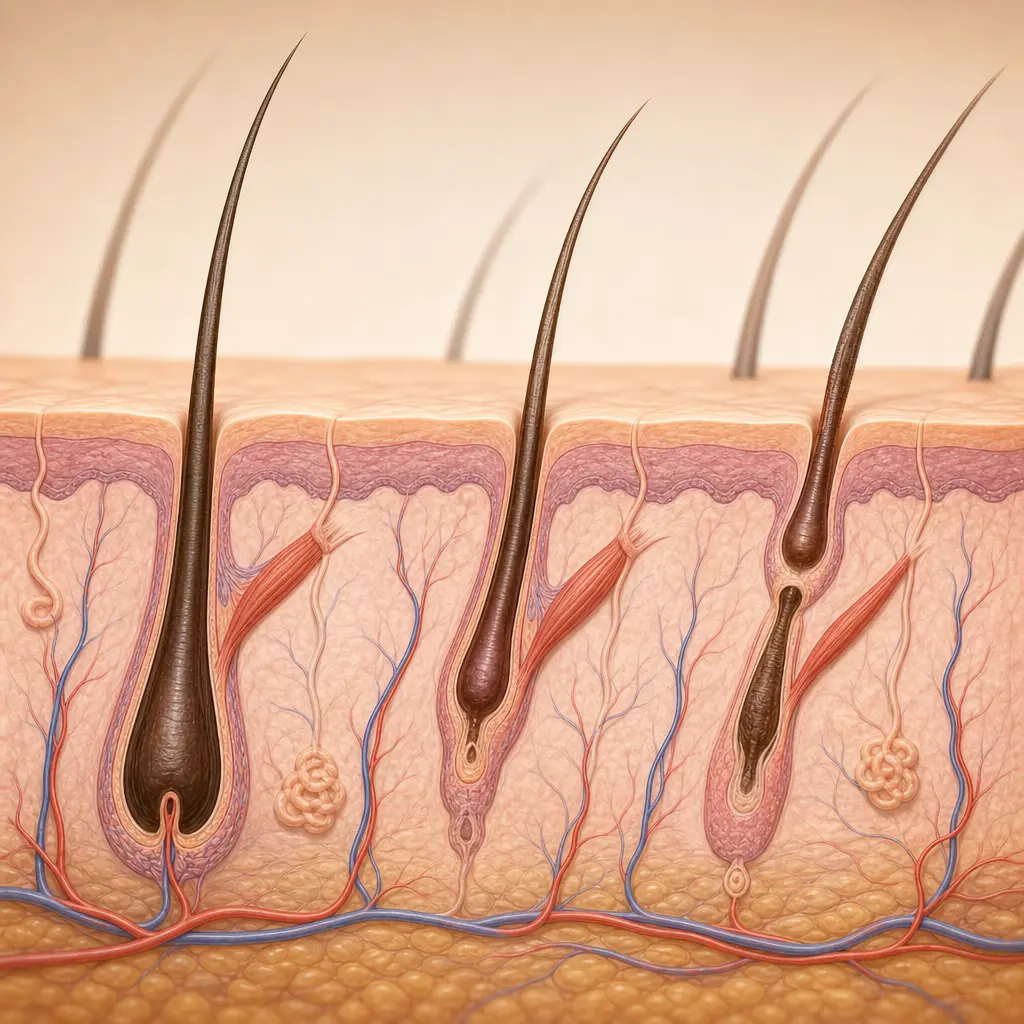
Hair grows in a cycle. Anagen is the active growth phase, catagen is the brief transition phase, and telogen is the resting phase before the hair sheds. The same 2023 review notes that scalp hair grows about 0.35 mm a day, roughly 1 cm a month, so any real change takes time to see.
CDSCO records on approved dermatology drug actives help explain why regular shampoos in India sit in the cosmetic category unless they are sold with specific drug actives. That means a regular anti-hairfall shampoo cannot treat androgenetic alopecia, the patterned thinning driven by follicle miniaturisation, or telogen effluvium, the diffuse shedding that starts after stress, illness, childbirth, or nutritional problems. Even medicated shampoos such as ketoconazole products are best understood as scalp-treatment adjuncts, not regrowth treatments.
A shampoo can still help in three real ways. A good formula can reduce scalp inflammation in seborrhoeic dermatitis, remove oil and build-up that worsen dandruff or itching, and reduce mechanical breakage from rough washing, hard water, or over-stripped hair lengths. Reducing breakage and calming an itchy scalp matter. They are not the same as reversing hair loss.
What using the best shampoo for hair fall in India looks like in real life depends on the cause. If dandruff is driving wash-day shedding, week 2 usually feels less itchy and the pillow has fewer flakes, but the shower drain may still look dramatic. If breakage is the problem, week 2 often brings softer ends and fewer snapped short pieces on the sink, not a sudden drop in shed hairs from the root. If postpartum shedding is the cause, even the best shampoo for hair fall in India female readers can buy will mostly make hair easier to wash and detangle while the shedding phase runs its course.
See a dermatologist if your parting is getting wider, if shedding stays heavy for months, or if you have patchy bald spots, scalp tenderness, pustules, or broken hairs near the scalp. A 2023 StatPearls review on telogen effluvium says management depends on finding the trigger, which may be iron deficiency, thyroid disease, medication effects, postpartum hormone change, or systemic illness.
We may earn a commission from purchases made through these links, at no extra cost to you. Products are chosen on evidence and value, never on commission.

LOreal Paris Fall Resist 3X Anti-Hairfall Shampoo 650ml
For many shoppers looking for the best shampoo for hair fall in India, the real issue is breakage, not root-level shedding. This formula is a practical pick for weak, rough lengths because it is marketed around breakage control rather than miracle regrowth. In use, this type of shampoo usually feels like a normal mainstream wash. By week 2, the main change is often less roughness while rinsing and fewer snapped short strands during combing. By week 8 to week 12, the benefit is easier detangling and less breakage from the shaft, not new growth at the part line.
- Good fit for the article’s point that many anti-hairfall shampoos mainly reduce breakage
- Large 650ml bottle offers decent value
- Clearer use case than many herbal regrowth claims
- Not an evidence-based regrowth or scalp-treatment shampoo
- Less useful if your hair fall is from the root rather than shaft breakage
- Arginine-led anti-hairfall claims are not strongly supported by the evidence set
The Lotus CAUSE-FIRST Framework: Match Your Hair Fall Type to the Right Ingredient
The Lotus CAUSE-FIRST Framework puts hair fall into four practical buckets: Scalp-Fungal, Mechanical-Breakage, Hormonal-Shedding, and Nutritional-Deficiency-Adjacent. Identify the pattern before you buy, because the best shampoo for hair fall in India changes completely if the problem is dandruff, hard-water roughness, postpartum shedding, or low iron.
- Quadrant 1: Scalp-Fungal
- Signs: flakes, itch, greasy scalp, recurring dandruff, seborrhoeic dermatitis.
- Ingredient category: Ketoconazole, Zinc pyrithione, Climbazole.
- Clinical rationale: A 2006 observational study found that increased hair shedding may be associated with Malassezia colonization and dandruff severity, which makes dandruff-associated shedding biologically plausible.
- Quadrant 2: Mechanical-Breakage
- Signs: snapped strands on comb, rough hair after washing, hard-water exposure, heat styling, tight ponytails or braids.
- Ingredient category: EDTA as a chelating agent, citric acid, hydrolysed protein or keratin, low-sulphate surfactants.
- Clinical rationale: A 2016 ex vivo study of 15 hair samples found that hard water can leave more calcium and magnesium on hair and reduce hair-shaft thickness after repeated washing compared with distilled water.
- Quadrant 3: Hormonal-Shedding
- Signs: diffuse shedding after pregnancy, illness, crash diet, emotional stress, thyroid shifts, or possible androgenetic alopecia.
- Ingredient category: Caffeine, Biotinoyl tripeptide-1 marketed as Procapil, gentle sulphate-free base.
- Clinical rationale: A 2007 clinical pharmacokinetic study found that caffeine penetrates the hair follicle within two minutes of topical application, which gives it short-contact delivery data. That is not the same as proof of regrowth in women.
- Quadrant 4: Nutritional-Deficiency-Adjacent
- Signs: diffuse shedding with fatigue, low ferritin, restrictive diet, recent illness, heavy periods.
- Ingredient category: amino acid blends, biotin-containing shampoos, gentle cleansers.
- Clinical rationale: A 2022 systematic review found that low ferritin is associated with some forms of diffuse hair loss in women, but the literature does not support a single universal ferritin cutoff for all women with hair fall. Shampoo cannot correct the deficiency.
- What to do next
- If your scalp is flaky or itchy, start with the Scalp-Fungal quadrant.
- If your strands feel rough, tangle easily, or snap after wash day, start with the Mechanical-Breakage quadrant.
- If shedding began after pregnancy, fever, surgery, severe stress, or a crash diet, start with the Hormonal-Shedding quadrant.
- If you also have fatigue, heavy periods, or known low iron, do not spend blindly on shampoos. Get a work-up.
How to Identify Your Hair Fall Type in 3 Questions
- Q1: Is your scalp flaky or itchy?
Flakes, itch, and greasy scaling point first to the Scalp-Fungal quadrant. Seborrhoeic dermatitis and dandruff are common reasons wash-day shedding looks worse than it is. If you are unsure, learn the difference between dandruff and dry scalp when choosing ketoconazole or zinc pyrithione shampoos. - Q2: Do you live in a hard-water area or use heat tools daily?
Hard water, blow-drying, flat irons, and tight hairstyles roughen the fibre and increase breakage. Broken strands are usually shorter, uneven, and often lack the white club bulb seen on a shed telogen hair. - Q3: Did shedding start after pregnancy, illness, or a crash diet?
That pattern fits the Hormonal-Shedding quadrant, especially telogen effluvium. Shampoo can keep the scalp comfortable, but it will not fix the trigger.
A worked example helps. Dandruff-linked shedding often looks worst after one wash because loosened flakes and already-detached hairs come away together. By week 2 of an antifungal or zinc pyrithione routine, the scalp often feels calmer but the drain still looks busy. By week 8, fewer flakes on dark clothes and less itch are realistic. By week 12, the best shampoo for hair fall in India for this group may mean fewer shed hairs on wash days, but only if dandruff was part of the problem to begin with.

Himalaya Anti-Hair Fall Bhringaraja Shampoo 340Ml
This is a low-cost bhringraj option for readers who prefer a traditional ingredient and understand the evidence limit. A 2009 animal study found that Bhringraj, or Eclipta alba, showed hair-growth-promoting activity in mice, but there is no good human shampoo trial proving it treats common female hair fall. In use, a shampoo like this is better judged by how gently it cleans and whether it leaves lengths less rough, not by hopes of visible regrowth.
- Bhringraj is at least tied to preclinical hair-growth evidence
- Affordable at Rs 225
- Large enough for regular use without premium pricing
- Evidence for bhringraj is animal-based, not strong human shampoo evidence
- Not the best choice if dandruff is the main trigger
- Herbal positioning may overpromise relative to what the data can support
Which Shampoo Ingredient Actually Works for Hair Fall? (The Evidence, Not the Marketing)
Ketoconazole has the strongest shampoo-level clinical support for dandruff-linked shedding, but even ketoconazole works best as an adjunct, not a regrowth treatment. For non-dandruff hair fall, caffeine has short-contact penetration data, rosemary has human data in leave-on oil form, zinc pyrithione has antidandruff and mechanistic evidence, and Procapil is mostly marketed with limited independent human proof. That is the evidence frame to use when choosing the best shampoo for hair fall in India.
Ingredients with Human Clinical Evidence
Ketoconazole is the best-supported scalp-treatment ingredient in this category, but the wording needs care. A 2002 comparative trial of 150 people compared antidandruff shampoos rather than testing placebo against shedding outcomes, so the evidence is stronger for dandruff control than for direct hair regrowth. A 2020 systematic review of 318 participants concluded that topical ketoconazole appears promising as an adjunct or alternative in androgenetic alopecia, while stating that randomized controlled trials are still needed.
Ketoconazole is best supported as an antifungal and anti-inflammatory adjunct for scalp conditions, while claims that it directly blocks DHT in human scalp are not established by good clinical evidence. CDSCO documents recognise ketoconazole as an antifungal drug ingredient, not as a hair-regrowth drug on the evidence reviewed here.
Zinc pyrithione also deserves a place, especially if dandruff is your trigger. Zinc pyrithione has mechanistic and antidandruff evidence against Malassezia, and dandruff has been associated with increased shedding, but direct proof that zinc pyrithione reduces secondary hair fall is indirect rather than definitive. A 2018 in vitro study showed that zinc pyrithione inhibited Malassezia restricta by disrupting zinc balance and mitochondrial function.
Rosemary oil, or Rosmarinus officinalis, has better human evidence than most botanical hair claims. A 2015 randomised trial of 100 people with androgenetic alopecia found rosemary oil comparable to minoxidil 2% at 6 months. The same trial showed that neither group had a significant hair-count change at 3 months, but both improved by 6 months. That supports patience with leave-on treatment. It does not prove that a rinse-off rosemary shampoo regrows hair.
Onion evidence exists, but it is often stretched too far. A 2002 clinical trial of 38 patients with alopecia areata found that onion juice produced 86% hair regrowth versus 13% with placebo. Alopecia areata is patchy autoimmune hair loss. That is not the same as routine diffuse shedding, postpartum telogen effluvium, or androgenetic alopecia.
Ingredients with In-Vitro or Animal Evidence Only
Caffeine is the most interesting of the weaker-evidence ingredients because at least the delivery question has been studied. A 2007 clinical pharmacokinetic study found that caffeine penetrates the hair follicle within two minutes of topical application. A 2008 follow-up pharmacokinetic study found that hair follicles are the fast route for caffeine absorption, with caffeine appearing in blood after 5 minutes when follicles were open and after 20 minutes when follicles were blocked.
But penetration is not the same as regrowth. A 2003 lab study using 14 human follicles found that caffeine counteracted testosterone-induced suppression of hair follicle growth in vitro. That is useful mechanistic support. It is not a large human randomised trial showing that a caffeine shampoo regrows hair in women.
Biotinoyl tripeptide-1, usually marketed as Procapil, is far weaker than many brands imply. Procapil is marketed with supplier-backed claims, but no robust independent peer-reviewed human trial was located showing that biotinoyl tripeptide-1 alone reduces hair fall. A 2023 comparative study evaluated Procapil in combination contexts rather than isolating biotinoyl tripeptide-1 alone.
Bhringraj, or Eclipta alba, sits in the same evidence tier. A 2009 mouse study found dose-dependent hair-growth-promoting activity. Human evidence is absent. If you like bhringraj, use it as a traditional cleansing choice, not as a proven treatment.
Climbazole has real antifungal logic, but the details matter. Cosmetic shampoo formulations containing climbazole have shown antidandruff efficacy, but the exact effectiveness depends on concentration and formulation and is not proven for every cosmetic shampoo on the market. A 2011 randomised split-head trial found that a shampoo with 0.5% piroctone olamine plus 0.45% climbazole matched a 1% zinc pyrithione shampoo for dandruff reduction and improved wet combability in that tested formula.
Ingredients That Sound Stronger in Ads Than in Studies
Topical biotin is a good example of a claim that needs correction, not repetition. A 1999 pharmacokinetic study of 31 people found that topical biotin can be absorbed through human skin, but there is still no good evidence that applying biotin to the scalp improves common hair-loss conditions. Absorption alone is not efficacy.
Keratin fillers mostly coat the hair shaft. They can make hair feel smoother and reduce breakage from roughness, but they do not strengthen the follicle or treat telogen effluvium. Plant keratin is even looser as a term because there is no standardised definition across brands.
Claims about DHT-blocking shampoos replacing treatment are not supported by good human evidence. If you suspect androgenetic alopecia, shampoos can support scalp health. Minoxidil remains the best-supported topical treatment for regrowth.
What a caffeine shampoo feels like is also worth saying plainly. Most do not feel medicinal. They lather and rinse like ordinary shampoos, and many users would not notice anything special except fragrance and scalp feel. By week 2, the only fair thing to judge is whether the scalp tolerates it and whether hair feels less coated or greasy between washes. By week 8 to week 12, the best shampoo for hair fall dermatologist recommended lists may still only deliver a supportive role unless there is a leave-on treatment doing the heavy lifting.

Man Matters Anti Hair Fall Shampoo 200ml
Among the candidates for the best shampoo for hair fall in India, this stands out because it is marketed with caffeine, the ingredient here with the clearest shampoo-relevant penetration data. That does not prove shampoo regrowth in women, but it gives this formula a more evidence-linked angle than generic anti-hairfall claims. In use, expect a standard shampoo feel rather than a treatment feel. The common mistake is to judge by one wash and count the shower-floor hairs. The better question is whether 8 to 12 weeks of consistent use fits into a broader plan for thinning.
- Contains caffeine, the ingredient with the clearest shampoo-relevant evidence in this list
- Moderate price for a targeted shampoo
- Useful angle for androgenetic-hair-loss content without overstating results
- Only 200ml, so price per ml is not low
- The DHT-blocking positioning is not supported by good human evidence
- Biotin and saw palmetto claims are weaker than the caffeine rationale

Naturali Anti Hairfall Shampoo 200 ml
This product earns a place for readers who want a rosemary-led option with modest expectations. Rosemary oil has human evidence in androgenetic alopecia, though that evidence is for topical use over months, not for shampoo specifically. For readers asking which shampoo is best for hair growth and thickness, this is still a supportive cleanser, not a proven regrowth treatment. The best shampoo for hair fall in India can only do so much when the active is rinse-off and the evidence is leave-on.
- Rosemary is one of the few botanicals in the evidence set with human comparative data
- Affordable entry price
- Simple fit for readers interested in botanical options without onion claims
- Only 200 ml, so it may run out quickly
- Evidence is for rosemary oil treatment, not this shampoo format specifically
- Lower review base than mass-market alternatives
Top 8 Shampoos for Hair Fall in India: Ingredient-by-Ingredient Review
The best shampoo for hair fall in India depends less on brand ranking and more on whether the formula matches dandruff, breakage, or diffuse shedding. The products below are the most relevant names from the draft, but product-specific efficacy claims are softened where exact formula strength was not verified from a label. Prices below use the supplied current values, and cost per 100 ml is calculated from those figures.
| Product | Best for | Marketed with | Price | Pack | Cost/100 ml |
|---|---|---|---|---|---|
| Bare Anatomy Anti-Hair Fall Shampoo | diffuse shedding, gentle use | Procapil, caffeine | ₹545 | 250 ml | ₹218 |
| WishCare Multi Peptide | mild thinning, normal scalp | rosemary, peptides, biotin | ₹499 | 250 ml | ₹199.6 |
| Ketomac Anti Hair Fall | dandruff, itchy scalp | ketoconazole 2% | ₹335 | 100 ml | ₹335 |
| Scalpe Pro | dandruff with rough hair | zinc pyrithione, climbazole | ₹340 | 100 ml | ₹340 |
| Indulekha Bringha | herbal preference, mild roughness | bhringraj | ₹172 | 200 ml | ₹86 |
| Trigaine Caffeine | diffuse shedding, oily scalp | caffeine, biotin | ₹699 | 200 ml | ₹349.5 |
| Sebamed Anti Hair Loss | sensitive scalp, frequent washing | niacinamide, mild surfactants | ₹650 | 200 ml | ₹325 |
| Mamaearth Onion | routine cleansing, softer feel | onion seed oil, plant keratin | ₹349 | 250 ml | ₹139.6 |
Bare Anatomy Anti-Hair Fall Shampoo
Bare Anatomy Anti-Hair Fall Shampoo is one of the better non-medicated options for women who want a gentle base and are realistic about what peptide claims mean. The formula is marketed with Biotinoyl tripeptide-1, often called Procapil, and a sulphate-free cleansing base. That suits postpartum shedding, stress-related shedding, and dry scalps better than a harsh antidandruff wash.
The problem is evidence strength. Procapil is marketed with supplier-backed claims, but no robust independent peer-reviewed human trial was located showing that biotinoyl tripeptide-1 alone reduces hair fall. If Bare Anatomy works for you, the benefit may come from gentle cleansing, lower friction, and better scalp comfort as much as from the peptide itself.
- Key actives: marketed with Biotinoyl tripeptide-1, caffeine, conditioning agents
- INCI position: exact concentration not verified here
- Sulphate/paraben status: usually sulphate-free, paraben-free
- Who it suits: postpartum shedding, dry scalp, frequent washers, women avoiding medicated shampoos
- Value tier: mid
WishCare Multi Peptide Anti Hairfall Shampoo
WishCare Multi Peptide Anti Hairfall Shampoo is usually marketed with rosemary oil, peptides, and biotin in a sulphate-free base. If you are asking which Plum shampoo is best for hair fall, the honest answer is that Plum is not in this top eight because the better evidence-linked actives in the Indian market right now are in WishCare, Bare Anatomy, Ketomac, and Scalpe Pro rather than a standout Plum hair-fall formula.
WishCare suits women with mild diffuse shedding, especially if they want a softer formula than medicated shampoos. A 2015 randomised trial of 100 people found rosemary oil comparable to minoxidil 2% for androgenetic alopecia at 6 months, but that evidence is for topical oil use over time, not for a rinse-off shampoo.
- Key actives: marketed with rosemary oil, peptides, biotin
- Sulphate/paraben status: usually sulphate-free
- Who it suits: stress-related shedding, normal to dry scalp, readers who want a botanical-led formula
- Value tier: mid
Ketomac Anti Hair Fall Shampoo
Ketomac is the most straightforward pick if your scalp is flaky, itchy, oily, or clearly dandruff-prone. The active is ketoconazole 2%, which places it in the medicated end of this list. It fits the doctor recommended shampoo for hair fall category only when dandruff or seborrhoeic dermatitis is part of the picture.
Ketoconazole is a recognised antifungal dermatologic drug, but it is not a regulator-approved hair-regrowth drug on the evidence reviewed here. Use it as a scalp-treatment adjunct, not as a replacement for minoxidil if you have androgenetic alopecia. In real use, ketoconazole often leaves lengths drier than a regular shampoo, especially after the second or third wash of the week. That is why many people quit at week 6 even when the scalp is less flaky. The scalp feels better, but the hair lengths feel rough unless conditioner is used on mid-lengths and ends.
- Key actives: Ketoconazole 2%
- Rx vs OTC status in India: commonly available, but still a medicated formula
- Usage warning: often used up to twice weekly unless a clinician advises otherwise
- Who it suits: dandruff-linked shedding, seborrhoeic dermatitis, monsoon flare-ups
- Value tier: premium by volume
Scalpe Pro Anti Hair Fall Shampoo
Scalpe Pro is a strong Indian option for people who need antidandruff action but hate the stripped feel of some medicated shampoos. The formula is marketed with zinc pyrithione and climbazole. A 2011 randomised formulation study found that a climbazole-containing antidandruff shampoo could match a zinc pyrithione shampoo for dandruff reduction while improving wet combability in the tested formula.
Scalpe Pro is not a regrowth shampoo. It is a dandruff-control and scalp-comfort shampoo that may reduce secondary shedding if flakes and inflammation are part of your problem.
- Key actives: marketed with Zinc pyrithione, Climbazole
- Who it suits: dandruff with rough hair, oily scalp, humid climates
- Cost per 100 ml: high, but expected for a medicated blend
- Value tier: premium
Indulekha Bringha Hair Cleanser
Indulekha Bringha Hair Cleanser is one of the clearer herbal entries in this list because bhringraj has at least some preclinical support. A 2009 animal study found that Bhringraj, or Eclipta alba, stimulated hair follicle growth in mice. That is still animal evidence. Human evidence for common female shedding is absent.
Some herbal cleansers use richer oils or conditioning agents that make hair feel softer after washing. That can reduce breakage and improve the impression of less hair fall even if the follicle biology has not changed.
- Key actives: marketed with Bhringraj
- Base note: often richer and more conditioning than medicated shampoos
- Who it suits: herbal preference, mild roughness, non-medicated routine
- Value tier: budget
Trigaine Caffeine Shampoo
Trigaine is one of the more sensible caffeine shampoos in India because the product concept matches what the evidence can actually support. A 2007 clinical pharmacokinetic study found that caffeine penetrates the hair follicle within two minutes of topical application, and a 2003 lab study using 14 human follicles found that caffeine counteracted testosterone-induced suppression of hair follicle growth in vitro. That gives Trigaine a better evidence link than generic hair-growth claims.
But that should not be stretched into regrowth proof. There is still no large peer-reviewed human randomised trial showing that a caffeine shampoo regrows hair in women with androgenetic alopecia or telogen effluvium.
- Key actives: marketed with caffeine, biotin, amino acids
- Who it suits: diffuse shedding, oily scalp, readers wanting a non-herbal active
- Value tier: premium
Sebamed Anti Hair Loss Shampoo
Sebamed Anti Hair Loss Shampoo is the best fit for sensitive scalps and frequent washing. The pH 5.5 claim is mostly about maintaining a skin-friendly acid mantle, not about regrowing hair. The value here is tolerability. If every strong shampoo leaves your scalp tight or itchy, Sebamed is often easier to stay consistent with.
This is a good postpartum option because postpartum shedding is not caused by poor shampoo choice. A mild shampoo that does not add irritation or dryness is often the smarter move.
- Key actives: marketed with niacinamide, mild surfactants
- Who it suits: sensitive scalp, postpartum washing, dry or reactive skin
- Value tier: premium
Mamaearth Onion Shampoo
Mamaearth Onion Shampoo is popular, easy to find, and often included in top 10 best hair fall Shampoo in India roundups. But the evidence needs a reset. A 2002 clinical trial of 38 patients with alopecia areata found benefit from onion juice, and that cannot be directly transferred to onion seed oil shampoos for everyday hair fall.
Plant keratin adds another marketing layer. Keratin fillers can coat hair and reduce roughness, but they do not treat follicle-level shedding. So Mamaearth is best seen as a routine cleansing shampoo with some cosmetic smoothing benefit, not as a proven anti-hairfall treatment.
- Key actives: marketed with onion seed oil, plant keratin
- Who it suits: readers who like fragranced herbal formulas and want softer-feeling hair
- Value tier: budget to mid
Can a Shampoo Actually Regrow Hair? What the Evidence Says
Cosmetic shampoo is not a proven regrowth treatment. Shampoo mainly reduces shedding triggers such as dandruff, oil, inflammation, and breakage. For actual regrowth, minoxidil remains the evidence-based topical option, and readers who need a leave-on treatment for real thinning can look at what to use alongside shampoo when you need a leave-on treatment for real thinning or regrowth support.
A 2004 placebo-controlled randomised trial of 381 women with female pattern hair loss found that 5% topical minoxidil outperformed placebo on all three primary endpoints at 48 weeks. The American Academy of Dermatology says topical minoxidil is FDA-approved and women generally need to use it continuously for about 6 to 12 months to judge benefit.
A 2015 randomised trial of 100 people found rosemary oil comparable to minoxidil 2% for androgenetic alopecia at 6 months, but neither group improved significantly at 3 months. That makes rosemary more credible than most botanicals, but it still does not turn a shampoo into a regrowth treatment.
Caffeine has in vitro support for follicle stimulation, plus short-contact penetration data. There is no large peer-reviewed human randomised trial showing hair regrowth from caffeine shampoo. The same goes for most peptide blends.
Use anti-hairfall shampoo as an adjunct. If you have true thinning, widening of the part, or diagnosed androgenetic alopecia, pair scalp care with evidence-based treatment. A 2016 randomised trial of 322 women found that once-daily 5% minoxidil foam and twice-daily 2% minoxidil solution produced very similar hair-count gains at 24 weeks, which matters because adherence often matters more than a complicated routine.
Hair Fall Shampoos for Indian Women: Postpartum, Hormonal, and Stress-Related Shedding
Postpartum, hormonal, and stress-related shedding usually need cause-finding first, not aggressive shampoo switching. Gentle shampoos can make wash day easier and reduce breakage, but diffuse shedding from hormone change, illness, iron deficiency, or thyroid problems will not be fixed by the best shampoo for hair fall in India alone.
A 2014 cohort study of 116 women found that postpartum hair-cycle changes follow hormone shifts after delivery, so postpartum shedding is driven by hormone change, not by a bad shampoo. Postpartum shedding is commonly described as most noticeable around the fourth postpartum month in that literature, and hair-cycle measures move closer to pregnancy-independent baseline by the first postpartum year. If heavy postpartum shedding remains significant well beyond the first postpartum year, seek evaluation rather than buying another shampoo.
The StatPearls review on telogen effluvium says stress-induced shedding usually starts two to three months after the trigger and management depends on identifying and correcting the cause. That timing matters because many readers blame the shampoo they started last week for shedding that was biologically set in motion months earlier.
The American Academy of Dermatology says women generally need 6 to 12 months of topical minoxidil use to judge benefit for female pattern hair loss. That is the right timeline for regrowth treatment. It is not the right timeline for judging whether a gentle shampoo feels less stripping after two washes.
What postpartum shedding looks like in use is often misunderstood. A 32 year old woman may notice the first heavy shed around month 4 after delivery, especially on wash days and when oiling before shampoo loosens already-detached hairs. By week 2 of switching to a gentler shampoo, the realistic win is easier detangling and less roughness, not fewer hairs in the drain. By week 8, the scalp may feel calmer and the lengths may break less. By week 12, the shed may still be obvious if the telogen phase is active, because the shampoo was never the main treatment.
Composite illustrative case: A 32 year old woman develops diffuse thinning four months after delivery. Ferritin is 18 ng/mL. The scalp is not itchy, there are no bald patches, and the part line is only mildly wider. The evidence-supported first step is to recognise the pattern as likely postpartum telogen effluvium, the shedding that often starts two to three months after a trigger and becomes most noticeable a little later. A gentle shampoo is reasonable because it reduces tangling and breakage, but the shampoo is not treating the cause. Low ferritin adds another clue, because a 2022 systematic review found an association between low ferritin and some forms of diffuse hair loss in women, even though there is no single universal cutoff. The next step is medical evaluation and correction of the deficiency if confirmed. If shedding stays heavy beyond a few months, or remains significant well beyond the first postpartum year, follow-up matters. If patterned thinning becomes clearer, the American Academy of Dermatology says minoxidil usually needs 6 to 12 months to judge benefit.
Hormonal hair fall from PCOS or thyroid disease is different again. Shampoo cannot correct the root cause. If you have irregular periods, acne, facial hair growth, sudden weight change, fatigue, or a widening part, blood tests such as TSH, ferritin, and androgens are often more useful than another influencer recommendation.
Iron matters, but the internet often oversimplifies it. A 2022 systematic review found that low ferritin is associated with some forms of diffuse hair loss in women, but the literature does not support a single universal ferritin cutoff for all women with hair fall. If ferritin is low, shampoo will not fix that. Treatment has to address the deficiency.
India-Specific Guide: Hard Water, Monsoon Humidity, and Which Shampoo to Use by City
Hard water and humidity can change how hair behaves in India, even when they are not causing follicle disease. A 2016 ex vivo study of 15 hair samples found that hard water can leave more calcium and magnesium on hair and reduce hair-shaft thickness after repeated washing compared with distilled water. A 2001 clinical review says high temperature and humidity are recognised environmental factors that can favour Malassezia-associated conditions and may worsen seborrhoeic dermatitis in susceptible people.
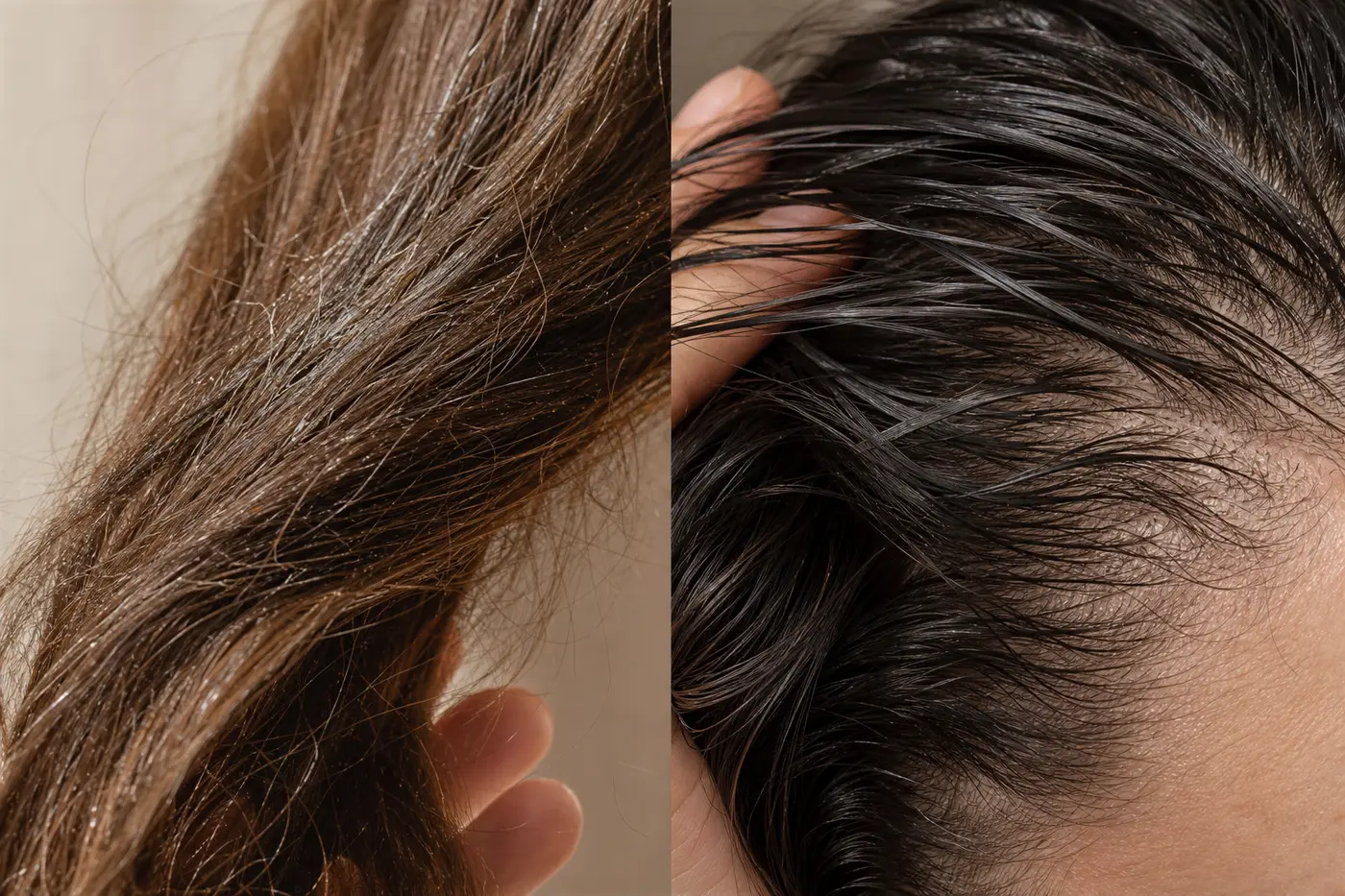
If your strands stay rough, squeaky, and tangle more after washing, solve mineral build-up before judging your anti-hairfall shampoo. Use a shampoo with EDTA or citric acid to remove deposits, then reassess. Readers who want more detail can see how hard water causes roughness and breakage and why chelating shampoos help. A shower filter may help as a housekeeping step in some homes, but it is not an evidence-based hair-loss treatment.
If your scalp gets oily, itchy, and flaky in monsoon weather, an antifungal or zinc pyrithione shampoo often makes more sense than a peptide shampoo. Readers who want the seasonal pattern explained in more detail can see why monsoon humidity can worsen dandruff-related shedding and scalp irritation.
| Item | Pattern | Main risk | Ingredient focus | Example |
|---|---|---|---|---|
| Hard water homes | rough feel after washing | mineral build-up, breakage | EDTA or citric acid | Bare Anatomy after chelation |
| Humid monsoon months | oily itchy flaky scalp | dandruff, secondary shedding | zinc pyrithione or climbazole | Scalpe Pro |
| Dry damaged lengths | snapping and tangling | shaft breakage | gentle cleansers, conditioner | LOreal Fall Resist |
| Frequent washers | tight or reactive scalp | irritation, over-washing | mild surfactants | Sebamed |
A practical routine example helps here. If dandruff is active, use ketoconazole twice weekly and a gentle shampoo on the other wash days. Ketoconazole usually leaves lengths drier, so conditioner on mid-lengths and ends matters. If monsoon humidity is the main issue, the best shampoo for hair fall in India may be the one that keeps the scalp calm enough for you to stay consistent, not the one with the loudest regrowth claim.

Head & Shoulders Anti-Hairfall Shampoo 1 L
This is the strongest candidate here for dandruff-linked hair fall because anti-dandruff shampoos have indirect evidence for reducing secondary shedding when scalp inflammation and Malassezia are part of the problem. It is not a regrowth shampoo, but it can be a sensible adjunct for monsoon flaking and oily scalps. For readers searching best shampoo for hair fall in india female or best shampoo for hair fall dermatologist recommended lists, this is a practical scalp-first option when visible dandruff is part of the story.
- Best fit for the evidence that dandruff control can help secondary shedding
- Large 1 litre pack at rupee-efficient pricing
- High rating and large review base suggest broad user acceptance
- Evidence supports it mainly as an anti-dandruff adjunct, not a direct hair-regrowth treatment
- Large bottle is less convenient for travel or trial use
- May not suit very dry or easily stripped hair
How to Use Anti-Hairfall Shampoo Correctly (Most People Get This Wrong)
Using anti-hairfall shampoo correctly means separating evidence-backed steps from sensible care habits. A 2007 pharmacokinetic study found that caffeine penetrates the hair follicle within two minutes of topical application, so contact time matters for caffeine shampoos. Other steps, such as lukewarm water and conditioning the lengths, are practical care tips rather than direct trial-backed hair-loss treatments.
- Evidence-backed: pick the right frequency.
Medicated antifungal shampoos are often used up to twice weekly in practice, while gentle or caffeine shampoos are usually fine for more regular use. More frequent use is not automatically better if the scalp becomes dry or irritated. - Evidence-backed: leave caffeine shampoo on long enough.
For caffeine shampoos, keep the lather on the scalp for at least two minutes before rinsing. Rinsing in 20 seconds defeats the point of the short-contact penetration data. - Practical care tip: apply to scalp first.
Put the shampoo on wet scalp, not mainly on the lengths. The scalp needs the contact. The lengths usually only need the runoff. - Practical care tip: use fingertips, not nails.
Nail-scrubbing can worsen irritation and breakage. Gentle fingertip massage is enough. - Practical care tip: use lukewarm water.
Very hot water can worsen dryness and may aggravate dandruff-prone scalps. Lukewarm water is the safer default. - Practical care tip: condition the lengths every time.
After medicated shampoo, use conditioner on mid-lengths and ends. That reduces dryness-induced breakage, which many people then mistake for continued hair fall. - Precautionary tip: patch test fragranced or botanical formulas.
A 24-hour inner-arm patch test is a cautious step before first use of rosemary, onion, or heavily fragranced formulas, especially if your skin reacts easily. - Evidence-backed timeline: judge results after 8 to 12 weeks, not after one wash.
Hair changes are slow, and the shower-floor count after one wash is a poor way to judge the best shampoo for hair fall in India.
A realistic routine example is ketoconazole twice weekly plus a gentle shampoo on the other wash days. On ketoconazole days, focus the lather on the scalp and use conditioner only on the lengths. In the first two weeks, the scalp often feels less itchy but the lengths may feel drier. By week 8, flakes should be lower if dandruff was the trigger. By week 12, the best shampoo for hair fall in India for this use case should mean a calmer scalp and less secondary shedding, not dramatic regrowth.
Safety and When to See a Doctor
Heavy shedding that lasts more than a few months, especially with fatigue, heavy periods, weight change, or other body symptoms, needs medical evaluation. A 2023 StatPearls review says telogen effluvium management depends on identifying triggers such as iron deficiency, thyroid disease, medication effects, postpartum change, or systemic illness. Shampoo alone is not enough here.
Patchy bald spots, scalp pain, pustules, scarring, or clusters of broken hairs need prompt dermatology review. Those patterns can point to alopecia areata, tinea capitis, scarring alopecia, or inflammatory scalp disease. Over-the-counter shampoo swapping can waste months.
Pregnant, trying to conceive, or breastfeeding readers should avoid minoxidil unless specifically advised by a clinician. The American Academy of Dermatology says women who are pregnant, planning pregnancy, or breastfeeding should avoid minoxidil. If minoxidil causes redness, itching, scaling, or unwanted facial hair, stop and get medical advice. The 2004 randomised trial of 381 women recognised local irritation and hypertrichosis as adverse effects of topical minoxidil.
Persistent dandruff despite antifungal shampoo also needs a doctor. Severe seborrhoeic dermatitis sometimes needs prescription anti-inflammatory treatment, not just stronger washing.
Myths to Ignore Before You Spend Another ₹500
A shampoo alone can regrow hair in postpartum, stress-related, or hormonal shedding. That is false. A shampoo may reduce breakage, itch, oil, or dandruff, but true regrowth in diffuse shedding usually depends on treating the cause and, when appropriate, using evidence-based therapies such as minoxidil under medical guidance.
DHT-blocking shampoos can replace minoxidil for androgenetic alopecia. That is not supported by good clinical evidence. If androgenetic alopecia is suspected, shampoos can be adjuncts for scalp health, but minoxidil remains the best-supported topical treatment for hair regrowth.
Biotin shampoos stop hair fall because biotin deficiency is common. That is also wrong. Biotin deficiency is uncommon in the general population, and topical biotin efficacy for common hair-loss disorders is not established. Investigate iron deficiency, thyroid disease, postpartum shedding, androgenetic alopecia, or seborrhoeic dermatitis first.
Onion seed oil shampoos are proven for routine hair fall because onion juice worked in alopecia areata. No. Onion-juice evidence comes from one small alopecia areata study and cannot be directly extrapolated to onion seed oil shampoos for everyday hair fall.
Where the Evidence Is Missing
Independent human trials of cosmetic shampoo actives are still scarce. That includes Procapil, caffeine blends, onion seed oil, and many ayurvedic combinations sold to Indian women. Much of the market relies on supplier dossiers, combination products, or small nonblinded studies rather than independent randomized trials in the target population.
Evidence specific to Indian climates is also thin. There is some mechanistic evidence for mineral deposition from hard water and for humidity as an aggravating factor in Malassezia-related disease, but little direct evidence linking these exposures to true follicular hair-loss outcomes in Indian populations.
South Asian routines are under-studied. Most trials do not stratify by textured hair, frequent oiling, henna use, straightening, or braid tension, even though these clearly affect breakage and perceived shedding.
Postpartum shedding is another area where internet certainty runs ahead of data. It is widely repeated, but objective incidence data remain limited.
Frequently Asked Questions
Which shampoo is best to stop hair fall in India?
No shampoo stops hair fall completely. For dandruff-linked shedding, ketoconazole 2% shampoos and zinc pyrithione or climbazole shampoos have the strongest indirect support because a 2002 comparative trial of 150 people studied antidandruff shampoos and a 2006 observational study linked increased shedding with Malassezia colonization. For diffuse or stress-related shedding, caffeine or peptide shampoos are supportive options, not proven regrowth treatments.
What brand of shampoo is best for hair fall?
The best brand depends on the cause. Ketomac and similar medicated options fit dandruff-linked shedding. Bare Anatomy and WishCare fit readers who want gentler supportive formulas. LOreal Fall Resist fits breakage-prone lengths better than scalp-driven shedding. Ingredient match matters more than branding when choosing the best shampoo for hair fall in India.
Can shampoo regrow lost hair?
Cosmetic shampoos are not proven regrowth treatments. A 2004 placebo-controlled randomised trial of 381 women found that 5% topical minoxidil outperformed placebo at 48 weeks, and the American Academy of Dermatology describes minoxidil as a core evidence-based option for female pattern hair loss. Shampoo can still help by reducing dandruff, irritation, oil, and breakage.
How long does an anti-hairfall shampoo take to show results?
Give it 8 to 12 weeks of consistent use before judging it. A 2023 anatomy review notes that scalp hair grows about 1 cm a month, and the 2015 rosemary-versus-minoxidil trial of 100 people showed no significant change at 3 months. Two weeks is enough to judge tolerance and scalp feel, not regrowth.
Is ketoconazole shampoo safe for daily use?
Usually not as a default routine. Ketoconazole shampoos are commonly used a few times a week during active dandruff phases, and daily use can leave the scalp and lengths dry. A practical routine is ketoconazole twice weekly plus a gentle shampoo on other wash days, with conditioner on the mid-lengths and ends.
Which shampoo is best for postpartum hair fall in India?
Postpartum shedding is driven by hormone change after delivery, not by poor cleansing. A 2014 cohort study of 116 women describes postpartum hair-cycle change, and the StatPearls review on telogen effluvium explains that reactive shedding follows a trigger. A gentle shampoo such as Sebamed or Bare Anatomy is a better fit than a harsh antidandruff wash unless dandruff is also present. If heavy shedding remains significant well beyond the first postpartum year, seek evaluation.
Does hard water cause hair fall and which shampoo helps?
Hard water is more clearly linked to roughness and breakage than to follicle disease. A 2016 ex vivo study of 15 hair samples found more calcium and magnesium deposition and reduced hair-shaft thickness after repeated washing in hard water. A shampoo with EDTA or citric acid helps remove build-up before you judge any anti-hairfall formula.
What is the difference between hair fall and hair loss?
Hair fall usually means temporary shedding, often from telogen effluvium after stress, illness, or childbirth. Hair loss, or alopecia, means a more specific disorder such as androgenetic alopecia or alopecia areata. The second group needs diagnosis, not just a better shampoo.