

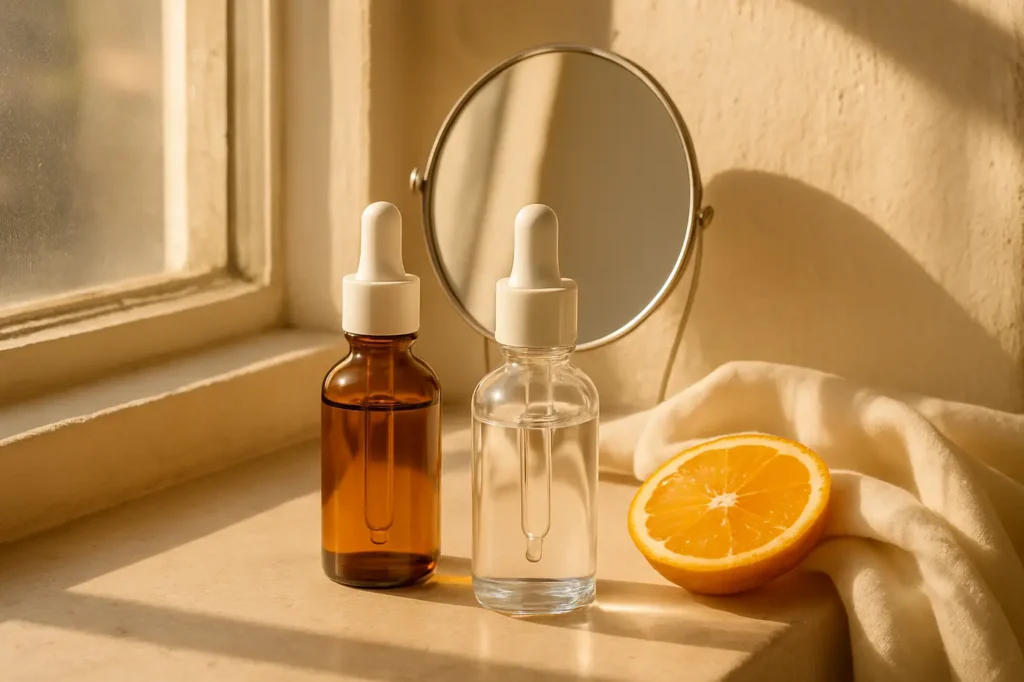
Yes, niacinamide vs vitamin c is not an either-or fight for most routines. Niacinamide and vitamin C can be used together. The warning that they cancel each other out came from old research conditions that do not match modern skincare use, and current dermatology references do not support it as a routine problem on skin. Vitamin C is used as a depigmenting active and is thought to reduce melanogenesis partly through antioxidant effects and interference with tyrosinase-related pathways, while niacinamide reduces visible pigmentation by inhibiting melanosome transfer and also helps with oil control. They target overlapping but different problems and are usually safe to layer if your skin tolerates them.
Key takeaways
- Niacinamide vs vitamin c is not a dangerous pairing. Niacinamide and vitamin C can be used together safely in modern formulations. The old warning came from a 1960s experiment under harsh conditions, not normal skincare use, and current dermatology references do not support routine on-skin conversion into flushing nicotinic acid.
- Vitamin C is used as a depigmenting active and is thought to reduce melanogenesis partly through antioxidant effects and interference with tyrosinase-related pathways, while niacinamide reduces visible pigmentation by inhibiting melanosome transfer from melanocytes to keratinocytes. The two ingredients overlap in outcome, but they do not work through the same route.
- Hakozaki et al. 2002 in the Journal of the European Academy of Dermatology and Venereology supports that topical niacinamide reduced facial hyperpigmentation and that niacinamide inhibited melanosome transfer in cell-based experiments, but it does not show a four-week 2% twice-daily human trial proving reduced melanosome transfer directly in vivo. The human study included 18 Japanese subjects and was manufacturer-funded.
- For readers comparing niacinamide vs vitamin c in Indian conditions, vitamin C in the morning before sunscreen is a reasonable antioxidant adjunct, while niacinamide in the evening can support barrier function and oil regulation without forcing both into one step.
- If budget allows only one serum, oily or acne-prone skin often gets more day-to-day benefit from niacinamide, ideally starting at 5%. Dry or sun-damaged skin with visible tanning or sun spots may get more from a well-formulated vitamin C serum, especially one using a stable derivative rather than a fragile clear-bottle formula.
The Short Answer: Yes, You Can Use Both, Here Is Why the Warning Exists
Yes, you can use niacinamide and vitamin C together. The old warning came from outdated chemistry concerns, while current dermatology references say the feared conversion into flushing nicotinic acid is not supported under normal topical use conditions.
The older warning came from high-heat or prolonged processing conditions, not from two serums sitting on skin for a few minutes during a routine. DermNet NZ notes that nicotinamide does not cause flushing, unlike nicotinic acid, which is the form linked to redness.
Niacinamide, the active form of Vitamin B3, helps with oil, barrier support, and post-acne marks. Vitamin C, especially L-ascorbic acid or a stable derivative, is used for dullness, UV-related pigmentation, and antioxidant support. Many people use both because one does not replace the other.
But safe does not mean automatic. Patch-test any new serum on the jawline or behind the ear for two to three nights first. If you get burning, marked redness, itching, or flushing, stop and reassess the formula rather than pushing through.
What Each Ingredient Actually Does: Niacinamide vs Vitamin C Benefits Compared
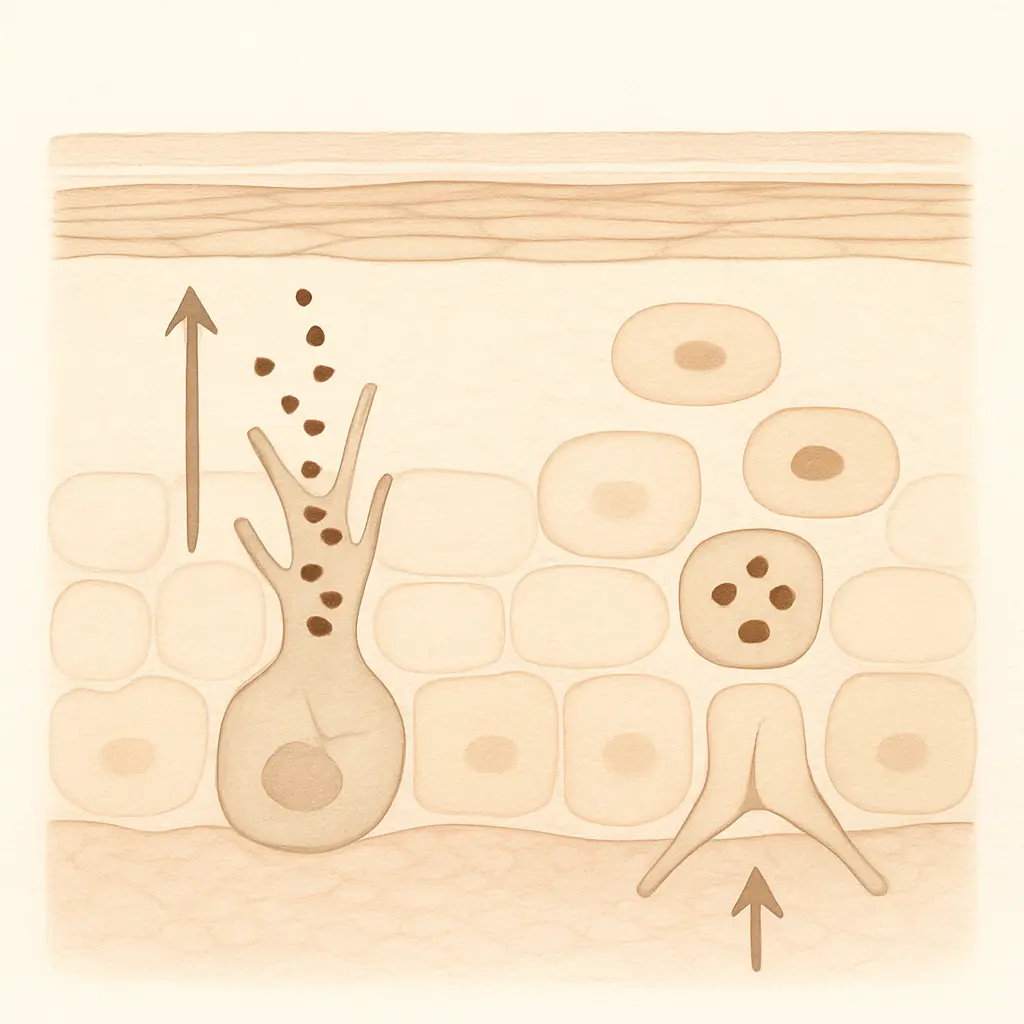
Niacinamide vs vitamin c for pigmentation depends on the type of mark, not just the ingredient name. Vitamin C is used as a depigmenting active and is thought to reduce melanogenesis partly through antioxidant effects and interference with tyrosinase-related pathways, while niacinamide reduces visible pigmentation by inhibiting melanosome transfer from melanocytes to keratinocytes. In limited studies, vitamin C changes have been seen in about 4 to 8 weeks, while niacinamide studies more often run 8 to 12 weeks for clearer spot change.
Direct head-to-head trials of niacinamide vs vitamin c for the same problem are scarce. Most studies test one ingredient against a vehicle, not against each other. So any page that says one is simply better is usually extrapolating beyond the evidence.
Before choosing in the niacinamide vs vitamin c debate, it helps to understand the difference between tanning, post-acne marks, and true pigmentation disorders. Those marks do not behave the same way, and one serum will not suit every cause of darkening.
What Niacinamide Does to Your Skin (and What It Cannot Do)
Niacinamide is Vitamin B3 in its amide form. In skincare, its best-supported pigment mechanism is melanosome transfer, which means the transfer of pigment packets from melanocytes, the cells that make melanin, to keratinocytes, the surface skin cells that show the colour.
Hakozaki et al. 2002, a manufacturer-funded vehicle-controlled study in 18 Japanese subjects published in the Journal of the European Academy of Dermatology and Venereology, supports that topical niacinamide reduced facial hyperpigmentation and that niacinamide inhibited melanosome transfer in cell-based experiments, but it does not show a four-week 2% twice-daily human trial proving reduced melanosome transfer directly in vivo. That distinction matters because many brand pages blur the cell study and the human study into one stronger claim than the paper supports.
So what can you say honestly in niacinamide vs vitamin c comparisons? Niacinamide helps visible pigmentation, especially the kind left after inflammation. Niacinamide does not directly block tyrosinase in the way vitamin C is often described. It works later in the pathway.
Niacinamide also helps the skin barrier. A 2000 manufacturer-funded study in cultured human keratinocytes found that nicotinamide increased ceramide biosynthesis dose-dependently by 4.1-fold to 5.5-fold by day 6, and topical use increased stratum corneum ceramides and free fatty acids while decreasing transepidermal water loss in dry skin. That is weaker evidence than a large independent trial, because part of it is in vitro, but the barrier story is biologically plausible and consistent with how dermatologists use niacinamide in routine care. DermNet NZ also states that nicotinamide can improve skin barrier function by decreasing epidermal water loss.
Ceramides matter because they are part of the skin’s lipid seal. If your face feels tight after cleansing, stings after actives, or flakes every winter, barrier support is not cosmetic fluff. It changes how well you tolerate the rest of your routine.
Niacinamide also helps with sebum. Draelos et al. 2005, reported in a 2006 publication, was a manufacturer-funded double-blind placebo-controlled trial in 100 Japanese subjects plus a separate split-face study in 30 Caucasian subjects. The paper found that 2% niacinamide reduced sebum excretion rate significantly versus placebo after 2 and 4 weeks. That is one of the most useful real-world findings here, especially if you have oily skin and are deciding between niacinamide vs vitamin c or asking niacinamide or vitamin c which is better for your routine.
And niacinamide is generally well tolerated. The Cosmetic Ingredient Review safety assessment reported no stinging sensation up to 10% and no irritancy in 21-day cumulative irritation testing up to 5%, though safety-panel data are not the same as comparative efficacy trials. That helps explain why niacinamide benefits for oily skin and sensitive skin often show up in the same conversation.
A 2005 split-face randomized trial in 50 women adds another useful point. A 5% niacinamide moisturizer improved hyperpigmented spots, fine lines, texture, red blotchiness, sallowness, and elasticity over 12 weeks versus vehicle. That means niacinamide is not only an oil-control ingredient. It can also fit a broader uneven-skin-quality routine.
What Vitamin C Does to Your Skin (and Its Stability Problem)
Vitamin C in skincare usually means L-ascorbic acid, the pure form, or a derivative. L-ascorbic acid has the strongest classic penetration data, but it is also the form with the biggest formulation headache.
Vitamin C is used as a depigmenting active and is thought to reduce melanogenesis partly through antioxidant effects and interference with tyrosinase-related pathways, but the strongest clinical evidence is for pigment improvement rather than direct human proof of topical L-ascorbic acid acting as a standalone tyrosinase inhibitor in skin. A 2021 systematic review of vitamin C and melanin pigmentation makes that clear. The effect is promising, but the mechanism is often marketed more confidently than the human data justify.
Vitamin C also has a collagen role. Pullar et al. 2017, a review in Nutrients, states that vitamin C stimulates collagen synthesis in skin fibroblasts and acts as a cofactor for enzymes needed for collagen stabilization and cross-linking. That is why vitamin C sits in both brightening and photoaging conversations.
For UV protection, keep the wording tight. Pinnell et al. 2001 primarily established the formulation conditions needed for topical L-ascorbic acid to penetrate skin. Antioxidant photoprotection is biologically plausible and supported by broader literature, but that specific paper is not a direct human clinical trial of UV-oxidative-stress reduction. Earlier experimental work in swine skin found vitamin C enhanced the efficacy of sunscreen when applied as an adjunct, but that is not the same as a human routine-order trial.
The bigger problem with vitamin C is stability. L-ascorbic acid oxidises on exposure to light, oxygen, and heat, reducing efficacy. DermNet NZ notes that topical vitamin C can protect against photoageing when it is manufactured into a stable formulation, but many marketed products are ineffective because L-ascorbic acid is unstable and penetration is poor. That is the point many shoppers need before they spend ₹700 on a clear bottle with a dropper.
Packaging matters. Opaque bottles, air-limiting pumps, and formulas that do not darken quickly are not marketing extras. They are part of whether the active is still active by the time you reach the middle of the bottle.
Pinnell et al. 2001 also found that L-ascorbic acid requires a formulation pH of about 2.5 to 3.5 for effective skin penetration. The classic study found that 20% was the maximal concentration for optimal percutaneous absorption of L-ascorbic acid, and skin levels saturated after three daily applications, with a tissue half-life of about 4 days. That does not prove every serum above 20% is pointless or irritating, but it does undercut the idea that higher numbers are always better.
A 2021 review of topical vitamin C derivatives and their efficacy explains that derivatives were developed to improve stability and formulation flexibility, but head-to-head clinical proof is still limited. The stability case is stronger than the superiority case.
For readers comparing niacinamide vs vitamin c for brightening, the vitamin C timeline needs caution. A 2023 systematic review of topical vitamin C in melasma and photoaging found promising results across only 7 publications and 139 volunteers, with more work needed to define ideal concentration and regimen. So visible brightening in 4 to 8 weeks is better treated as a range seen in limited studies, not a fixed promise.
Niacinamide vs vitamin C at a glance
| Product | Main identity | Pigment route | Best for | Timeline | Limitation |
|---|---|---|---|---|---|
| Niacinamide | Vitamin B3 | Melanosome transfer | Oil, PIH, barrier | 8 to 12 weeks | Not direct tyrosinase block |
| Vitamin C | L-ascorbic acid or derivative | Tyrosinase-related and antioxidant | Dullness, tanning, photoaging | 4 to 8 weeks | Stability varies widely |
We may earn a commission from purchases made through these links, at no extra cost to you. Products are chosen on evidence and value, never on commission.

Minimalist 10% Advanced Vitamin C Serum
This serum is useful in the article because it represents a stable vitamin C approach rather than a low-pH pure L-ascorbic acid formula. That makes it easier to place in routines for dullness and uneven tone, while staying honest that derivatives do not have identical evidence to pure L-ascorbic acid.
- Clear 10% vitamin C positioning
- 20 ml size is more practical than many 10 ml trial bottles
- Useful for readers comparing niacinamide vs vitamin c by skin goal
- At ₹499, it costs more than entry-level vitamin C options
- The title does not specify pure L-ascorbic acid, so it should not be treated as equivalent to classic low-pH vitamin C evidence
- No niacinamide, so it is less useful if oil control is your top concern
Can You Use Niacinamide and Vitamin C Together? The Myth, the Science, and the Real Answer
Yes. In the niacinamide vs vitamin c discussion, the answer to can i use niacinamide and vitamin c together is usually yes. The concern that they cancel each other out traces to old research and chemistry warnings, not normal skincare use, and current dermatology references do not support routine on-skin conversion into flushing nicotinic acid at everyday temperatures.
The old warning said niacinamide and vitamin C either cancel each other out or convert into nicotinic acid, which then causes redness and flushing. That claim spread because it sounds technical. It does not match how modern products are used.
Where the ‘They Cancel Each Other Out’ Warning Actually Came From
The old compatibility warning came from harsh processing conditions, not from a person applying two serums at the sink. The evidence-safe version is this: the old warning about niacinamide and vitamin C converting on skin into flushing nicotinic acid is not supported by normal topical use conditions, and available dermatology references note that nicotinamide itself does not cause flushing, unlike nicotinic acid.
That last distinction matters. Nicotinamide, which skincare brands call niacinamide, is not the same molecule as nicotinic acid. Nicotinic acid causes skin flushing via vasodilation. A 2010 review explains that nicotinic acid triggers dermal Langerhans-cell signalling, increases prostaglandins, and activates receptors in capillaries, causing cutaneous vasodilatation. In plain English, blood vessels widen and your skin goes red.
But routine niacinamide use is not routine nicotinic acid exposure. DermNet NZ states that nicotinamide does not cause flushing. So if a serum makes you hot, red, and itchy, the useful question is not whether the myth was right. The useful question is whether the formula is irritating your skin.
Modern formulations also separate ingredients into stable systems. Some combine niacinamide and vitamin C in one bottle. Others keep them in separate products but still expect them to be used in the same routine. If the industry-wide interaction were a real routine-use problem, those products would fail in ordinary use fast and visibly.
For most readers, niacinamide vs vitamin c is not about chemistry fear. It is about tolerance. If you have a stable vitamin C serum and a plain niacinamide serum, you do not need to fear the pairing. You need to watch how your skin reacts.
What Ingredients You Should Actually Avoid Mixing with Niacinamide
What should you never mix niacinamide with? The more honest answer is not vitamin C. The more honest answer is strong low-pH exfoliating acids in the same step if your skin is reactive.
Strong AHAs and BHAs, especially when layered aggressively, can sting, disrupt the barrier, and increase the chance that any serum applied after them will feel irritating. Niacinamide should not be layered directly with strong acids such as AHAs or BHAs at low pH in the same application step if your skin is prone to flushing. That is a tolerance issue first.
Vitamin C is different. Vitamin C at low pH poses a similar theoretical risk, which is why applying them in separate steps or at separate times of day is the cleaner recommendation. But theoretical risk is not the same as never use together.
If you flush, stop. Flushing is not proof of efficacy. Flushing is a sign to back off, simplify the routine, and look at the whole formula, especially fragrance, essential oils, exfoliating acids, and how many actives you stacked at once.
A 2024 review on niacinamide also helps here. Niacinamide is not classically categorized as a cell-turnover accelerator like retinoids or exfoliating acids, so the common purging explanation is less biologically plausible, but direct clinical studies specifically proving that niacinamide never causes purge-like breakouts were not found. So if you break out after adding a niacinamide serum, suspect irritation, occlusion, or another ingredient before you blame a purge.

DOT & KEY 10% Vitamin C + E Serum with 5% Niacinamide
This is the clearest combined option in the list because it states both 10% vitamin C and 5% niacinamide. That makes it useful for the article’s myth-busting section: you can use both together, and some readers may prefer one bottle over managing order and layering.
- Combines vitamin C with 5% niacinamide in one product
- 5% niacinamide is a more evidence-grounded strength than assuming 10% is necessary
- Useful for readers asking whether both ingredients can be used together
- ₹598 is high if you are only testing whether vitamin C suits your skin
- Combination formulas give you less flexibility to adjust niacinamide and vitamin C separately
- Infused ingredient positioning may not suit users who prefer very plain formulas
Order of Application: Which Serum Goes First in Your Routine?
In niacinamide vs vitamin c routines, order depends on the type of vitamin C serum. If your vitamin C is low-pH L-ascorbic acid, many dermatologists prefer applying it first on clean skin. If your vitamin C is a derivative, order is less critical. A simple option is vitamin C in the morning and niacinamide in the evening.
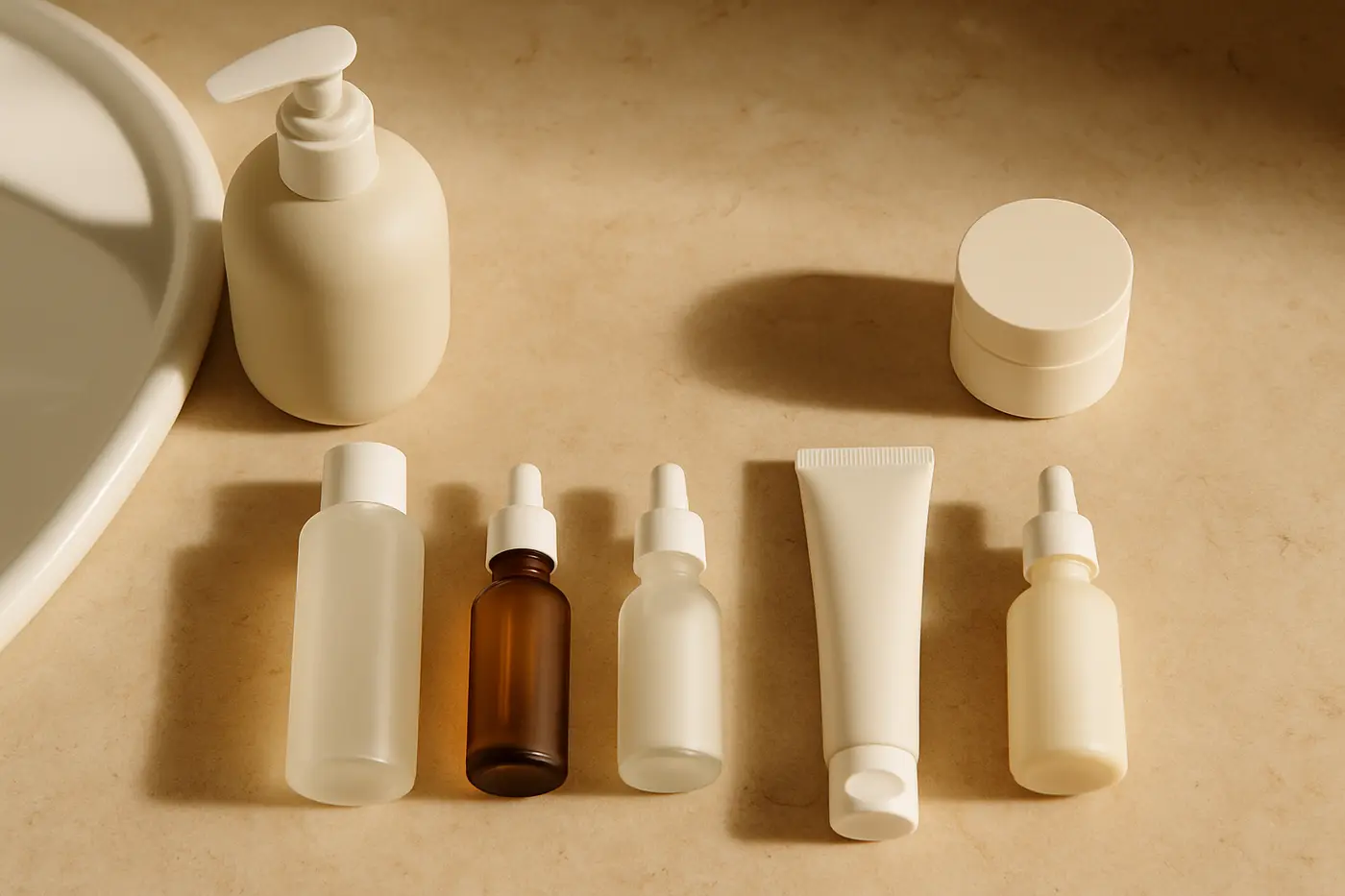
Here is the practical rule. Low-pH actives usually go earlier, then neutral serums, then moisturizer, then sunscreen in the morning. Texture still matters, but pH matters most when one of the products is L-ascorbic acid.
Lotus Femcare AM/PM Split Protocol
- Morning, cleanse gently.
Use a low-residue cleanser. If your skin is dry, a water rinse may be enough. - Apply vitamin C to clean skin.
This is the step for L-ascorbic acid or your chosen vitamin C derivative. If the formula is watery, spread it first. If it is a gel-serum, keep the layer thin. - Apply niacinamide only if your skin tolerates layering.
If you are asking about niacinamide vitamin c order of application or which serum first morning routine, low-pH L-ascorbic acid usually goes first. With derivatives, the sequence matters less than comfort and finish. - Moisturizer next, then sunscreen.
The American Academy of Dermatology treats broad-spectrum SPF 30 or higher as the main daily UV protection. Vitamin C is an adjunct, not a replacement. And sunscreen amount and reapplication matter more than vitamin C layering for preventing UV-driven pigmentation. - Evening, use niacinamide as the main active.
This sidesteps the pH question entirely. It also makes sense if your skin gets oily by day and dehydrated by night.
The split works because it separates jobs. Vitamin C sits in the part of the day where UV exposure happens. Niacinamide sits in the part of the day where barrier recovery happens.
Use thinner textures before thicker ones. If a vitamin C serum feels watery and disappears in seconds, niacinamide can usually go on top without much trouble. If the first serum is sticky, silicone-heavy, or leaves a film, the second serum may pill. Pilling looks like tiny rubbery rolls when you rub the skin. It usually means too much product, not better absorption.
A low-pH L-ascorbic acid serum often gives a brief sting on damp or freshly exfoliated skin. A niacinamide serum usually feels more neutral, sometimes slightly slippery, and often dries with less tack. If redness spreads, the sting lasts more than a few minutes, or your cheeks feel hot rather than mildly active, stop layering and simplify.
If your skin is sensitive, do not start both on the same day. Start one for a week, then add the second. That way, if something stings, you know which bottle caused it.
Worked example: starting both without wrecking your barrier
Week 1 of a niacinamide vs vitamin c routine should usually be niacinamide alone at night, especially if skin is oily, acne-prone, or easily irritated. A 5% niacinamide serum often feels light and dries fast. The first few nights should feel uneventful. That is good. If the skin feels tight, itchy, or oddly shiny by morning, the base may be too drying even if niacinamide itself is fine.
Week 2 is when many readers add vitamin C in the morning. Start with two or three mornings a week, not seven. A vitamin C serum may tingle for a minute, smell faintly metallic or citrus-like depending on the formula, and leave more tack than niacinamide. If sunscreen balls up on top, use less serum and let it settle before the next step.
Week 3 is where mistakes show up. If the vitamin C has turned deep yellow, orange, or brown, oxidation is likely and the bottle is no longer a good bet. If redness appears around the nose and mouth, or the skin starts stinging even with moisturizer, cut back. In a niacinamide vs vitamin c routine, irritation is usually from the formula, the frequency, or too many other actives, not from some mythic ingredient clash.
By week 4, an oily acne-prone reader may notice less midday shine from niacinamide before any major brightening shows up. Vitamin C changes are usually slower and easier to miss day to day. Photos in the same light help more than mirror checks. If the skin is calm, frequency can increase. If the skin is red, flaky, or burning, go back to one active.
A sensitive-skin version should be slower. Start niacinamide alone for one to two weeks. Add vitamin C only after the skin feels normal. Starting both at once makes it impossible to tell whether the problem is low pH, fragrance, solvent load, or simple overuse.
Does the Percentage Actually Matter? 5% vs 10% Niacinamide and Vitamin C Strength Explained
In the niacinamide vs vitamin c debate, percentage matters less than people think. For most people, 10 percent niacinamide too strong is a more useful question than whether 10% is automatically better. Clinical support for niacinamide is already decent at 5%, while vitamin C performance depends heavily on formulation, pH, and stability.
There is good clinical evidence that 5% niacinamide improves pigmentation and other skin-quality endpoints, but a robust head-to-head trial showing it is equivalent to 10% niacinamide for barrier or pigment outcomes across most skin types was not located. So the honest position is not that 5% and 10% are the same. The honest position is that 5% clearly works, and 10% is not automatically proven better.
When is 10 percent niacinamide worth it? Mostly when your main issue is persistent sebum and you already know your skin tolerates niacinamide well. Even then, higher strength is an option, not a requirement.
The irritation story is also less dramatic than social media makes it. Niacinamide is generally well tolerated in cosmetic use tests, with no stinging reported up to 10% in the safety assessment. But real-world formulas contain more than niacinamide. A 10% serum with fragrance, zinc, acids, or a drying base can still feel harsher than a plain 5% serum.
For vitamin C, the evidence is messier. Pinnell et al. 2001 found that L-ascorbic acid requires a low pH of about 2.5 to 3.5 to penetrate effectively, and that 20% was the maximal concentration for optimal percutaneous absorption in that classic study. Evidence supports that 20% is the absorption ceiling there, but that does not by itself prove that concentrations above 20% always add irritation without meaningful extra clinical benefit. It does, however, make 10% to 15% a sensible range for many shoppers.
The review of topical vitamin C derivatives also supports the idea that derivatives were built to improve stability and formulation flexibility. Buy them for stability logic, not because every derivative is automatically better.
Systematic-review evidence for topical vitamin C in melasma and photoaging is promising but still based on only 7 publications and 139 volunteers, with more studies needed to define ideal concentration. That is much thinner evidence than the marketing language around vitamin C suggests.

Minimalist Niacinamide 5% Serum with Hyaluronic Acid
This 5% niacinamide serum fits the evidence better than the common assumption that 10% is automatically necessary. It is the easier starting point for readers dealing with oiliness, mild pigmentation, or a weakened barrier, especially if they are new to active serums.
- 5% niacinamide is closer to the concentration with good clinical support for pigmentation and skin-quality benefits
- Useful for oil control and barrier-focused routines
- Low entry price at ₹249
- Only 10 ml, so the bottle runs out quickly with twice-daily use
- Not the best choice if your main goal is antioxidant support before sunscreen
- May feel too mild for shoppers specifically looking for a stronger niacinamide product
Which One Should You Buy If You Can Only Choose One?
Niacinamide vs vitamin c comes down to the problem you want to fix first. Niacinamide usually suits oily, acne-prone, or easily irritated skin better. Vitamin C usually suits dullness, tanning, and visible UV-related pigmentation better. If you can buy only one, match the bottle to the main complaint.
- Oily or acne-prone skin: start with niacinamide at 5%. Draelos et al. 2005 found 2% niacinamide reduced sebum excretion rate significantly versus placebo.
- Post-acne marks: choose niacinamide first. Melanosome transfer is highly relevant to post-inflammatory hyperpigmentation.
- Visible tanning or sun spots: choose vitamin C first. The 2021 systematic review of vitamin C and melanin pigmentation supports its use for pigment improvement, though not as a fixed guarantee.
- Overall dullness: choose vitamin C first, especially for morning use.
- Sensitive or barrier-damaged skin: choose niacinamide first. Low-pH vitamin C is more likely to sting.
- Dry skin with photoaging concerns: vitamin C can make more sense, but only if the formula is not aggressively acidic and you already use moisturizer well.
- Combination skin: niacinamide is the safer single-serum choice. Add vitamin C later if budget allows.
If you are still stuck on niacinamide or vitamin c which is better, use this tie-breaker. If your face gets shiny by noon, pick niacinamide. If your face looks dull by noon, pick vitamin C.
There is also a routine reality check. In the niacinamide vs vitamin c choice, sunscreen matters more than either serum for preventing new UV-driven darkening. Readers with oily or acne-prone skin often do better once they find a sunscreen that oily or acne-prone Indian skin will actually tolerate every day.

The Ordinary Niacinamide 10% + Zinc 1%
This is a straightforward niacinamide serum with a clearly stated 10% strength and zinc. It suits the article’s comparison because it shows that 10% is an option, not a requirement, for readers whose main concern is visible oiliness and leftover acne marks.
- Clearly labeled 10% niacinamide concentration
- Good fit for oil-control focused routines
- Strong review base at this price
- 10% is not automatically better than 5%, so some readers may be using more strength than they need
- Can be less comfortable for easily irritated or dehydrated skin
- No vitamin C, so it does not cover antioxidant support
Best Niacinamide and Vitamin C Serums Available in India: Rupee-per-ml Cost Comparison
Rupee-per-ml pricing shows value faster than brand claims do. A ₹249 serum can be more expensive per ml than a ₹499 serum, and a cheap vitamin C can still be poor value if the bottle is unstable or badly packaged. Prices below were checked from public retailer listings, and they will change during sales.
Methodology note: products were shortlisted for the niacinamide vs vitamin c comparison based on clear stated active percentages, public ingredient positioning, packaging logic, price, and review depth on Amazon.in. Formulas were assessed from public ingredient listings and product pages. No hands-on testing was performed for this article. Products with vague active claims, unclear packaging, or weak value for the category were not prioritised.
| Product | Stated active | Size | Amazon price | Cost/ml | Rating |
|---|---|---|---|---|---|
| Minimalist Niacinamide 5% | Niacinamide 5% | 10 ml | ₹249 | ₹24.90 | 4.2 |
| DOT & KEY 10% C + 5% N | Vitamin C 10% + Niacinamide 5% | 30 ml | ₹598 | ₹19.93 | 4.1 |
| Minimalist 10% Advanced C | Vitamin C 10% | 20 ml | ₹499 | ₹24.95 | 4.1 |
| Deconstruct 10% C | Vitamin C 10% | 30 ml | ₹575 | ₹19.17 | 4.2 |
| The Ordinary 10% + Zinc | Niacinamide 10% | 30 ml | ₹600 | ₹20.00 | 4.3 |
Pricing date: 19 August 2026
A few honest notes. Minimalist Niacinamide 5% looks cheap until you notice the 10 ml size. Minimalist 10% Advanced Vitamin C is one of the pricier options per ml in this group, which means you should buy it only if you specifically want that formula style.
For readers doing the niacinamide vs vitamin c math, vitamin C value is not only price. Stability matters more here than it does with niacinamide, especially in Indian heat.
For Indian climate use, combined or derivative-led vitamin C formulas often make more sense than clear, low-protection bottles of pure L-ascorbic acid. DermNet NZ’s warning is blunt and useful: many marketed topical vitamin C products are ineffective because they contain low concentrations or unstable formulations that do not penetrate sufficiently.
If you shop on Amazon.in, check the bottle type before checkout. Opaque or air-limiting packaging beats pretty clear glass for vitamin C. For niacinamide, packaging matters less, so price-per-ml comparisons are more straightforward.
India Context: UV Levels, Humidity, Hard Water, and Which Ingredient Indian Skin Needs More
In Indian conditions, niacinamide vs vitamin c is shaped by climate as much as by skin type. High UV exposure increases the importance of sunscreen, and antioxidant adjuncts such as vitamin C may be reasonable for some routines. Humidity, dry winters, and hard water can also make niacinamide feel easier to tolerate day to day.
Evidence in Indian populations is limited. Most clinical studies here come from Japanese, Caucasian, or mixed populations, not from Indian cohorts living through Chennai summers or Delhi winters. So India-specific routine advice has to combine the evidence we do have with climate reality, not pretend there is a perfect Indian RCT for every question.
The American Academy of Dermatology is clear that broad-spectrum SPF 30 or higher sunscreen is the core daily protection against UV damage. Antioxidants can support that routine, but they do not replace it. In Indian conditions, the exact sunscreen quantity needed to prevent tanning and pigmentation from undoing serum results matters more than chasing the perfect serum order.
Vitamin C can sit under sunscreen as an adjunct. A 1996 experimental study in swine skin found vitamin C enhanced the efficacy of sunscreen when combined with it. But that is not a human routine-order trial, so it should not be overstated.
For Indian skin tones, the pigmentation stakes are higher because post-inflammatory hyperpigmentation is more prevalent and more persistent in darker skin tones. A 2024 systematic review of treatment of post-inflammatory hyperpigmentation in skin of colour found PIH has a heightened predilection for darker skin tones and often runs a chronic course once developed. That is exactly why small amounts of irritation from badly chosen actives matter more here.
Hard Water, Monsoon Humidity, and Dry Winters: Choosing the Right Texture by Season
Hard water gets blamed for everything. The evidence is narrower than social media suggests. A 2021 systematic review and meta-analysis on water hardness and atopic eczema found the strongest support for eczema association and detergent-residue issues, not for a simple claim that hard water alone damages everyone’s barrier.
That still matters in Delhi and Chennai, where many readers deal with mineral-heavy water and harsh cleansers. In those conditions, niacinamide often earns its place faster than vitamin C. If cleansing leaves your face tight and squeaky, barrier support via ceramide-related effects is usually the more urgent fix than adding another brightening serum.
Mumbai monsoon humidity changes texture choice. Lightweight water-based serums and gel moisturizers are often easier to tolerate than oily suspensions. In a niacinamide vs vitamin c routine, a sticky vitamin C layered under sunscreen in humid weather is one of the fastest ways people quit by week six.
Dry northern winters flip the priority. From November to February in Delhi and nearby regions, barrier-focused niacinamide often matters more than pushing a low-pH vitamin C every morning. If your skin is already flaky, stinging, or over-cleansed, adding acidic vitamin C may worsen the problem.
And for pigmentation in Indian skin, niacinamide has one more advantage. Post-inflammatory hyperpigmentation from acne, friction, threading, or irritation is common in Fitzpatrick skin types IV to VI. Because niacinamide acts on melanosome transfer rather than only on melanogenesis, it fits especially well into routines built around PIH prevention and recovery.

Deconstruct 10% Vitamin C Serum
This serum earns a place because it is positioned for oily skin and keeps the vitamin C strength clear at 10%. For this article, it works as a practical alternative to niacinamide when the reader’s main issue is dullness and uneven tone rather than sebum control.
- 10% vitamin C is clearly stated
- Targeted toward oily skin, which is useful for Indian climate conditions
- Better review depth than many newer vitamin C serums
- ₹575 is expensive versus several other vitamin C options here
- No niacinamide, so it will not do as much for oil-control routines as a niacinamide serum
- The formula technology claim is not the same as stronger clinical proof
Safety and when to see a doctor
Niacinamide vs vitamin c is a self-care question only up to a point. Persistent or worsening facial pigmentation, especially if it is patchy, symmetrical, hormonally linked, or not improving after consistent sunscreen and topical care, needs a proper diagnosis rather than endless serum swapping.
The 2024 systematic review on post-inflammatory hyperpigmentation in skin of colour supports medical review when pigmentation may actually be melasma, PIH, contact dermatitis, or another pigment disorder, because treatment choice and relapse prevention differ.
Stop and reassess if a product causes burning, stinging, redness, scaling, or dermatitis. The same systematic review supports the point that irritation can worsen hyperpigmentation, especially in darker skin tones where PIH is more persistent. Do not keep using a serum just because the comments section said it gets worse before it gets better.
Pregnancy and breastfeeding change the stakes. Niacinamide and topical vitamin C are commonly used cosmetic actives, but DermNet NZ is a reasonable reference point for seeking clinician guidance before combining them with prescription depigmenting agents such as hydroquinone or retinoids.
If you get acne-like breakouts, rosacea-like flushing, or barrier damage after layering multiple low-pH or fragranced products, do not assume it is purging. Simplify the routine. Use moisturizer and sunscreen, then get medical review if symptoms continue. A 2024 review on niacinamide supports caution around barrier irritation and over-layering.
If you have eczema or very sensitive skin in a hard-water environment, focus first on gentle cleansing, moisturization, and reducing detergent residue. A serum alone will not fix an active barrier disorder. The systematic review on water hardness and eczema is the best fit for that point.
Myths that need to die
Myth: You must never use niacinamide and vitamin C together because they cancel each other out or create flushing nicotinic acid on skin.
Current dermatology references do not support this as a routine-use problem. Say instead: niacinamide and vitamin C can usually be used in the same routine, and the bigger issues are formulation quality, skin tolerance, and whether the product is stable and well designed.
Myth: 10% niacinamide is always better than 5% niacinamide.
A robust head-to-head clinical trial proving superior real-world outcomes for 10% over 5% across common goals such as pigmentation or barrier support was not located. Say instead: 5% niacinamide has solid clinical support, while higher percentages may suit some users but are not automatically proven superior.
Myth: Any vitamin C derivative works just like pure L-ascorbic acid, only gentler.
The derivative literature supports improved stability and formulation flexibility more clearly than equal clinical performance. Say instead: vitamin C derivatives may be easier to formulate and sometimes easier to tolerate, but they should not be assumed to match L-ascorbic acid without product-specific evidence.
Myth: Vitamin C serum should always go before sunscreen because it makes sunscreen stronger in humans.
The evidence located for additive photoprotection comes mainly from animal or experimental models, not from a direct human routine-order trial. Say instead: vitamin C can be used as a morning antioxidant adjunct, but sunscreen remains the primary photoprotective step.
Where the evidence is missing
Direct head-to-head trials of niacinamide vs vitamin c for the same indication are scarce. Most studies compare one active with a vehicle or combine it with other ingredients, so strong better-than claims usually outrun the evidence.
Evidence in Indian populations and climates is limited. That is a real gap because the search results are India-focused but the studies are mostly not.
Evidence for vitamin C derivatives is weaker than for pure L-ascorbic acid. Derivatives dominate the market because they are easier to formulate, not because they have uniformly better clinical proof.
Primary human studies directly testing niacinamide-plus-vitamin-C routine layering order are sparse. The practical recommendation to use both is reasonable. The exact superiority of one sequence over another is not strongly trial-backed.
Data are also limited on whether concentrations above common cosmetic ranges improve outcomes proportionately. For vitamin C, the classic absorption study supports a 20% ceiling for optimal penetration, not every marketing claim above it. For niacinamide, 5% has evidence, while 10% superiority is not well proven.
Regulatory status
Niacinamide is used in cosmetics and OTC skincare. In the evidence reviewed for this article, niacinamide was not identified as a drug active for topical brightening or anti-aging claims.
Vitamin C, including L-ascorbic acid and common cosmetic derivatives, is also used in cosmetics and OTC skincare. In the evidence reviewed here, vitamin C was not identified as a drug active for topical brightening or anti-aging claims.
Frequently Asked Questions
Can you use niacinamide and vitamin C together?
Yes. In most modern routines, niacinamide and vitamin C can be used together. The old warning came from harsh older chemistry conditions, not normal topical use. If your skin is reactive, start one first and add the second later.
Which should I apply first, niacinamide or vitamin C?
If your vitamin C is low-pH L-ascorbic acid, many dermatologists prefer applying it first on clean skin. If your vitamin C is a derivative, order is less critical. A simple option is vitamin C in the morning and niacinamide in the evening.
Is 10 percent niacinamide too strong for most people?
For many people, 10% is not the best starting point. A 2005 split-face randomized trial in 50 women supports benefits at 5%, so starting lower is reasonable unless your skin is very oily and already tolerates niacinamide well.
Which is better for pigmentation, niacinamide or vitamin C?
In the niacinamide vs vitamin c question, the answer depends on the pigmentation type. Vitamin C is often a better fit for tanning and UV-related darkening, while niacinamide is especially useful for post-inflammatory hyperpigmentation after acne.
Does niacinamide cause purging?
Probably not in the classic retinoid sense. A 2024 review on niacinamide supports that niacinamide is not classically a cell-turnover accelerator, so irritation, occlusion, or another formula ingredient is often a better explanation for new breakouts.
Which one suits oily Indian skin better?
Niacinamide often suits oily Indian skin better as a daily first step because Draelos et al. 2005 found 2% niacinamide reduced sebum excretion rate significantly versus placebo. Vitamin C can still be useful if dullness or tanning is the bigger issue.
How long before I see results from niacinamide or vitamin C?
In limited studies, vitamin C changes have been seen in about 4 to 8 weeks, while niacinamide studies more often run 8 to 12 weeks for clearer spot change. Photos in the same lighting are a better check than daily mirror watching.
When is self-treatment not enough?
If pigmentation is patchy, symmetrical, hormonally linked, or not improving after consistent sunscreen and topical care, stop escalating self-treatment and see a dermatologist. The 2024 systematic review on post-inflammatory hyperpigmentation in skin of colour supports proper diagnosis because melasma, PIH, and dermatitis do not need the same treatment plan.
Can I put niacinamide on an open pimple?
Do not apply active serums on broken or raw skin if they sting. Niacinamide is usually well tolerated, but an open pimple is still a disrupted barrier. Use a plain moisturizer, let the area calm down, and restart only when the skin is closed and not burning.
What should you never mix niacinamide with?
The bigger problem is not vitamin C. The bigger problem is layering niacinamide into a routine already overloaded with strong low-pH acids, fragrance, and other irritating actives. If your skin flushes or stings, stop the stack and reintroduce products one at a time.
Is there a downside to niacinamide?
Yes. Niacinamide can still irritate some people, especially in high-strength formulas or in badly designed products with extra sensitizers. It can also distract from the real issue if the problem is sunscreen gaps, over-cleansing, or untreated melasma.
Composite illustrative case
A 32-year-old woman develops diffuse thinning and more visible shedding four months after delivery. Her ferritin is 18 ng/mL. The pattern fits postpartum telogen effluvium, the shedding that often starts two to four months after a body stress and can overlap with low iron stores. The evidence-supported first step is not to chase stronger hair serums. The first step is to address the trigger, review iron status with a clinician, and avoid adding multiple irritating scalp actives at once. If the scalp is also oily and itchy, a gentle wash routine and a simple niacinamide-containing face routine can still make sense for facial post-acne marks, but that does not treat the hair shedding itself. A realistic timeline is months, not days. Shedding often improves gradually once the trigger settles, while pigment marks from acne or irritation may still take 8 to 12 weeks with niacinamide or 4 to 8 weeks with vitamin C in limited studies. The point is diagnosis first, then actives.