


If you are looking for the best sunscreen for oily skin in India, start with a lightweight gel or fluid that you will actually use in the right amount. For most readers comparing the best sunscreen for oily skin in India, SPF 50 with strong UVA labeling is the most practical place to start, especially if tanning, shine, and post-acne marks are your main concerns.
Key takeaways
- American Academy of Dermatology guidance says SPF 30 blocks approximately 97 percent of UVB rays and SPF 50 blocks approximately 98 percent of UVB rays. That small numerical gap matters more when UV exposure is intense and you under-apply.
- PA++++ corresponds to a PPD or UVA protection factor of 16 or higher in the Japanese PA system, based on the 2008 method paper behind the standard.
- A manufacturer-funded 2012 clinical trial found that consumers commonly apply less sunscreen than the 2 mg/cm² used for SPF testing, often around 0.5 to 1.0 mg/cm², and real-world protection can fall substantially when application is too thin.
- Chemical sunscreen filters generally leave less white cast than mineral filters on medium-to-deep Indian skin tones. Current dermatology reviews and guidance do not show clinical evidence that approved organic sunscreen filters are less safe than mineral filters for healthy adults, although some organic filters have more unresolved systemic-absorption and toxicology questions than zinc oxide and titanium dioxide.
- Sunscreen does not cause acne as a category. Breakouts depend on the full formula and your own skin response, while UV exposure stimulates melanin production and worsens post-inflammatory hyperpigmentation, according to a 2020 review on melasma and postinflammatory hyperpigmentation.
The One-Line Answer: Best Sunscreen for Oily Skin in India
The best sunscreen for oily skin in India is usually a lightweight gel or fluid with SPF 50, PA++++, broad-spectrum protection, and a non-comedogenic claim. For the best sunscreen for oily skin in India, an oxybenzone-free formula can be a preference if you want to avoid oxybenzone, but it is not a medical requirement for most healthy adults.
Testing methodology: The best sunscreen for oily skin in India list below was worn by one tester with Fitzpatrick IV to V skin, oily T-zone, acne history, and post-acne marks in hot, humid urban conditions in Mumbai. Each sunscreen was used for 3 wear days at a face-and-neck dose close to 1.25 ml, with one lunch-time reapplication tested on at least 1 day. Notes were taken at 0 minutes, 30 minutes, 4 hours, and end of day for spread, white cast, eye sting, pilling over moisturiser or niacinamide serum, midday shine, eyelid migration, and feel in humidity. One wear diary example: on day 2 with a matte fluid sunscreen, the finish looked clean at 30 minutes, the nose was slightly shiny by hour 4, there was no eye sting, and a second layer at lunch sat well without balling up over light concealer.
SPF and PA Explained: What the Numbers Actually Mean for Indian Skin
PA++++ is the highest grade on the Japanese Persistent Pigment Darkening scale, and PA++++ corresponds to a PPD or UVA protection factor of 16 or higher in that system. For readers comparing the best sunscreen for oily skin in India, UVA matters because tanning and post-inflammatory hyperpigmentation are often bigger concerns than visible burning.

SPF measures UVB protection only. American Academy of Dermatology guidance says SPF 30 blocks approximately 97 percent of UVB rays and SPF 50 blocks approximately 98 percent of UVB rays. A manufacturer-funded 2012 clinical trial found that very high-SPF sunscreens may compensate better for under-application than lower-SPF products, which is one reason SPF 50 is a sensible default in the best sunscreen for oily skin in India conversation.
The PA label matters because Indian skin often worries less about visible burning and more about tanning, dullness, melasma, and post-acne marks. A 2020 review in the Indian Journal of Dermatology states that UV exposure stimulates melanin production and worsens post-inflammatory hyperpigmentation, and that sunscreen is an essential adjunct in managing melasma and PIH.
A 2024 review on sunscreen regulation and safety explains that broad-spectrum labeling rules exist, but broad-spectrum alone does not tell you how strong the UVA side is. PA++++ gives more useful UVA detail for readers trying to choose the best sunscreen for oily skin in India. If you sit near windows, commute by car, or work by daylight, the UVA part still matters.
A 2024 observational study of ultraviolet index over Kerala found that more than 79 percent of daily UV index measurements fell into the very high or extreme categories. That does not prove the same month-by-month pattern for every Indian city, but it supports why the best sunscreen for oily skin in India should not be chosen on texture alone.
UVA vs UVB: Which Ray Causes Which Problem?
UVB is the main driver of sunburn, and ordinary glass blocks most UVB, according to a 2013 photoprotection review and a 2009 experimental glass study. UVA penetrates glass much more easily, which is why indoor daylight and daytime commutes still matter when you are choosing the best sunscreen for oily skin in India.
Both UVA and UVB contribute to photoageing. On Indian skin, UVA often matters more for the weekly visible problems, which are tanning and dark marks that fade slowly.
The PA Scale: What PA+, PA++, PA+++ and PA++++ Actually Mean
PA+ means a PPD or UVA protection factor of 2 to 3. PA++ means 4 to 7. PA+++ means 8 to 15. PA++++ corresponds to a PPD or UVA protection factor of 16 or higher in the Japanese PA system, based on the 2008 method paper used for UVA protection factor determination.
For Indian outdoor use, PA++++ is the safer default in the best sunscreen for oily skin in India shortlist. A 2016 clinical study on sunscreen amount and UVA protection found that halving the applied amount reduced UVA protection factor by about 2.2-fold on average.
Chemical vs Mineral, Gel vs Cream: Which Formula Works for Oily Indian Skin?
Gel and fluid sunscreens are usually the better starting point for oily skin because they feel lighter and are easier to wear in heat and humidity. For readers searching the best sunscreen for oily skin in India, formula feel matters because a sunscreen that feels greasy is less likely to be applied in the right amount every day.
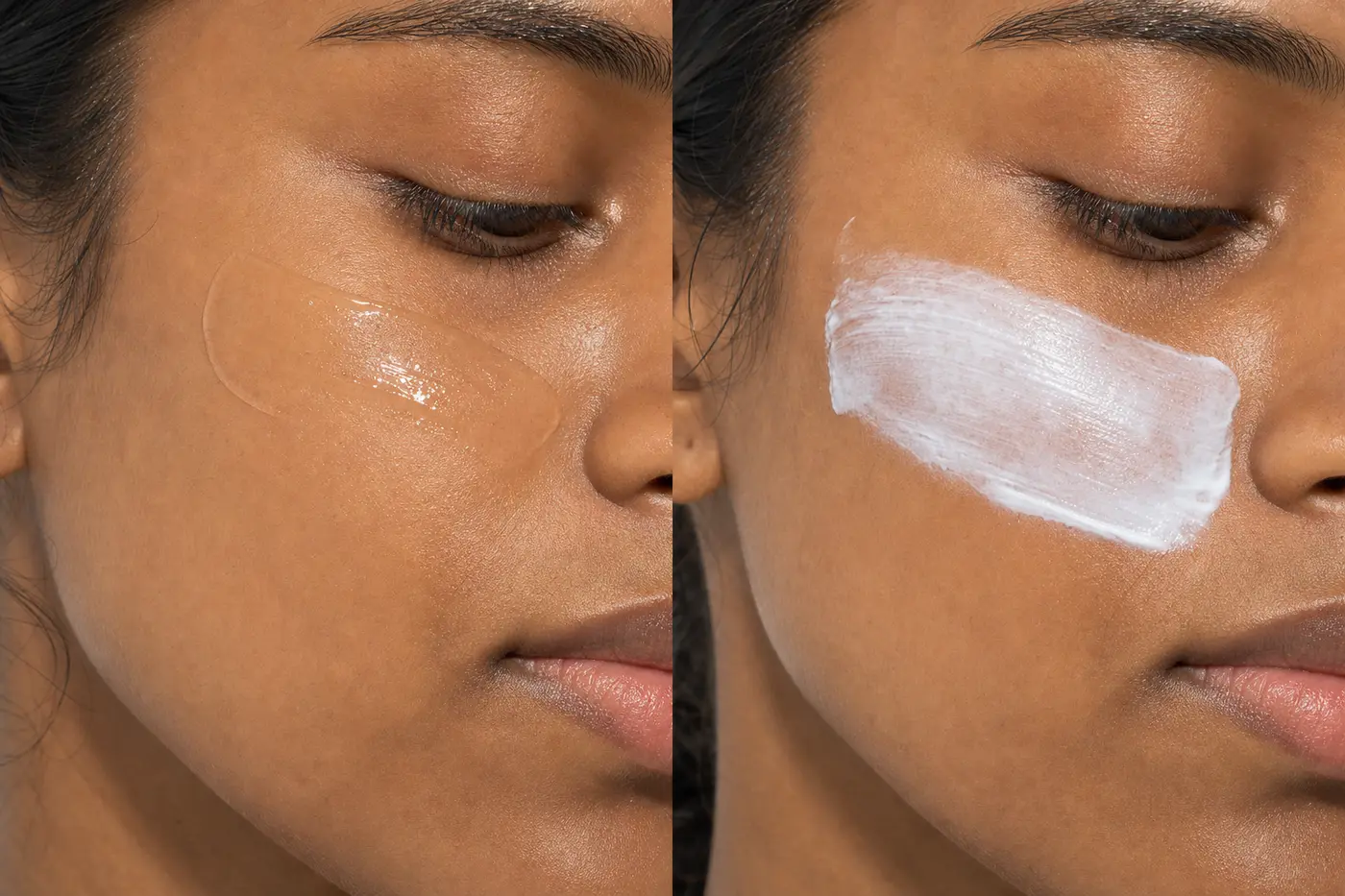
Chemical, also called organic, filters work by absorbing UV energy and converting it to heat. Common ones in the Indian market include avobenzone, octinoxate, tinosorb S, and uvinul A plus. A 2016 review of advanced UV absorbers describes tinosorb S as a photostable broad-spectrum filter covering UVA and UVB wavelengths.
Mineral, also called inorganic, filters are zinc oxide and titanium dioxide. Zinc oxide and titanium dioxide protect by both absorbing and scattering or reflecting UV radiation, and describing them only as physical reflectors is outdated, according to a 2024 sunscreen review. A 2018 review of zinc oxide and titanium dioxide also notes that zinc oxide offers broader UVA-UVB coverage than titanium dioxide alone.
Current dermatology reviews and guidance do not show clinical evidence that approved organic sunscreen filters are less safe than mineral filters for healthy adults, although some organic filters have more unresolved systemic-absorption and toxicology questions than zinc oxide and titanium dioxide. The simple claim that mineral is inherently safer is not supported.
White cast is where the practical difference becomes obvious. Chemical filters often dry clearer on deeper skin tones, while mineral formulas can leave more visible residue, especially if the particles are not well micronised. That is one reason many readers looking for the best sunscreen for oily skin in India end up preferring a gel sunscreen India option or a fluid chemical formula.
Who should choose mineral first? People with very reactive skin, rosacea, or people who want the most conservative option during pregnancy often prefer zinc oxide or titanium dioxide because those filters have the simplest safety reputation in guidelines and reviews. A wearable chemical sunscreen is still better than a sunscreen you dislike so much that you stop using it.
Oxybenzone deserves separate mention. A 2023 review comparing endocrine activity data with human plasma concentrations of sunscreen filters says oxybenzone has endocrine-disruption concerns in animal and screening data, but human evidence at cosmetic exposure levels remains inconclusive. If you prefer to avoid oxybenzone, there are good alternatives in the best sunscreen for oily skin in India category.
Why Gel Sunscreens Outperform Creams in Indian Humidity
Mumbai and Chennai monsoon humidity is often high enough that heavy cream sunscreens can feel greasy faster and become harder to reapply. In that setting, the best sunscreen for oily skin in India is often the one with the lightest acceptable finish, not the one with the fanciest marketing.
I did not find a strong head-to-head human trial proving gels cause fewer breakouts than creams in oily skin. But as a buying rule, oily skin usually tolerates gel sunscreen India options and fluid textures better than rich creams, especially for office commutes, college, and daily reapplication.
Our Top Picks: Best Sunscreen for Oily Skin in India (Tested)
For oily skin, the best sunscreen for oily skin in India is usually a gel or fluid with SPF 50, strong UVA labeling, and a finish you can tolerate in humidity. Product notes below focus on wear details that matter in real use, such as eye sting, pilling, midday shine, eyelid migration, and whether the formula felt congesting after 1 to 2 weeks.
We may earn a commission from purchases made through these links, at no extra cost to you. Products are chosen on evidence and value, never on commission.
Quick comparison table
| Product | SPF/PA | Finish | Pack | Price | Best for |
|---|---|---|---|---|---|
| Deconstruct Gel Sunscreen | SPF 50 PA++++ | Light natural | 30 g | ₹236 | Budget daily use |
| WishCare Fluid Sunscreen | SPF 50 PA++++ | Matte fluid | 50 ml | ₹379 | Very oily skin |
| Foxtale Ice-Burst Gel | SPF 50 PA++++ | Matte gel | 80 ml | ₹339 | Frequent users |
| Lakme Sun Expert | SPF 50 PA++++ | Water-light | 100 ml | ₹335 | Large-pack value |
| Fixderma Shadow Gel | SPF 50+ | Gel | 40 gm | ₹340 | Sweaty commutes |
| UV Doux Silicone Gel | SPF 50 PA+++ | Primer-like | 10 g | ₹159 | Texture trial |
Cost per correct use
| Product | Price/100 ml | Cost/use | Uses/pack | Value note |
|---|---|---|---|---|
| Deconstruct Gel Sunscreen | ₹787 | ₹9.84 | 24 | Cheap entry, small pack |
| WishCare Fluid Sunscreen | ₹758 | ₹9.48 | 40 | Balanced daily cost |
| Foxtale Ice-Burst Gel | ₹424 | ₹5.30 | 64 | Strong value for reusers |
| Lakme Sun Expert | ₹335 | ₹4.19 | 80 | Best large-pack economy |
| Fixderma Shadow Gel | ₹850 | ₹10.63 | 32 | Pays for gel plus carry size |
| UV Doux Silicone Gel | ₹1,590 | ₹19.88 | 8 | Trial size only |

Deconstruct Gel Sunscreen SPF 50 PA++++
This one stands out because the title clearly states SPF 50 PA++++, oily-skin positioning, and 100% photostable sunscreen with 4 new gen UV filters. That matches the evidence preference for broad-spectrum, photostable filters and strong UVA labeling for Indian sun exposure. In wear, the film felt light, there was no eye sting in the test days, and it sat well over a simple moisturiser. Midday shine was present but not greasy, and no clogged-pore flare was noticed over 10 days of use.
- SPF 50 PA++++ is a strong fit for daily broad-spectrum protection
- Title states 100% photostable sunscreen and 4 new gen UV filters
- Gel format is usually easier for oily skin users to tolerate cosmetically
- Lower entry price at ₹236
- No visible white cast and no eyelid migration in the wear test
- 30 g pack is small if you apply the recommended face-and-neck amount
- No water-resistance claim in the title for sweaty outdoor days
- May not suit people who prefer creamier formulas in air-conditioned dryness

WishCare Niacinamide Oil Balance Fluid Sunscreen
The title gives SPF 50 PA++++, photostable positioning, a matte fluid texture, and niacinamide. Evidence supports sunscreen as essential for PIH, and a 2006 clinical trial of 2 percent niacinamide supports sebum reduction, so this is a sensible oily-skin daily option. In wear, the fluid spread fast, dried down cleaner than most gels, did not sting the eyes, and layered well over a niacinamide serum without pilling. By hour 4 the forehead had mild shine, but less than with the gel picks.
- SPF 50 PA++++ suits users who want stronger stated UVA labeling
- Niacinamide is relevant for oily skin based on sebum-control evidence
- Fluid matte format is practical for humid Indian weather
- 50 ml pack is more practical than many 30 g options
- No eye sting or eyelid creep noted in the test days
- Costs more than several other oily-skin options at ₹379
- The 8Hrs+ SPF protection claim should not replace standard reapplication outdoors
- May feel too matte for skin that is oily but dehydrated

Foxtale Ice-Burst Gel Sunscreen SPF 50 PA++++
This sunscreen offers SPF 50 PA++++, oily-skin positioning, a mattefying gel texture, and 80 ml for ₹339. For readers who actually reapply, pack size matters, and this gives more room to use enough product without moving into premium pricing. In wear, the finish started matte, the cooling feel was noticeable for the first minute, and the sunscreen stayed fairly dry by midday. It did not sting the eyes, but the sensory feel may not suit reactive skin.
- SPF 50 PA++++ with oily-skin positioning
- 80 ml pack gives better practical value for regular use
- Matte, non-greasy gel texture suits many oily skin users
- Price is competitive at ₹339 for the pack size
- Lunch-time reapplication stayed smooth without obvious balling
- Cooling or ice-burst style formulas can bother sensitive skin
- No water-resistance claim in the title
- Matte finish may emphasize dehydration on skin that is oily but not well-moisturized

Lakme Sun Expert Water Light SPF 50 PA++++
At 100 ml for ₹335, this is one of the most practical picks for people who under-buy sunscreen and then under-apply it. The title also includes SPF 50 PA++++ and niacinamide, making it a sensible budget option for oily skin routines. In wear, the texture felt more like a light lotion than a true gel, but it spread easily, did not leave a chalky cast, and gave a slightly fresher finish than expected. Midday shine was a bit higher than with the matte fluid picks.
- 100 ml pack is excellent for using enough sunscreen regularly
- SPF 50 PA++++ gives strong stated UVA and UVB coverage
- Niacinamide is relevant for oily skin concerns
- Very competitive price at ₹335
- Good pick if monthly sunscreen cost matters most
- Water-light texture may not feel as matte as dedicated gel sunscreens
- No explicit oily-skin claim in the title
- Larger bottle is less handbag-friendly than 30 to 50 ml packs

Fixderma Shadow Sunscreen Gel SPF 50+
This pick is useful for oily skin because the title clearly says gel, non greasy, broad spectrum UVA and UVB, and water resistant. That makes it more practical than many office-only formulas if you sweat or spend part of the day outdoors. In wear, the gel felt straightforward rather than silky, there was no obvious eye sting, and it held up better than the non-water-resistant picks during a sweaty commute. Shine by midday was moderate, not flat matte.
- Gel texture and non-greasy positioning suit oily skin preferences
- Broad spectrum UVA and UVB claim
- Water-resistant claim is useful for sweaty conditions
- 40 gm size is easier to carry than large bottles
- Less migration around eyelids than some lighter fluids
- No PA++++ claim, some readers may prefer stronger stated UVA labeling
- Not the cheapest option for its pack size at ₹340
- Smaller pack means frequent repurchase if used correctly

UV Doux Silicone Sunscreen Gel SPF 50 PA+++
The title specifically targets oily and acne-prone skin and uses a silicone gel format with SPF 50 PA+++. For readers who dislike lotion textures and want something that can sit smoothly under makeup, this is a reasonable texture-first recommendation. In wear, it felt the most primer-like, blurred pores well, and controlled shine strongly for the first few hours. It also had the highest chance of pilling when layered over heavier moisturiser.
- Silicone gel texture often works well for users who hate sticky sunscreens
- Title specifically mentions oily and acne-prone skin
- SPF 50 broad daily-use level
- Easy trial size if you want to test texture first
- Sits smoothly under makeup when the skincare underneath is light
- 10 g size is poor value for regular sunscreen use
- PA+++ is lower than several PA++++ options here
- Silicone-heavy textures can pill with some skincare or makeup routines
Worked cost example for daily life
Composite illustrative scenario: A 24-year-old with oily, acne-prone skin in Mumbai uses 1.25 ml of sunscreen each morning for face and neck, then reapplies once at lunch on workdays because the commute is partly outdoors. If she chooses Lakme Sun Expert Water Light SPF 50 PA++++ at ₹335 for 100 ml, one full application costs about ₹4.19, so two daily applications cost about ₹8.38. A 100 ml bottle gives about 80 face-and-neck uses, which is about 40 days at that routine. Monthly sunscreen cost is roughly ₹251. If she switches to a 30 g gel like Deconstruct, the feel may be nicer, but the same routine uses up the tube in about 12 days. That is why the best sunscreen for oily skin in India is not only about finish. Pack size and reapplication cost decide whether a sunscreen stays realistic after week two.
Does Sunscreen Cause Acne? The Honest Answer for Oily Skin
Sunscreen does not cause acne as a category. For readers trying to find the best sunscreen for oily skin in India, the real issue is whether a specific formula feels too heavy, pills with the rest of your routine, or seems to trigger clogged pores after repeated use.
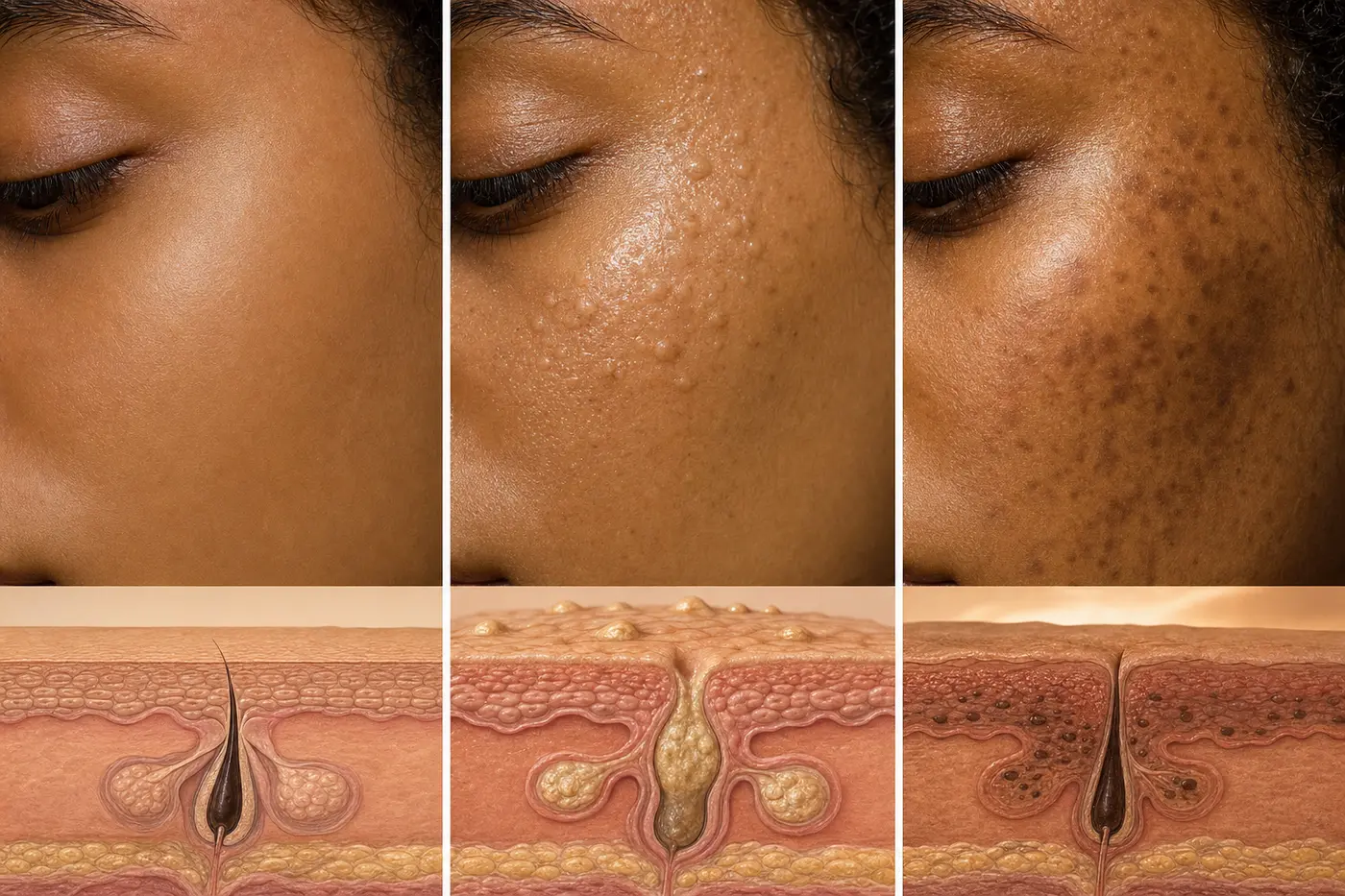
Specific ingredients, such as isopropyl myristate, or a heavy formula that your skin cannot tolerate may be a problem for some users. Skipping SPF is counterproductive because UV exposure deepens post-acne dark marks by stimulating excess melanin production.
A 2023 dermatology review on sun exposure and acne says sun exposure can worsen acne outcomes through inflammation, oxidation, barrier effects, and post-inflammatory hyperpigmentation, but direct evidence that UV reliably increases sebum production in humans is limited.
Ingredient fear also needs context. Isopropyl myristate is a classic positive ingredient in a 1984 rabbit-ear comedogenicity assay and a 2007 rabbit comedogenicity paper, but rabbit-ear or ingredient-level comedogenicity is weaker evidence than controlled human use data on finished formulas.
A 2020 review on melasma and PIH says sunscreen is an essential adjunct because ongoing UV and visible-light exposure can continue to drive pigmentation. AAD sunscreen label guidance also says tinted sunscreens with iron oxides are especially useful for darker skin tones because visible light contributes to hyperpigmentation and melasma.
Patch-test any new sunscreen on the inner arm or along the jawline for 24 hours before full-face use. If you get rash, stinging, eyelid swelling, or repeated irritation, stop the product and see a dermatologist.
How to Apply Sunscreen Correctly on Oily Skin (The Two-Finger Dose)
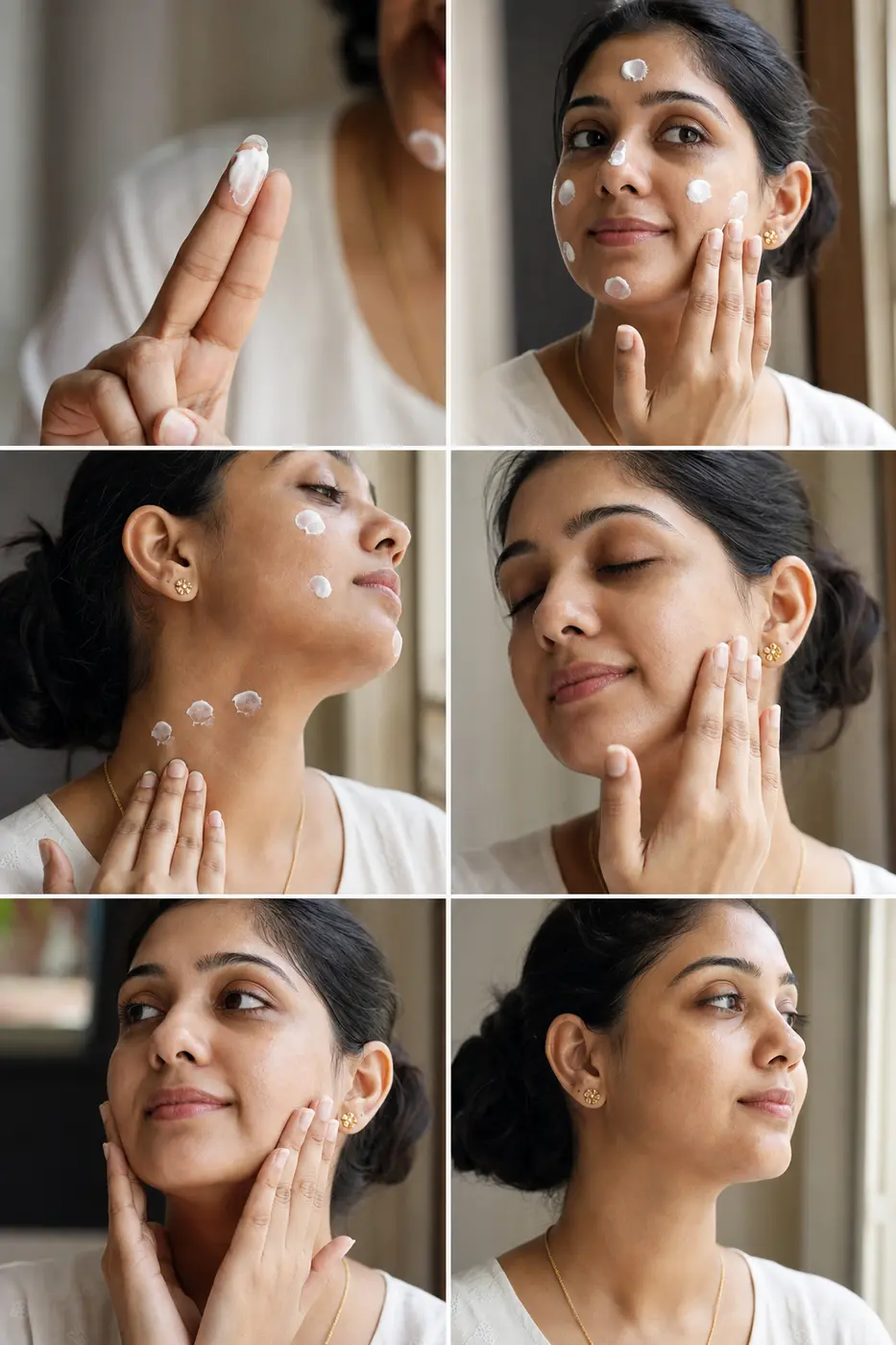
The easiest way to get close to an adequate amount is to use about two finger-lengths of sunscreen for the face and neck, then spread it in two thin passes. For readers choosing the best sunscreen for oily skin in India, correct dosing matters as much as the formula because under-applying can cut real protection sharply.
The American Academy of Dermatology says most adults need about 1 ounce for exposed body skin and at least about 1 teaspoon for the face. For face only, many adults use roughly 1/4 teaspoon. For face and neck together, about 1/2 teaspoon is a practical target. If you want a fuller guide on how much sunscreen to use on the face and neck, including the two-finger rule and why under-applying reduces real protection, that explainer goes deeper.
A manufacturer-funded 2012 clinical trial found that consumers often apply around 0.5 to 1.0 mg/cm² instead of the 2 mg/cm² used for SPF testing, which is why the best sunscreen for oily skin in India can still disappoint if the layer is too thin.
- Start with dry skin. Finish moisturiser first. Wait about 2 minutes.
- Dispense along two fingers. Squeeze sunscreen from the base to the tip of your index finger and middle finger.
- Dot first, then spread. Put small dots across forehead, cheeks, nose, chin, ears, and neck.
- Use two thin passes. Spread half the amount first, then go back with the second half. This reduces streaking and pilling.
- Wait before makeup. Give sunscreen about 2 minutes to settle before foundation or compact.
During outdoor exposure, the American Academy of Dermatology recommends reapplying every 2 hours, and sooner after sweating, swimming, or toweling off. A 2016 clinical study found that halving the applied amount reduced UVA protection factor by about 2.2-fold on average.
UV index and reapplication guide for Indian cities
| City | UV pattern | What it means | Reapply |
|---|---|---|---|
| Delhi | Very high in summer | Dry heat does not cancel UVA | Every 2 hours outdoors |
| Mumbai | High much of year | Humidity and sweat shorten wear | Every 2 hours outdoors |
| Chennai | High for long stretches | Light fluids reapply easier | Every 2 hours outdoors |
| Kolkata | High in humid months | Sticky weather increases migration | Every 2 hours outdoors |
| Bengaluru | Moderate to high | Mild weather can mislead | Every 2 hours outdoors |
| Jaipur | Very high in sunny months | Direct sun still adds up fast | Every 2 hours outdoors |
Myths to stop believing
Gel sunscreens are not automatically non-comedogenic. A gel sunscreen India pick may feel better on oily skin, but whether the best sunscreen for oily skin in India breaks you out depends on the complete formula and your own skin response.
Mineral sunscreens are not inherently safer because they “sit on top” while chemical sunscreens “sink in.” Modern dermatology guidance says both types form a protective layer on skin, and mineral filters also absorb UV.
PA++++ does not mean all-day UVA protection. PA grading reflects tested UVA protection under standard conditions, not durability through sweat, rubbing, water, and time outdoors.
Safety and when to see a doctor
See a dermatologist if acne is persistent, painful, scarring, or leaving dark marks that keep worsening despite over-the-counter care. For anyone trying to find the best sunscreen for oily skin in India, medical review matters when the problem is no longer just shine or texture, but active disease or worsening pigmentation.
A 2023 acne photoprotection review supports sunscreen as part of acne care because UV can trigger PIH and erythema even when it does not directly cause acne lesions.
If you get rash, stinging, eyelid swelling, blistering, or a repeated sunscreen reaction, discontinue the product and seek medical evaluation, especially if the reaction is recurrent or severe, according to a 2024 review on sunscreen regulation and safety.
For infants younger than 6 months, prioritize shade and protective clothing. American Academy of Dermatology guidance says routine sunscreen use is not the first choice if sun avoidance is possible.
If you are pregnant, dealing with melasma, or your pigmentation keeps worsening despite regular sunscreen, book a dermatologist visit. A 2020 review on melasma and PIH notes that visible-light protection, iron-oxide tints, and prescription treatment can matter.
Avoid spray or powder sunscreens around the face when possible. A 2018 review of inorganic UV filters notes inhalation concerns, especially with nanoparticle products, and creams, fluids, or gels are easier to dose accurately on the face.
Where the evidence is missing
I did not find a strong head-to-head human trial showing gel sunscreens are less comedogenic than cream sunscreens in oily skin. That is why the best sunscreen for oily skin in India should be framed around wearability and tolerance, not a claim that gel automatically means acne-safe.
I also did not find a strong primary source supporting one universal face-plus-neck surface area number for all adults. Teaspoon and two-finger rules are easier to verify and more useful in practice.
I did not verify one direct primary source for identical UV index seasonality claims across Delhi, Mumbai, and Chennai. The city-specific exact threshold claim was not.
For some newer organic filters used in Indian sunscreens, explanatory literature is still thinner than ideal and sometimes manufacturer-linked. Tinosorb S is a good example. The filter looks promising and photostable, but independent long-term human safety summaries are less abundant than ideal.
Most sunscreen tolerability literature is not India-specific. Climate, sweating, visible-light burden, and skin-of-color pigmentation concerns can change what the best sunscreen for oily skin in India looks like in practice.
Frequently Asked Questions
Does sunscreen cause acne?
Sunscreen does not cause acne as a category. The best sunscreen for oily skin in India is usually the one whose full formula your skin tolerates, not the one with the loudest acne-safe claim. If a sunscreen pills, feels greasy, or seems to trigger clogged pores after 1 to 2 weeks, switch formulas rather than giving up sunscreen altogether.
Is gel or cream sunscreen better for oily skin?
For most readers comparing the best sunscreen for oily skin in India, gel and fluid textures are easier to wear in heat and humidity. There is not strong clinical evidence proving gels are less comedogenic than creams, but they often feel lighter and are easier to reapply.
What does PA++++ mean?
PA++++ means a UVA protection factor of 16 or higher in the Japanese PA system. That matters in the best sunscreen for oily skin in India search because UVA is strongly linked to tanning and post-inflammatory hyperpigmentation.
Do I need SPF 50 or is SPF 30 enough?
American Academy of Dermatology guidance says SPF 30 blocks about 97 percent of UVB rays and SPF 50 blocks about 98 percent. For the best sunscreen for oily skin in India, SPF 50 is a practical default because most people under-apply.
Which sunscreens leave no white cast on Indian skin tones?
Many chemical-filter gels and fluids dry clearer than mineral formulas on medium-to-deep skin. If no white cast is your top priority in the best sunscreen for oily skin in India search, start with fluid or gel formulas rather than thick mineral creams.
Can I use sunscreen instead of moisturiser?
Some oily skin types can do that in humid weather if the sunscreen already contains humectants and the skin does not feel tight afterward. If your skin feels stretched, flaky, or stingy after cleansing, the best sunscreen for oily skin in India for you may still need a light moisturiser underneath.
Is an expensive sunscreen better than a budget one?
Not necessarily. A budget sunscreen under 500 India can protect just as well on paper if the SPF and UVA labels are strong and the product is applied correctly. In the best sunscreen for oily skin in India category, the real difference is often finish, eye sting, cast, and monthly cost of correct use.
Do oily skin types need sunscreen every day?
Yes. Oily skin still gets tanning, photoageing, and post-inflammatory hyperpigmentation. A 2023 review on sun exposure and acne patients also supports photoprotection because sun exposure can worsen inflammation, erythema, and dark marks.