Why Lower Ab Workouts Matter
Many women notice that despite doing endless crunches, the lower stomach remains soft and unresponsive. Biomechanically, this happens because in many common core exercises (like standard crunches), the upper fibers of the rectus abdominis dominate the movement, while the hip flexors often compensate. This leaves the lower abdominal fibers under-stimulated.
That’s why a focused lower abs workout is essential. While no exercise will “magically flatten your stomach,” targeted training can help tone the lower abdomen, enhance pelvic stability, and improve overall core function.
Weak Lower Abs
Weak lower abdominal muscles don’t just affect appearance—they influence body mechanics. Poorly trained lower abs can contribute to anterior pelvic tilt (swayback), where the pelvis tips forward. This posture places extra stress on the lumbar spine, increasing the risk of lower back pain.
In daily life, this translates to difficulty lifting, bending, and maintaining proper alignment.
Why It Matters for Women
For women, weak lower abs can become especially problematic due to hormonal and life-stage factors:
- During pregnancy, the hormone relaxin loosens connective tissue, including the linea alba (the midline seam of the abdominal wall). This increases the risk of diastasis recti (abdominal separation).
- After childbirth, many women experience instability, back discomfort, and difficulty regaining abdominal strength.
Targeted training of the deep core muscles (especially the transversus abdominis and pelvic floor) provides both preventive and rehabilitative benefits. It helps restore core stability, improves posture, and reduces long-term back issues.
Understanding Lower Ab Anatomy
To train effectively, it’s important to understand the muscles involved:
- Rectus Abdominis: The superficial “six-pack” muscle. The lower fibers are the ones we specifically aim to activate.
- Transversus Abdominis (TVA): The body’s natural corset. It stabilizes the waist and lower back by creating intra-abdominal pressure.
- Obliques (internal and external): Crucial for trunk rotation, lateral flexion, and overall stability.
- Hip Flexors: Assist in leg-lifting movements but should not dominate the exercise.
Key takeaway: Effective lower ab workouts don’t just build aesthetics—they stabilize your entire core system.
Benefits of Lower Ab Workouts
- Toned lower abdomen – strengthens the hard-to-reach region.
- Spinal support and posture – reduces swayback and slouching.
- Core stability – protects against injury during daily movements.
- Enhanced athletic performance – improves running, yoga, and weightlifting.
- Pelvic floor health – particularly supportive during postpartum recovery.
Principles of Lower Abs Training
- Breathing: Exhale forcefully during contraction to activate the TVA and increase intra-abdominal pressure, which stabilizes the spine.
- Slow, controlled movements: This maximizes time under tension and ensures the abs—not momentum—are doing the work.
- Tighten your core: Pull your belly button inward toward the spine (without holding your breath). This engages the deep muscles.
- Variety: Combining dynamic moves (like leg raises) and static holds (like planks) ensures full activation.
- Protect your back: If the lower back lifts off the floor, reduce the range of motion or regress the movement.
The 12 Best Lower Ab Workouts
Each exercise below includes muscles targeted, instructions, breathing cues, common mistakes, progressions, and regressions.
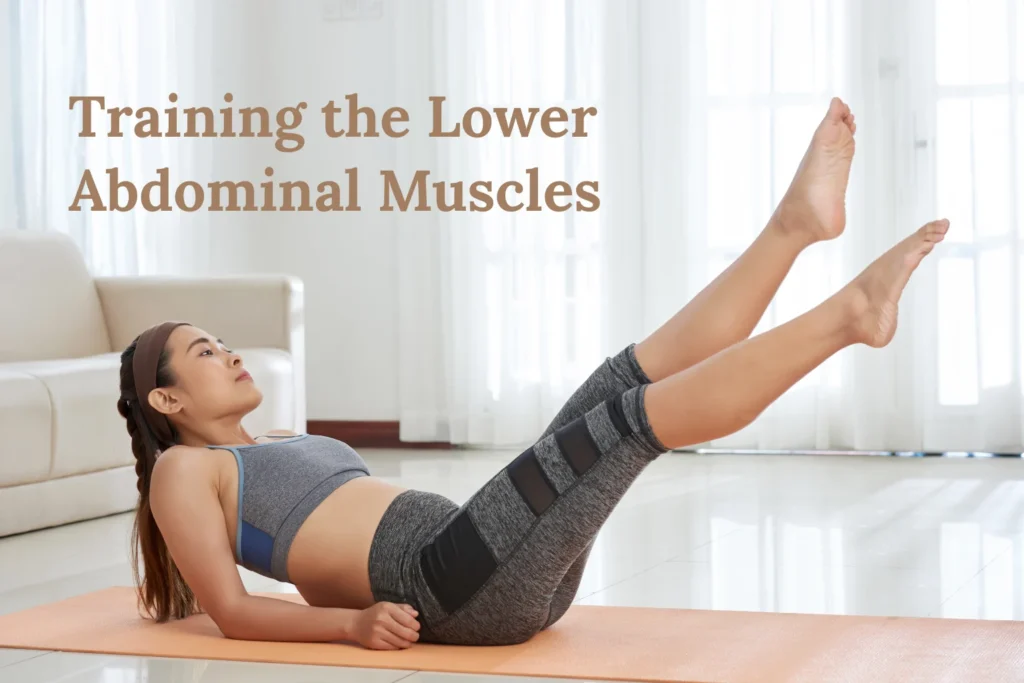
1. Leg Raises
- Target: Lower rectus abdominis, hip flexors
- Steps:
- Lie flat with hands under your hips.
- Lift legs to 90°.
- Lower slowly without touching the ground.
- Breathing: Inhale lowering, exhale lifting.
- Common Mistake: Lower back arching. Fix: Keep core braced and limit range.
- Progression: Hold 2 seconds at the bottom.
- Regression: Bend knees slightly.
2. Reverse Crunch
- Target: Lower rectus abdominis
- Steps:
- Lie down with knees bent.
- Contract abs to lift hips off the mat.
- Breathing: Exhale lifting hips, inhale lowering.
- Common Mistake: Swinging legs. Fix: Move slowly.
- Progression: Add ankle weights.
- Regression: Reduce hip lift height.
3. Flutter Kicks
- Target: Lower abs, hip flexors
- Steps:
- Lie flat, legs extended.
- Alternate small kicks.
- Breathing: Steady rhythm, exhale bracing abs.
- Mistake: Kicks too high. Fix: Keep low.
- Progression: Increase duration.
- Regression: Place hands under hips.
4. Scissor Kicks
- Target: Lower abs, obliques
- Steps:
- Cross legs alternately.
- Maintain controlled pace.
- Breathing: Exhale with effort.
- Mistake: Rushed reps. Fix: Slow down.
- Progression: Add ankle weights.
- Regression: Bend knees.
5. V-Ups
- Target: Entire rectus abdominis
- Steps:
- Lie flat, arms overhead.
- Lift legs and arms to form V.
- Breathing: Exhale lifting.
- Mistake: Momentum. Fix: Move controlled.
- Progression: Hold top position.
- Regression: Perform single-leg V-ups.
6. Dead Bug
- Target: TVA, rectus abdominis
- Steps:
- Lie on back, arms up.
- Lower opposite arm and leg.
- Breathing: Exhale lowering.
- Mistake: Arching back. Fix: Press spine to mat.
- Progression: Add light weights.
- Regression: Keep knees bent.
7. Mountain Climbers
- Target: Lower abs, shoulders
- Steps:
- High plank position.
- Drive knees to chest.
- Breathing: Exhale with each drive.
- Mistake: Hips bouncing. Fix: Keep steady.
- Progression: Increase speed.
- Regression: Slow down.
8. Alligator Walk
- Target: TVA, rectus abdominis
- Steps:
- Low plank.
- Crawl forward slowly.
- Breathing: Exhale moving forward.
- Mistake: Sagging hips. Fix: Brace abs.
- Progression: Longer distance.
- Regression: Hold plank.
9. Hip Lift
- Target: Lower rectus abdominis
- Steps:
- Legs vertical.
- Lift hips using abs.
- Breathing: Exhale lifting.
- Mistake: Pushing with legs. Fix: Contract abs.
- Progression: Add hold at top.
- Regression: Smaller lift.
10. Body Saw
- Target: TVA, shoulders
- Steps:
- Forearm plank.
- Rock forward and back.
- Breathing: Exhale pushing back.
- Mistake: Arching back. Fix: Keep aligned.
- Progression: Increase range.
- Regression: Hold static plank.
11. Bicycle Crunch
- Target: Obliques, lower abs
- Steps:
- Lie flat, alternate elbow to knee.
- Extend opposite leg.
- Breathing: Exhale each twist.
- Mistake: Pulling neck. Fix: Relax shoulders.
- Progression: Slow tempo.
- Regression: Keep feet higher.
12. Hanging Leg Raise
- Target: Lower abs, hip flexors
- Steps:
- Hang from bar.
- Lift legs slowly.
- Breathing: Exhale lifting.
- Mistake: Swinging. Fix: Stabilize body.
- Progression: Straight-leg raises.
- Regression: Bent-knee raises.
Sample Lower Abs Workout Routine
Beginner Plan
- Leg Raises: 8 reps x 2
- Dead Bug: 8 reps each side
- Flutter Kicks: 15 seconds x 2
- Rest: 45–60 seconds between sets
Advanced Plan
- Hanging Leg Raises: 12 reps x 3
- Body Saw: 12 reps x 3
- V-Ups: 15 reps x 3
- Mountain Climbers: 30 seconds x 3
- Rest: 20–30 seconds between sets
Case Study: Maria’s Transformation
Maria, 32, a mother of two, often felt lower back pain when lifting her children and described her torso as unstable. Her physiotherapist recommended a 10-week lower abs plan:
- Dead Bug: 8 reps each side
- Reverse Crunch: 12 reps
- Hip Lift: 10 reps
- Flutter Kicks: 15 seconds
She trained 3 times per week with rest days in between. Initially, she overused her hip flexors, but by focusing on exhaling during contraction, she improved her technique.
After 10 weeks:
- She could lift a 5-kg box without back pain.
- Her posture visibly improved in before-and-after photos.
- She reported feeling more stable and confident in her movements.
The Myth of Targeted Fat Burning
Many believe training the lower abs will “melt” belly fat. In reality, the body cannot burn fat from one area selectively.
Ab workouts strengthen and tone muscles, but fat loss depends on overall calorie balance and body composition. To see definition, pair core training with cardio and balanced nutrition.
The Crucial Role of Breathing and Pelvic Floor Activation
- Diaphragmatic breathing: Inhale deeply into your belly, letting it expand.
- Exhale fully: Draw the navel in, activating the TVA and pelvic floor.
This synergy forms the foundation of safe and effective core training, preventing pressure on the lower back and pelvic floor.
Progressive Overload in Ab Training
Just like any muscle group, abs need gradual challenge:
- Increase reps or sets.
- Reduce rest periods.
- Try harder variations (e.g., bent-knee raises → straight-leg raises).
This prevents plateaus and ensures steady progress.
Warm-Up and Cool-Down for Core Training
Warm-Up (dynamic):
- Cat-Cow (10 reps)
- Standing Leg Swings (10 each side)
- Torso Twists (10 reps)
Cool-Down (static):
- Cobra Stretch (20 sec)
- Seated Forward Fold (20 sec)
- Hip Flexor Stretch (20 sec each side)
Glossary of Key Terms
- Rectus Abdominis: Superficial “six-pack” muscle.
- Transversus Abdominis (TVA): Deep core stabilizer.
- Diastasis Recti: Separation of the abdominal wall.
- Anterior Pelvic Tilt: Forward tipping of the pelvis.
- Intra-abdominal Pressure: Pressure inside the abdomen that stabilizes the spine.
FAQs About Lower Ab Workouts
Q1. What is the best ab workout for lower stomach?
Leg raises, reverse crunches, and hanging leg raises provide strong activation of the lower abdominal fibers.
Q2. How to workout lower abs at home without equipment?
Exercises like flutter kicks, dead bugs, and mountain climbers are highly effective and require only a mat.
Q3. What is the best ab workout for lower stomach fat?
Spot reduction isn’t possible, but combining lower ab workouts with cardio and a healthy diet helps burn fat and reveal muscle.
Q4. How to workout lower abs without equipment?
Exercises like reverse crunches, leg raises, bicycle crunches, and dead bugs can be done at home with no equipment.
Q5. How often should I train lower abs?
Aim for 2–3 focused sessions per week, allowing at least one rest day in between.
Q6. Why are lower abs so hard to train?
The lower portion of the rectus abdominis is harder to isolate, and fat tends to store around the lower belly, making results slower.
Q7. Can lower ab workouts reduce belly pooch after pregnancy?
Yes, when combined with pelvic floor exercises and proper nutrition. But consult your doctor before starting postpartum workouts.