Why Women Should Not Skip Leg Day
The leg muscles—comprising the quadriceps, hamstrings, glutes, and calves—represent the largest muscle group in the human body. Together, they can account for more than 50% of total muscle mass. Because skeletal muscle tissue is metabolically active, well-developed legs play a decisive role in determining basal metabolic rate (BMR), meaning the number of calories the body burns at rest. Strong leg muscles also form the biomechanical foundation for upright walking, pelvic stability, and spinal alignment. Neglecting them can therefore impair both metabolic health and structural stability.
Why Many Women Avoid Leg Workouts
One of the main reasons women hesitate to engage in strength training for the lower body is the fear of “bulking up.” This concern is largely unfounded. Muscle hypertrophy (growth in muscle size) depends heavily on testosterone, a hormone that men produce at significantly higher levels. Women, by contrast, have approximately 10 to 20 times lower testosterone concentrations, while estrogen dominates the hormonal profile. Estrogen itself supports muscle repair but does not drive hypertrophy to the same extent.
In practice, this means that women who train their legs regularly can expect increased muscle tone and definition, but not excessive bulk. Another point often overlooked: muscle tissue is denser than fat tissue. For the same body weight, a woman with higher muscle mass may appear leaner, with a more sculpted body composition, than someone with less muscle mass and higher fat proportion.
What Happens If You Ignore Leg Workouts?
The physiological consequences of neglecting lower-body training are measurable. Since the leg and gluteal muscles together constitute more than half of skeletal muscle mass, undertraining them results in a reduced basal metabolic rate, making long-term weight management more difficult.
From a biomechanical perspective, weak leg muscles can lead to chain reactions in posture and joint health. For example, insufficient quadriceps and gluteal strength may contribute to pelvic misalignment, which in turn can increase strain on the lumbar spine. Weak hamstrings can destabilize the knee joint, heightening the risk of overuse injuries such as patellar tendonitis. Over time, reduced lower-body strength also increases fall risk and impairs mobility in older age.
The Proven Benefits of Leg Training for Women
Strength and Functional Capacity
Leg strength supports nearly every daily activity: climbing stairs, lifting children, carrying shopping bags, or standing for long periods. Strong legs reduce fatigue and enhance independence throughout life.
Fat Loss and Metabolic Health
Exercises like squats and deadlifts engage large muscle groups, which significantly increases caloric expenditure. This creates not only immediate energy burn but also a prolonged excess post-exercise oxygen consumption (EPOC), meaning the body continues to burn calories at an elevated rate after training.
Hormonal and Bone Health
Weight-bearing exercise stimulates the release of growth-promoting hormones and improves insulin sensitivity. For bone health, mechanical loading plays a central role. According to Wolff’s Law, bones adapt structurally to the stresses placed upon them: compressive and tensile forces stimulate osteoblast activity, leading to increased bone mineral density. For women, this is an effective preventive strategy against osteoporosis.
Mobility and Stability
Balanced development of quadriceps, hamstrings, and glutes stabilizes the hip and knee joints. This reduces injury risk and ensures smoother, pain-free movement patterns, which is particularly relevant during pregnancy or in perimenopause when ligament stability can decrease.
Anatomical Basics: Which Muscles Do We Train?
- Quadriceps (Musculus quadriceps femoris): Located on the front of the thigh, responsible for knee extension. Essential for standing up, climbing, and jumping.
- Hamstrings: Situated at the back of the thigh, responsible for knee flexion and hip extension. Important for walking, sprinting, and bending.
- Gluteal muscles (gluteus maximus, medius, minimus): Form the buttock region, crucial for hip extension, abduction, and rotation. Stabilize the pelvis during locomotion.
- Calf muscles (gastrocnemius and soleus): Located on the back of the lower leg, responsible for plantar flexion of the ankle. Necessary for walking, running, and balance.
Warming Up and Cooling Down
Before leg training, the body should be prepared with dynamic warm-ups. This increases circulation, improves joint mobility, and primes the nervous system. Examples include bodyweight squats, hip circles, and leg swings.
After training, stretching the hamstrings, quadriceps, and calves helps maintain flexibility and reduce post-exercise muscle soreness. Foam rolling can further assist in recovery by enhancing blood flow to trained muscles.
The Best Leg Workouts for Women
Squats
The squat is a fundamental movement pattern. It engages quadriceps, hamstrings, glutes, and the core.
Technique Tip: Keep the knees aligned over the toes and avoid inward collapse (valgus). Maintain a neutral spine throughout the movement.
Common Mistake: Rounding the lower back or allowing heels to lift from the ground.
Deadlifts
Deadlifts primarily target the posterior chain (hamstrings, glutes, lower back). Romanian deadlifts emphasize hamstrings, while single-leg deadlifts challenge balance.
Technique Tip: Hinge at the hips rather than bending the lower back. Keep the barbell or dumbbells close to the body.
Common Mistake: Overarching or rounding the spine, which increases lumbar stress.
Lunges
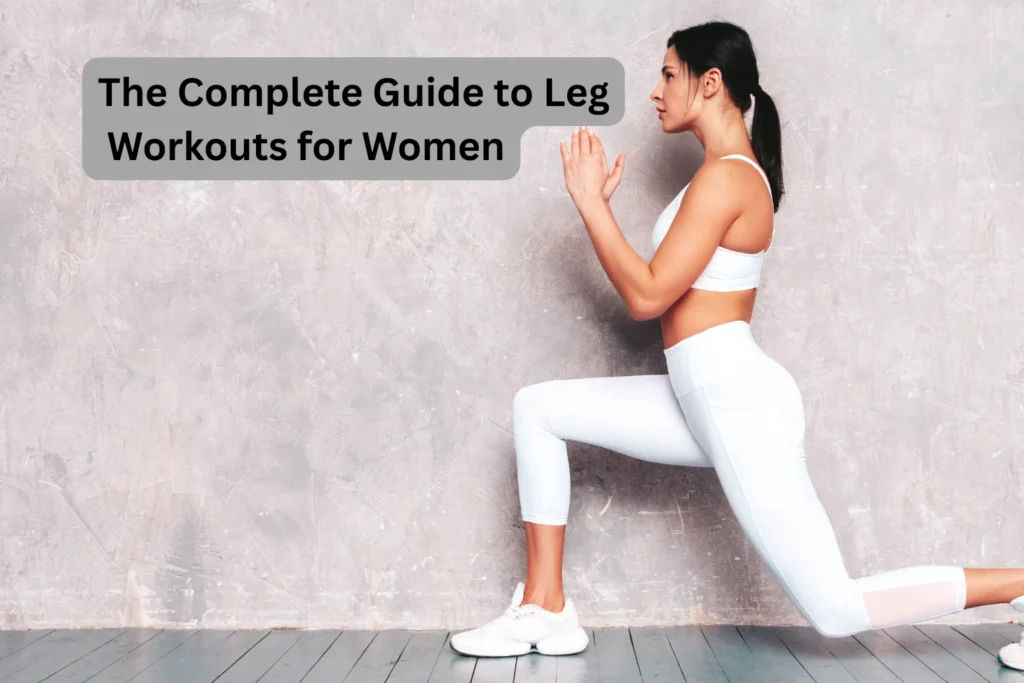
Lunges train the quads, glutes, and stabilizing muscles. Variations include forward, reverse, lateral, and Bulgarian split squats.
Technique Tip: Keep the torso upright, step long enough to ensure the front knee remains behind the toes.
Common Mistake: Letting the front knee collapse inward or stepping too narrowly, which destabilizes the movement.
Hip Thrusts and Glute Bridges
These are highly effective for glute activation.
Technique Tip: Drive through the heels, maintain a neutral neck position, and contract the glutes fully at the top.
Common Mistake: Hyperextending the lower back instead of using glute power.
Step-Ups
Step-ups mimic daily activities like climbing stairs.
Technique Tip: Place the whole foot on the step and push through the heel.
Common Mistake: Using momentum rather than controlled strength.
Designing a Leg Day Workout
Effective leg training follows the principle of progressive overload. To stimulate muscle adaptation, the training stimulus must be gradually increased—whether by adding weight, performing more repetitions, or reducing rest times.
Beginner Plan (30–40 minutes):
- Goblet Squat: 3 × 12 reps
- Reverse Lunge: 3 × 10 reps per leg
- Glute Bridge: 3 × 15 reps
- Step-Up: 3 × 10 reps per leg
Intermediate Plan (45–60 minutes):
- Back Squat: 4 × 8 reps
- Walking Lunge: 3 × 12 reps per leg
- Romanian Deadlift: 4 × 10 reps
- Bulgarian Split Squat: 3 × 8 reps per leg
- Hip Thrust: 4 × 12 reps
Advanced Plan (60–75 minutes):
- Front Squat: 4 × 6 reps
- Weighted Bulgarian Split Squat: 4 × 10 reps per leg
- Single-Leg Deadlift: 4 × 8 reps per leg
- Leg Press: 4 × 12 reps
- Barbell Hip Thrust: 5 × 10 reps with progressive overload
The Role of Nutrition for Training Success
Nutrition is the foundation of muscle adaptation and recovery.
- Proteins: Crucial for muscle protein synthesis. Recommendation: 1.6–2.2 g per kg of body weight daily.
- Carbohydrates: Stored as glycogen in muscles, they provide energy for high-intensity leg training. Adequate intake improves performance and recovery.
- Hydration: Water is essential for electrolyte balance, muscle contraction, and nutrient transport. Even mild dehydration reduces strength performance.
Training in Harmony with the Female Cycle
The menstrual cycle affects energy levels and recovery. Adapting training to cycle phases can optimize results.
- Follicular Phase (after menstruation): Rising estrogen supports energy, strength, and recovery. Ideal for heavy strength training and new personal records.
- Luteal Phase (before menstruation): Progesterone dominance may lower energy and increase fatigue. Focus on moderate training intensity, higher repetitions, or technical refinement.
A Real-Life Example: Sarah’s Transformation
Sarah, a 34-year-old mother of two, introduced structured leg training into her weekly routine. After six months:
- She reduced her body fat percentage by 5 percentage points, verified via bioelectrical impedance analysis.
- Strength tests showed a 20% increase in her squat performance.
- She reported significant relief from cycle-related symptoms, including abdominal discomfort and fatigue.
- Her posture improved, with reduced lumbar tension during prolonged standing.
This illustrates how measurable improvements in composition, strength, and well-being can be achieved with consistent leg training.
Glossary of Key Terms
- Progressive overload: Continuous increase in training stimulus to stimulate adaptation.
- Hypertrophy: Increase in muscle fiber cross-sectional area.
- Valgus position: Inward collapse of the knees during movement.
- Posterior chain: The muscle group on the backside of the body, including glutes, hamstrings, and lower back.
FAQs on Leg Workouts for Women
Q1. Do leg workouts increase testosterone in women?
Leg workouts may cause a small, temporary rise in testosterone, but women’s natural levels are too low to cause bulky muscle growth. Instead, they help tone and shape the legs.
Q2. What are good leg workouts for beginners?
Goblet squats, reverse lunges, glute bridges, and step-ups are excellent for starting out. They build strength without overwhelming the body.
Q3. How many times a week should women train legs?
Training legs two to three times a week with rest days in between is ideal for results without overtraining.
Q4. Can dumbbell leg workouts be as effective as machines?
Yes. Dumbbells challenge balance and stability while strengthening muscles, making them just as effective, if not more so, than machines.
Q5. Are leg workouts good for fat loss?
Absolutely. Because they target large muscles, leg workouts burn more calories and boost metabolism, supporting long-term fat loss.
Conclusion
Leg workouts are not optional—they are a fundamental component of women’s health and fitness. By training the largest muscle group, women enhance metabolism, strengthen bones, stabilize joints, and build long-term resilience. When combined with proper nutrition and an understanding of hormonal cycles, leg training becomes a scientifically sound strategy for sustainable health and performance.