
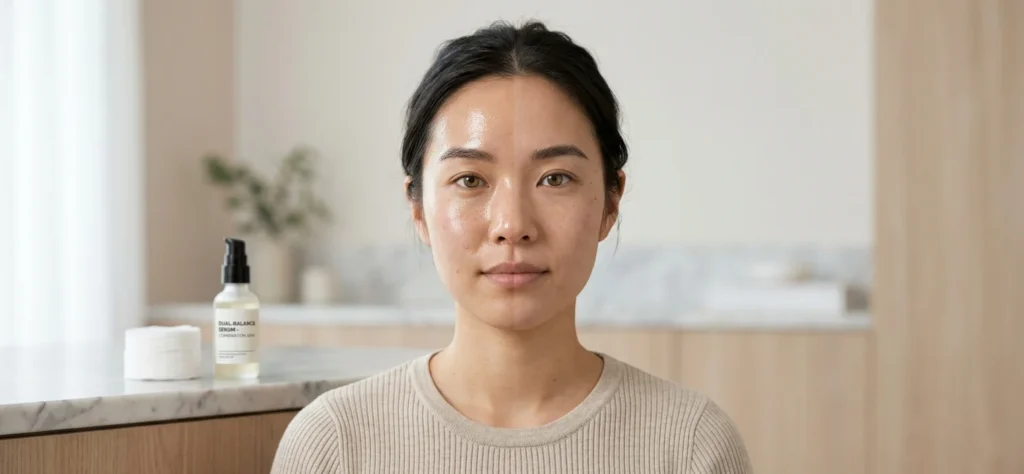
Many people experience a confusing skin state where the face appears oily but still feels tight, dull, or uncomfortable. This condition is not contradictory—it reflects an imbalance between sebum (oil) production and water content in the skin.
Understanding this imbalance requires looking beyond surface oiliness and focusing on skin barrier function, hydration levels, and internal triggers. This guide provides a structured, science-backed explanation along with practical strategies you can apply immediately.
Skin Types vs. Skin Conditions
Understanding this distinction is essential for accurate skincare decisions.
Types Of Skin
Skin type is largely genetically determined and influenced by:
- Sebum (oil) production
- Pore size
- Hormonal baseline
Common skin types:
- Oily
- Dry
- Combination
- Normal
Skin Conditions
Skin conditions are dynamic and change over time, influenced by:
- Hormones
- Climate
- Skincare habits
- Internal health
Dehydration is a skin condition, not a skin type.
What Is Dehydrated Skin?
Dehydrated skin refers to low water content in the epidermis, not lack of oil.
The Mechanism (Scientific Explanation)
The key process involved is:
Transepidermal Water Loss (TEWL)
TEWL is the process where water evaporates from the skin surface.
When the skin barrier is damaged:
- Water escapes more easily
- Skin becomes dehydrated
- Oil glands compensate by producing excess sebum
Result: Oily yet dehydrated skin
The Crucial Role of the Skin Barrier
The outermost layer of your skin, the stratum corneum, works like a protective shield.
Brick and Mortar Model:
- Corneocytes (cells) = Bricks
- Lipids (fats) = Mortar
When intact:
- Locks in moisture
- Protects from irritants
When damaged:
- Increased TEWL
- Sensitivity
- Oil overproduction
- A weak barrier is the core reason behind oily + dehydrated skin.
How Is Dry Skin Different from Dehydrated Skin?
| Factor | Dry Skin | Dehydrated Skin |
| Cause | Lack of oil | Lack of water |
| Type | Permanent | Temporary |
| Texture | Rough, flaky | Tight, dull |
| Oil production | Low | Can be high |
| Skin feel | Permanently tight, rough | Situationally tight, but oily and shiny |
Can Dehydrated Skin Be Oily at the Same Time?
Yes. This occurs when:
- Skin loses water
- Barrier weakens
- Oil glands overcompensate
This is why simply controlling oil often worsens the condition.
Causes of Dehydrated Oily Skin
Internal Factors
- Hormonal fluctuations → increased sebum production
- Stress (cortisol spikes) → triggers oil imbalance
- Poor hydration levels
External Factors
1. Harsh Skincare Products
- Disrupt the acid mantle (natural pH layer)
- Damage lipid barrier
- Increase TEWL
2. Over-cleansing
- Removes protective oils
- Signals skin to produce more oil
3. Over-exfoliation
- Weakens barrier
- Causes sensitivity + dehydration
4. Environmental Factors
- Air conditioning
- Pollution
- Weather changes
Common Signs You Have Oily but Dehydrated Skin
Do three or more of the following apply to your skin? This could be a clear indication of dehydration:
✔ Oily shine but tight feeling
✔ Skin feels dry after washing
✔ Makeup appears patchy
✔ Sudden fine lines
✔ Dull or tired look
✔ Breakouts despite oiliness
✔ Increased sensitivity
Identifying Dehydrated Skin (Simple Test)
Pinch Test:
Gently pinch your cheek:
- Wrinkles quickly → dehydration
- Smooth bounce → well hydrated
Disclaimer:
This is only a basic indicator. A proper diagnosis should be done by a dermatologist or licensed esthetician.
Why Treating Only Oily Makes Things Worse
Common mistake:
- Using only oil-control products
- Skipping moisturizer
This leads to:
- More oil production
- Barrier damage
- Persistent dehydration
Skin needs balance, not suppression.
How To Hydrate Oily Dehydrated Skin
Step-by-Step Routine (Structured)
Morning Routine:
- Gentle cleanser (pH-balanced)
- Hydrating toner (optional)
- Serum (humectant-based)
- Lightweight moisturizer
- Sunscreen
Night Routine:
- Cleanser
- Hydrating serum
- Barrier-repair moisturizer
Ingredients to Look for in Skincare for Oily Yet Dehydrated Skin
1. Hyaluronic Acid
- Acts as a humectant
- Binds multiple times its weight in water
2. Niacinamide
- Regulates sebum production
- Strengthens skin barrier
- Reduces inflammation
3. Panthenol (Provitamin B5)
- Promotes cell regeneration
- Soothes irritated skin
4. Glycerin
- Attracts moisture into the skin
5. Ceramides
- Restore lipid barrier
- Reduce TEWL
Ingredients to Use with Caution
- Alcohol-based toners
- Strong acids (overuse)
- Harsh scrubs
- Sulfate cleansers
Things to Avoid for Dehydrated Oily Skin
❌ Skipping moisturizer
❌ Washing face too often
❌ Using only mattifying products
❌ Ignoring hydration
❌ Following random trends
Real-Life Case Insight
Initial Situation
Anna, 28, works 8 hours daily in an air-conditioned office.
Her skin:
- Oily T-zone
- Tight after cleansing
- Frequent breakouts
She used:
- Strong foaming cleansers
- Oil-control products
Analysis
Her routine damaged the skin barrier, increasing TEWL and triggering oil overproduction.
Measures
She switched to:
- pH-neutral cleanser
- Hyaluronic acid serum
- Lightweight gel moisturizer with ceramides
Result (4 Weeks)
- Reduced tightness
- Balanced oil levels
- Improved texture
This demonstrates how hydration restores balance.
Diagnostic Procedures: When Is Professional Advice Advisable?
Professionals use tools like:
- Corneometry → measures skin hydration
- Sebumetry → measures oil levels
When to seek help:
- Persistent acne
- Rosacea symptoms
- No improvement after 4–6 weeks
- Severe sensitivity
Influence of Lifestyle and Diet
Nutrition
- High glycemic foods → increase oil production
- Dairy → may trigger acne in some individuals
- Omega-3 → supports skin barrier
- Antioxidants → reduce inflammation
Hydration
- Adequate water intake supports overall skin function
Stress
- Cortisol increases oil production
Sleep
- Skin repairs itself at night
- Poor sleep = weaker barrier
Common Myths About Oily Skin – A Fact Check
Myth 1: Oily skin doesn’t need moisturizer
❌ False → leads to more oil production
Myth 2: Washing frequently improves skin
❌ False → damages barrier
Myth 3: Sun dries pimples
❌ False → causes rebound oil production and damage
Oily Skin vs Dehydrated Skin: Understanding the Difference
- Oily skin = excess sebum
- Dehydrated skin = lack of water
They can exist together.
How to Treat Dehydrated Oily Skin Effectively
Core Strategy:
Hydrate → Repair → Protect
- Add hydration (humectants)
- Repair barrier (ceramides, niacinamide)
- Protect (SPF daily)
Glossary: Important Terms Explained
- Non-comedogenic: Does not clog pores
- Humectant: Attracts water (e.g., glycerin)
- Ceramides: Lipids that strengthen skin barrier
- Acid mantle: Protective acidic layer of skin
- TEWL: Water loss through the skin
FAQs
Can oily skin be dehydrated?
Yes, very commonly.
Why does my skin feel oily but tight?
Due to water loss and barrier damage.
How long does recovery take?
Typically 2–4 weeks with the right routine.
Is drinking water enough?
No, topical hydration is essential.
Final Note from Lotus Femcare
Your skin is responding—not malfunctioning.
When you shift focus from removing oil → restoring hydration, your skin naturally balances itself.
Consistency, gentle care, and understanding your skin’s signals will always give better results than aggressive treatments.