

Period care has evolved significantly over the decades. Traditional disposable pads and tampons are still widely used, but many women are now searching for sustainable, body-friendly alternatives. The introduction of the menstrual cup in the early 2000s changed the market by offering a reusable option with less waste.
The next innovation is the menstrual disc — a product designed to sit higher in the vaginal canal, hold more menstrual fluid, and even allow penetrative sex during periods.
Naturally, women have important questions:
- How does a menstrual disc work?
- How is it different from a menstrual cup?
- Is it safe and easy to use?
This guide brings together medical knowledge, product data, and user experiences to provide a clear, reliable, and comprehensive resource for anyone considering menstrual discs.
The Confusion Around Menstrual Disc vs Cup
When you search online, the debate of menstrual disc vs cup often leaves readers more confused than informed. Some say discs are harder to insert, others claim cups leak less, and then there’s the question of removal.
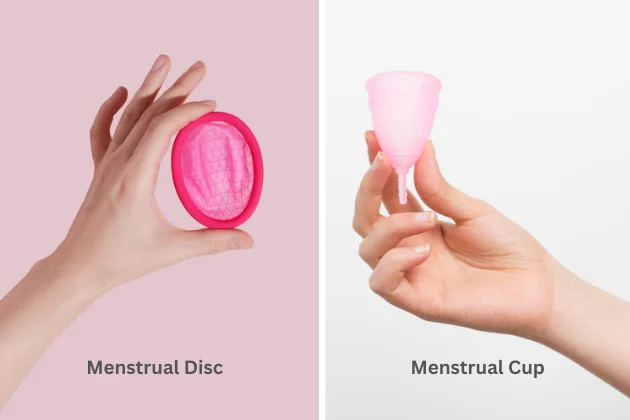
Women deserve clarity, real experiences, and medically backed information before making a choice. That’s why this guide pulls together scientific insights, gynecologist opinions, and real-life experiences to give you the most practical breakdown possible.
What is a Menstrual Disc?
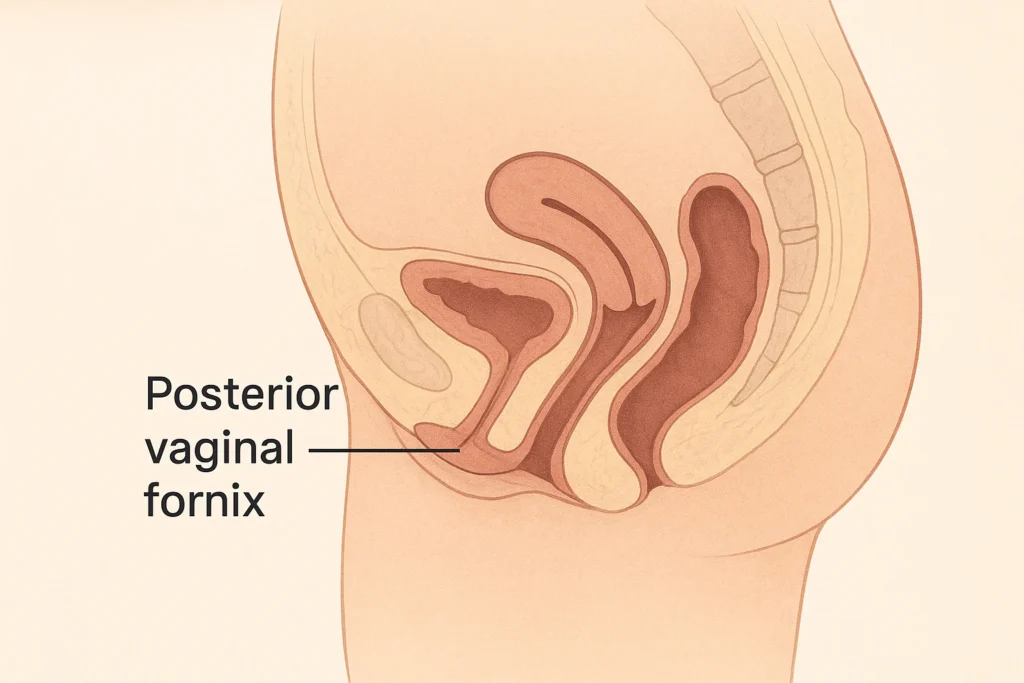
A menstrual disc is a round, flexible device shaped like a shallow bowl. It is inserted into the vagina and positioned in the posterior vaginal fornix, the natural space just below and behind the cervix. This location allows the disc to collect menstrual blood rather than absorb it.
Anatomical Note
- The vaginal fornix is like a pocket that surrounds the cervix. The disc rests in the posterior part of this fornix and tucks behind the pubic bone, ensuring a secure fit.
- Because the disc sits higher than a cup, it does not rely on suction to stay in place.
Materials and Safety
- Most reusable discs are made from biocompatible medical-grade silicone, tested according to ISO 10993 safety standards.
- Disposable discs (e.g., Flex Disc, Softdisc) are made of medical-grade polymers such as polyethylene.
- Reusable models last 1–3 years with proper care.
Capacity
Menstrual discs typically hold 30–75 mL of fluid, more than most cups and several times more than a tampon. This makes them especially useful for people with heavy menstrual flow.
Menstrual Disc vs Cup: Key Differences
Both menstrual cups and discs are reusable alternatives to pads and tampons, but their design, placement, and use differ.
| Feature | Menstrual Disc | Menstrual Cup |
|---|---|---|
| Placement | High, in vaginal fornix behind cervix and pubic bone | Lower, in vaginal canal |
| Mechanism | Collects fluid without suction | Creates suction seal against vaginal walls |
| Capacity | 30–75 mL | 20–35 mL |
| Sex compatibility | Can be worn during penetrative sex | Cannot be worn |
| Material & Hardness | Silicone or polymer, usually softer | Silicone or TPE, often firmer |
| Cleaning & Care | Rinse and boil (reusable); some require mild cleaners | Rinse and boil |
| Anatomical Fit | Good for high cervix; may require practice for low cervix | Easier for low cervix users |
| Removal Aids | Some have ring, notch, or tab | Stem (trimmed if needed) |
| Comfort | No suction, pressure-free; not usually felt once placed correctly | Some feel suction or pressure |
| Auto-Dumping | May self-empty slightly during urination | Does not self-empty |
How to Insert a Menstrual Disc (Step-by-Step)
Learning how to insert a menstrual disc correctly is crucial for comfort and leak protection.
Step 1: Wash your hands
Always begin with clean hands to reduce risk of infection.
Step 2: Pinch the disc
Squeeze the disc in half so it forms a narrow shape.
Step 3: Insert
- Sit on the toilet or squat slightly.
- Guide the disc into the vaginal canal.
- Push it back and down until it reaches the vaginal fornix.
Step 4: Tuck behind the pubic bone
This “locks” the disc in place and prevents leaks.
Tip: The first few cycles may feel tricky. Many users report it takes 2–3 periods to feel completely confident.
How to Remove a Menstrual Disc
Step 1: Wash hands.
Step 2: Sit on the toilet or squat.
Step 3: Hook a finger under the front rim.
Step 4: Keep the disc level and pull it out slowly.
Some reusable discs include a removal string or notch for easier grip.
Common Mistakes and Troubleshooting Tips
- Disc won’t stay behind pubic bone → Try adjusting position (squat or raise one leg), engage pelvic floor to help it click into place.
- Leaks during removal → Keep the disc parallel to the floor and remove over the toilet.
- Hard to insert at first → Use a water-based lubricant during early attempts.
- Which position works best for beginners? → Squatting or standing with one leg raised often provides easiest access.
How to Use a Menstrual Disc
- Wear time: Up to 12 hours, depending on flow.
- Empty when needed, wash (if reusable), and reinsert.
- Sterilize reusable discs by boiling for 5 minutes at the end of each cycle.
- Always follow manufacturer’s guidelines.
Can You Have Sex with a Menstrual Disc?
Yes — one of the most notable advantages. Because the disc sits high in the vaginal fornix, it leaves space in the vaginal canal for penetration.
What Users Report
- Many partners do not feel the disc.
- Some report feeling the rim in certain positions.
- Occasionally, the disc may slip slightly and need repositioning afterward.
Important:
- A menstrual disc is not a contraceptive.
- It does not protect against STIs.
Do Menstrual Discs Reduce Cramping?
Some users say they feel less cramping with a disc compared to cups or tampons.
Possible Explanation
- Cups use suction, which can place pressure on the cervix and surrounding nerves.
- Discs rest passively in the fornix without suction, reducing this pressure.
⚠️ Current medical studies are limited. These benefits are based mostly on user reports, not large-scale research.
Safety Considerations with Menstrual Discs
Safety is a common concern, and current evidence suggests discs are safe when used as directed.
Toxic Shock Syndrome (TSS)
- Extremely rare with discs.
- Unlike tampons, discs do not contain absorbent fibers that promote bacterial growth.
- Risk is considered lower than with tampons, but hygiene remains essential.
Compatibility with IUDs
- Most gynecologists consider discs safe with IUDs since they create no suction.
- However, users should consult their doctor to ensure the IUD string length is compatible.
Material Intolerance
- Rare allergies to silicone or polymers may occur.
- Alternative materials (like TPE) are available.
General Hygiene
- Wash hands before insertion/removal.
- Do not exceed 12 hours of wear.
- Sterilize reusable discs after each cycle.
Can Menstrual Discs Handle Heavy Flow?
Yes. In fact, discs are often recommended for women with heavy bleeding because of their higher capacity.
Comparison of capacity:
- Tampon: 5–15 mL
- Menstrual cup: 20–35 mL
- Menstrual disc: 30–75 mL
For women with menorrhagia (very heavy periods), discs may reduce bathroom trips and leaks.
Choosing the Right Menstrual Disc
Although many brands advertise “one size fits all,” differences exist.
Size
- High cervix: Larger discs are often more secure.
- Low cervix: Smaller discs may feel more comfortable.
Firmness
- Soft discs: Better for people with sensitive bladders or pelvic discomfort.
- Firm discs: More suitable for those with strong pelvic floors (better retention).
Removal Aids
- Ring: Easy to grip but may be felt by partner during sex.
- Tab or notch: Discreet but requires practice.
- No aid: Sleek design, but removal may be trickier for beginners.

Saalt Menstrual Disc – Soft, Flexible, Reusable Medical-Grade Silicone – Wear 12 Hours – Removal Notch – Two Sizes – Menstrual Cup or Tampon Alternative – Made in USA – Lasts 10 Years (Blue, Regular)
Cleaning and Care Guide
First Use
- Boil reusable disc in water for 5–7 minutes.
- Use a deep pot so the disc doesn’t touch the bottom and burn.
Daily Cleaning During Use
- Rinse with cold water first to avoid stains.
- Wash with warm water and mild, pH-neutral soap.
Storage
- Keep in a breathable cotton bag.
- Avoid airtight containers that trap moisture.
Removing Stains or Odors
- Baking soda paste can help remove discoloration.
- Sunlight exposure helps reduce odor naturally.
- Special menstrual cup/disc cleaning solutions are also available.
Troubleshooting Guide: Common Problems
Problem: The disc is leaking.
- Possible causes: wrong size, not tucked behind pubic bone, or overfilled.
Problem: I can feel the disc.
- Possible causes: placed too low, disc too firm, or cervix position mismatch.
Problem: Auto-dumping doesn’t work or happens too often.
- Explanation: Pelvic floor contractions during urination can release fluid.
- Solution: Try repositioning the disc or using a firmer design.
Problem: I can’t reach the disc for removal.
- Solution: Squat, bear down with pelvic floor muscles, and hook the rim gently.
Glossary: Important Terms Explained
- Vaginal fornix: The natural pocket around the cervix where a menstrual disc rests.
- Cervix: Lower part of the uterus that extends into the vagina; its height affects disc fit.
- Pubic bone: The bony ridge behind which the disc locks into place.
- Auto-dumping (self-emptying): When a disc releases some fluid during urination due to pelvic floor relaxation.
FAQs About Menstrual Discs
1. How long can I wear a menstrual disc?
Up to 12 hours, depending on flow.
2. Can menstrual discs get lost inside me?
No. The cervix blocks entry into the uterus, so the disc cannot get lost.
3. Are discs suitable for teenagers?
Yes, but younger users may need more practice with insertion.
4. Do menstrual discs smell?
No, because blood is not exposed to air while inside the vagina.
5. Are reusable or disposable discs better?
Reusable discs are more eco-friendly and cost-effective; disposable discs may be more convenient for occasional use.
Conclusion: Are Menstrual Discs Worth Trying?
Menstrual discs are a modern alternative that combine high capacity, comfort, and flexibility. They differ from cups by resting higher in the vagina, avoiding suction, and allowing sex during use.
While they require a short learning curve, many users find them a reliable and liberating solution, especially for heavy flows or those seeking more period intimacy.
At Lotus Femcare, we encourage women to explore different menstrual products and choose what feels best for their bodies. A menstrual disc might be the innovation you’ve been waiting for.