
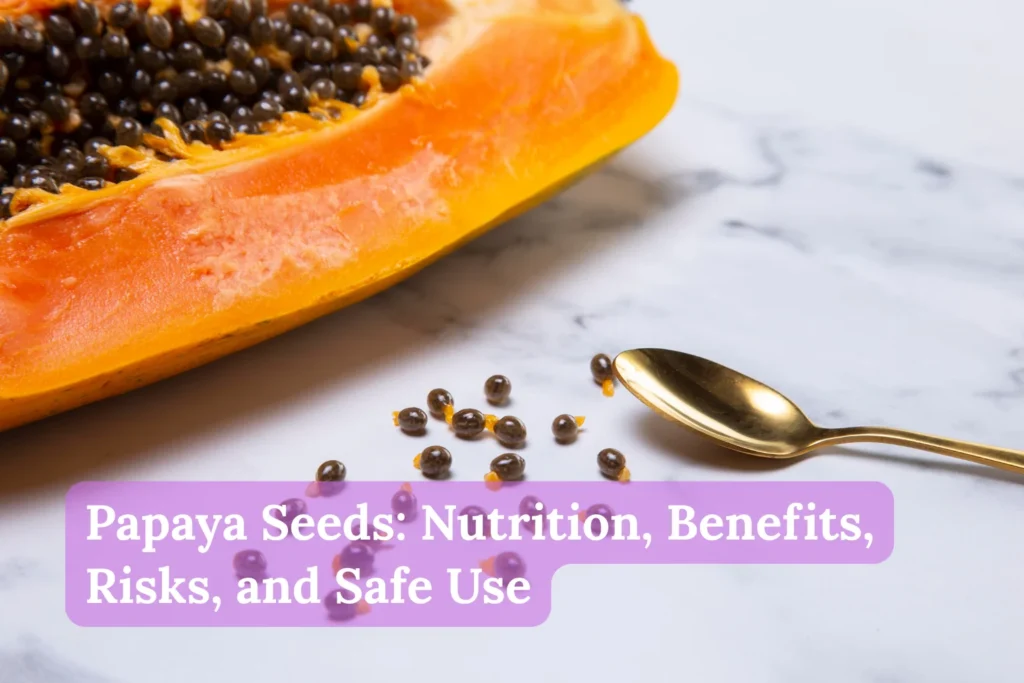
Yes, papaya seeds are edible, but their use requires knowledge and caution. While many people discard them, research shows they contain bioactive compounds that may influence digestion, liver health, parasite control, and more. At the same time, consuming papaya seeds in large amounts may cause side effects, including digestive upset and potential fertility concerns.
This article highlights the nutritional composition of papaya seeds, their studied health effects, clearly defined risks, and safe practical applications, supported by historical context, traditional uses, and scientific findings.
Nutritional Composition of Papaya Seeds
Papaya seeds are small, black, and peppery in flavor. Despite their size, they contain a complex mix of macronutrients, micronutrients, and bioactive compounds.
Nutritional Breakdown (per 10 g dried seeds)
- Energy: ~45 kcal
- Protein: ~2 g
- Total Fat: ~3 g
- Monounsaturated fatty acids: ~75% (primarily oleic acid)
- Polyunsaturated fatty acids: ~15% (mainly linoleic acid)
- Saturated fatty acids: ~10% (notably palmitic acid)
- Dietary Fiber: ~2 g
- Minerals (trace levels): calcium (~20 mg), magnesium (~15 mg), phosphorus (~10 mg), potassium (~30 mg), zinc (~0.2 mg), iron (~0.3 mg)
Key Bioactive Compounds
- Benzyl isothiocyanate (BITC): ~1.5–2.5 mg per g dried seed. (Known for its antimicrobial and anti-parasitic activity.)
- Papain enzyme: proteolytic enzyme aiding protein digestion and sometimes used in digestive supplements.
- Carpaine (alkaloid): may influence the cardiovascular system, lowering heart rate and blood pressure at high doses.
- Polyphenols and flavonoids: act as antioxidants, neutralizing free radicals.
This combination makes papaya seeds nutritionally unique compared to the sweet fruit pulp.
Historical Context and Traditional Application
Papaya (Carica papaya) originates from Central America and has long been valued in traditional medicine. Its seeds, though less popular as food, have been applied across cultures:
- Ayurveda (India): used for digestive problems, fever, and menstrual irregularities.
- South American folk medicine: sometimes employed as a natural contraceptive and for treating intestinal worms.
- African traditional medicine: seeds given for liver ailments, infections, and as part of detoxifying preparations.
These traditional applications align with some modern scientific findings, although rigorous human studies remain limited.
Biochemical Action of the Main Ingredients
The unique effects of papaya seeds stem from specific bioactive compounds:
Benzyl isothiocyanate (BITC):
- A sulfur-containing compound formed when seeds are chewed or ground.
- Exerts antimicrobial activity by inducing oxidative stress in bacteria.
- Acts against intestinal parasites by paralyzing their neuromuscular activity, causing them to detach from the intestinal lining.
Carpaine:
- An alkaloid with potential cardiovascular effects.
- In high doses, it can lower blood pressure and slow heart rate.
Papain:
- A cysteine protease enzyme that breaks down protein molecules.
- Supports digestion and is sometimes extracted for use in digestive enzyme supplements.
- Together, these compounds explain many of the studied health effects of papaya seeds.
Health Benefits of Papaya Seeds
1. Digestive Support
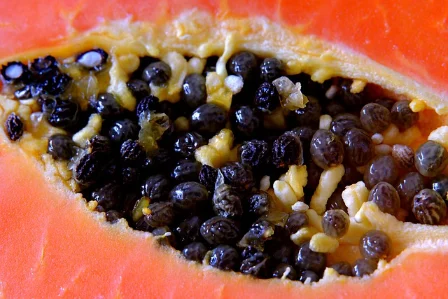
The fiber and papain enzyme in papaya seeds may promote healthy digestion, ease constipation, and improve protein breakdown.
👉 Practical tip: For mild digestive support, try eating 5–6 fresh seeds together with a piece of ripe papaya. The sweetness of the flesh balances the peppery flavor of the seeds.
2. Anti-Parasitic Properties
Papaya seeds are best known for their anti-parasitic activity.
- A Nigerian study (2007) found that children treated with papaya seed extract showed significant reductions in intestinal worms compared to controls.
- Mechanism: benzyl isothiocyanate paralyzes parasites’ neuromuscular activity, leading to their expulsion.
⚠️ Important note: Self-treatment of suspected parasitic infections is not recommended. Always consult a physician for proper diagnosis and treatment.
3. Antimicrobial & Detoxifying Effects
Laboratory studies suggest papaya seed extracts can inhibit harmful bacteria such as E. coli, Salmonella, and Staphylococcus aureus. Their antioxidant compounds may also support detoxification by neutralizing toxins.
Human data, however, is still limited.
4. Liver and Kidney Protection
Animal studies show promising results:
- In rats, papaya seed extract helped restore liver enzyme levels after toxin exposure.
- Kidney markers also improved compared to untreated groups.
⚠️ Caution: These findings are limited to animal studies. No strong human trials confirm these effects yet.
5. Potential in Cell Research
Some laboratory (in vitro) studies suggest that benzyl isothiocyanate can slow the growth of cancer cells in controlled settings.
⚠️ Important clarification: These are cell culture experiments only. No clinical studies prove anticancer effects in humans.
6. Heart Health Support
The oleic acid and antioxidants in papaya seeds may contribute to cardiovascular wellness by:
- Lowering LDL cholesterol
- Supporting healthy circulation
- Reducing inflammation
Still, more human-focused research is required.
Concerns and Side Effects of Papaya Seeds
While papaya seeds benefits are notable, risks exist, especially with high or prolonged intake.
Most common (mild, dose-related):
- Digestive upset: nausea, vomiting, or diarrhea, typically from excessive consumption.
Moderate concern:
- Fertility effects:
- In male rats, daily intake of ~0.1 g/kg seed extract reduced sperm count and motility.
- No direct evidence in humans, but caution is warranted, especially for couples trying to conceive.
Situational risks:
- Pregnancy and breastfeeding: Avoid, due to possible hormonal and uterine effects.
- Allergic reactions (rare): May include itching, swelling, or digestive distress in sensitive individuals.
Possible Drug Interactions
Due to their bioactive compounds, papaya seeds may interact with certain medications:
- Blood thinners (e.g., warfarin): papain may enhance anticoagulant effects.
- Diabetes medications: may influence blood sugar regulation.
- Antihypertensives: carpain may amplify blood pressure–lowering effects.
⚠️ Note: Always consult a doctor or pharmacist before regular consumption of papaya seeds if you take medication.
How to Eat Papaya Seeds Safely
Preparation and Taste Improvement
- Scoop fresh seeds from ripe papaya.
- Rinse under water to remove the gelatinous coating.
- Dry at low temperature (≤50 °C) in an oven or dehydrator to preserve enzymes.
- Store in an airtight container in a cool, dark place.
👉 Flavor tip: Drying reduces bitterness. Once dried, seeds can be ground and used as a pepper substitute.
Dosage Guidelines
- Starting dose: Maximum ¼ teaspoon (2–3 seeds) daily to test tolerance.
- General safe use (without medical advice): Up to 1 teaspoon daily.
- Avoid exceeding this unless under professional supervision.
Practical Guide: Harvesting, Drying, and Storing Papaya Seeds
- Harvesting: Remove seeds from ripe papaya.
- Cleaning: Rub under running water to remove the gelatinous sac (sarcotesta).
- Drying:
- Air-drying: natural but slower.
- Oven-drying: ≤50 °C, faster but risks enzyme degradation.
- Dehydrator: best balance of speed and nutrient preservation.
- Storage: Keep dried seeds in airtight containers, away from light and moisture.
- Use: Grind in small batches for spice-like seasoning or consume whole in tiny amounts.
Frequently Asked Questions (FAQ)
1. Can you eat papaya seeds?
Yes, papaya seeds are edible and may provide health benefits in small amounts.
2. Can you eat the seeds of a papaya fruit daily?
Yes, but limit intake to no more than 1 teaspoon per day to avoid side effects.
3. Are papaya seeds toxic?
No, papaya seeds are not toxic in small amounts. Large doses can cause side effects due to benzyl isothiocyanate.
4. Do papaya seeds kill parasites?
Yes, studies suggest anti-parasitic activity, but professional medical treatment is always recommended.
5. Can pregnant women eat papaya seeds?
No, papaya seeds should be avoided during pregnancy and breastfeeding due to possible hormonal effects.
Final Thoughts
Papaya seeds are often discarded, yet they contain unique nutrients and bioactive compounds with potential health applications in digestion, microbial defense, and traditional medicine. At the same time, their risks—especially in high doses—should not be overlooked.
Key takeaways:
- Yes, papaya seeds are edible.
- Consume only in small amounts (¼–1 teaspoon daily).
- Avoid during pregnancy, breastfeeding, or when trying to conceive.
- Consult a healthcare professional if taking medication or considering regular use.
Used wisely, papaya seeds can complement a balanced diet—but they are not a cure-all.