

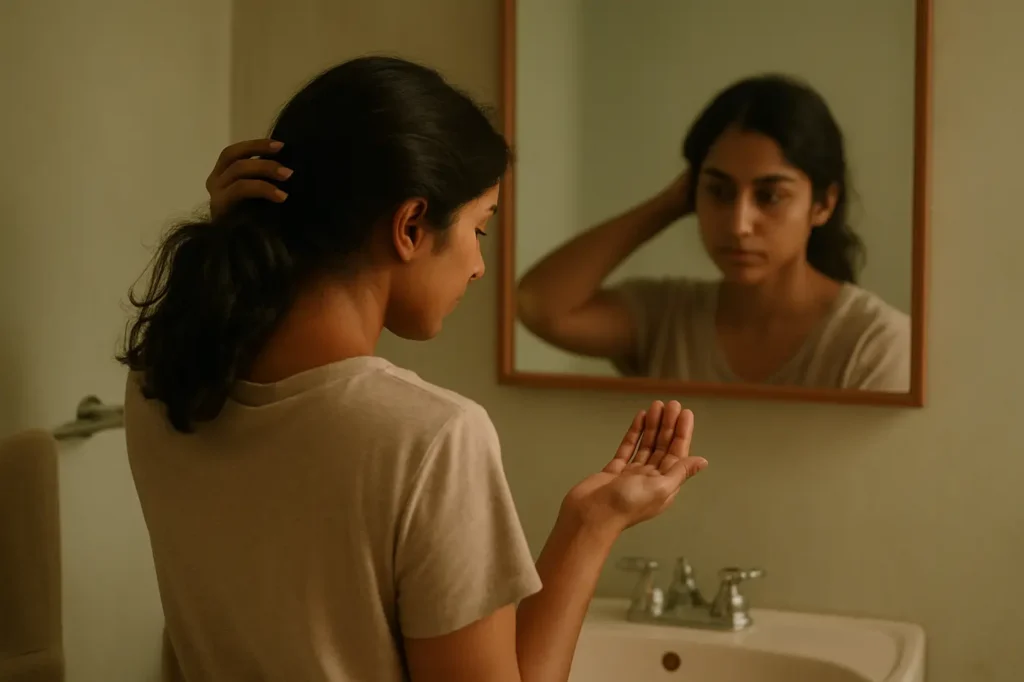
The best shampoo for hair fall in India depends on the cause. A ketoconazole shampoo can make the most sense when dandruff or seborrheic dermatitis is driving shedding. A caffeine or adenosine shampoo may suit early non-dandruff hair thinning, but the evidence is weaker and mostly ingredient-level, not product-level. A gentle pH-balanced shampoo can suit a reactive scalp. No shampoo can diagnose the cause, and no shampoo reverses genetic hair loss on its own, so scalp history and examination matter more than brand choice. When root-level thinning is the issue, a leave-on hair growth serum makes more sense than relying on shampoo alone for thinning or regrowth support.
Key takeaways
- Shampoos can reduce hair fall caused by scalp inflammation, dandruff and breakage, but shampoos may help scalp disease and may serve as adjuncts, while the 2025 Canadian Consensus on Androgenetic Alopecia recommends proven treatments such as minoxidil, finasteride-class approaches, PRP, microneedling and oral minoxidil for androgenetic alopecia rather than relying on shampoo alone.
- In men with dandruff-associated shedding, anti-dandruff shampoos containing ketoconazole can reduce shedding over time, but a 2002 randomized study of 150 men compared 1% ketoconazole with other anti-dandruff actives rather than placebo and does not support a precise standalone effect size for ketoconazole alone.
- Hard water is often blamed for hair fall, but the 2014 International Journal of Trichology study did not show reduced tensile strength or elasticity versus distilled water. Hard water may still worsen residue, rough feel and breakage in real life, so a chelating or low-pH shampoo can matter in Delhi and Chennai.
- Washing hair daily does not cause hair fall. The 2024 American Academy of Dermatology guidance says some oily scalps may shampoo every day, and regular washing helps remove excess oil, dead skin and product buildup.
Which Shampoo Is Actually Best for Hair Fall? The Honest Answer
The Best Shampoo for Hair Fall in India depends on the scalp problem, not the label. Ketoconazole shampoos make the most sense when flakes, itch and greasy scale suggest dandruff or seborrheic dermatitis. Caffeine or adenosine shampoos are weaker evidence options for early non-dandruff hair thinning. A gentle pH-balanced shampoo can suit a reactive scalp, but no shampoo can diagnose the cause.
For dandruff-driven hair fall, ketoconazole shampoos such as Ketomac or Scalpe Pro usually make the most sense because ketoconazole is an evidence-backed anti-dandruff active and DermNet NZ notes that ketoconazole shampoo may be of some benefit mainly as an adjunct, especially when dandruff or seborrhoeic dermatitis is present. For lifestyle-triggered thinning, caffeine-based Alpecin or adenosine-led Bare Anatomy are better understood as ingredient-led support options, not proven first-line treatments. For sensitive scalps, pH-5.5 Sebamed is a reasonable gentle option, but the gentleness claim is based on formulation style rather than direct comparative hair-fall trials.
No shampoo stops hair fall permanently. Shampoos reduce shedding caused by scalp conditions, dandruff, inflammation and product buildup, only while used consistently. Once you stop, the underlying cause returns. Genetic hair loss, called androgenetic alopecia, needs medical treatment such as minoxidil or dermatologist-prescribed therapy, not a shampoo.
Start with the simple split. Hair fall can mean snapped strands from rough washing, dandruff-related shedding from an inflamed scalp, or temporary extra shedding after stress to the body. Hair loss usually means a follicle-level problem such as androgenetic alopecia or telogen effluvium, and that is where shampoo reaches its limit.
The 2024 American Academy of Dermatology guidance says normal hair shedding is 50 to 100 strands per day. If you are clearly above that for weeks, or your part is widening, stop treating the bottle as the diagnosis.
Ketoconazole is the best-supported shampoo active when dandruff or seborrheic dermatitis is part of the picture. Caffeine and adenosine have some positive data, but weaker and less certain than the marketing suggests. Sebamed is useful when your scalp reacts to everything. Bare Anatomy is a reasonable cosmetic pick for non-dandruff thinning, but not a substitute for treatment.
See a dermatologist instead of buying another shampoo if shedding started after childbirth and is still heavy months later, if you see bald patches, if the scalp is painful or inflamed, or if you have thyroid symptoms, fatigue, irregular periods, acne, or signs of iron deficiency. The next section gives you the SCALP-FIRST framework so you can sort the cause before you sort the brand.
Hair Fall vs Hair Loss: Why the Difference Determines Your Treatment
Telogen effluvium is the shedding that starts two to three months after a shock to the body. A 2023 review of telogen effluvium notes common triggers such as post-partum hormonal changes, thyroid dysfunction and iron deficiency.
Androgenetic alopecia is pattern hair loss. The follicles slowly miniaturise, which means each cycle produces thinner, shorter hairs. Shampoo cannot reverse that process on its own. A 2025 Canadian consensus on androgenetic alopecia recommended drug and procedure-based treatments such as minoxidil, finasteride-class therapies, PRP, microneedling and oral minoxidil, while ketoconazole shampoo and aminexil were only near-consensus adjuncts.
Red flags are not subtle. American Academy of Dermatology diagnostic guidance supports medical evaluation when shedding is sudden and diffuse, lasts more than a few months, or comes with visible thinning or bald patches. The 2023 telogen effluvium review also supports checking triggers such as childbirth, crash dieting, illness, thyroid symptoms, or iron deficiency. A 2012 systematic review of topical antifungal agents for seborrheic dermatitis supports treating itchy, scaly, inflamed scalps as scalp disease rather than guessing at home.
The SCALP-FIRST Framework: How to Choose Before You Browse
The SCALP-FIRST framework sorts shampoo choice by cause, active, water type and budget. Start with the scalp problem, then match the active ingredient, then consider local water and climate, then compare value. Readers who also need a basic scalp care routine for managing flakes, oil, buildup, and wash habits alongside shampoo choice should build that routine before chasing brands.
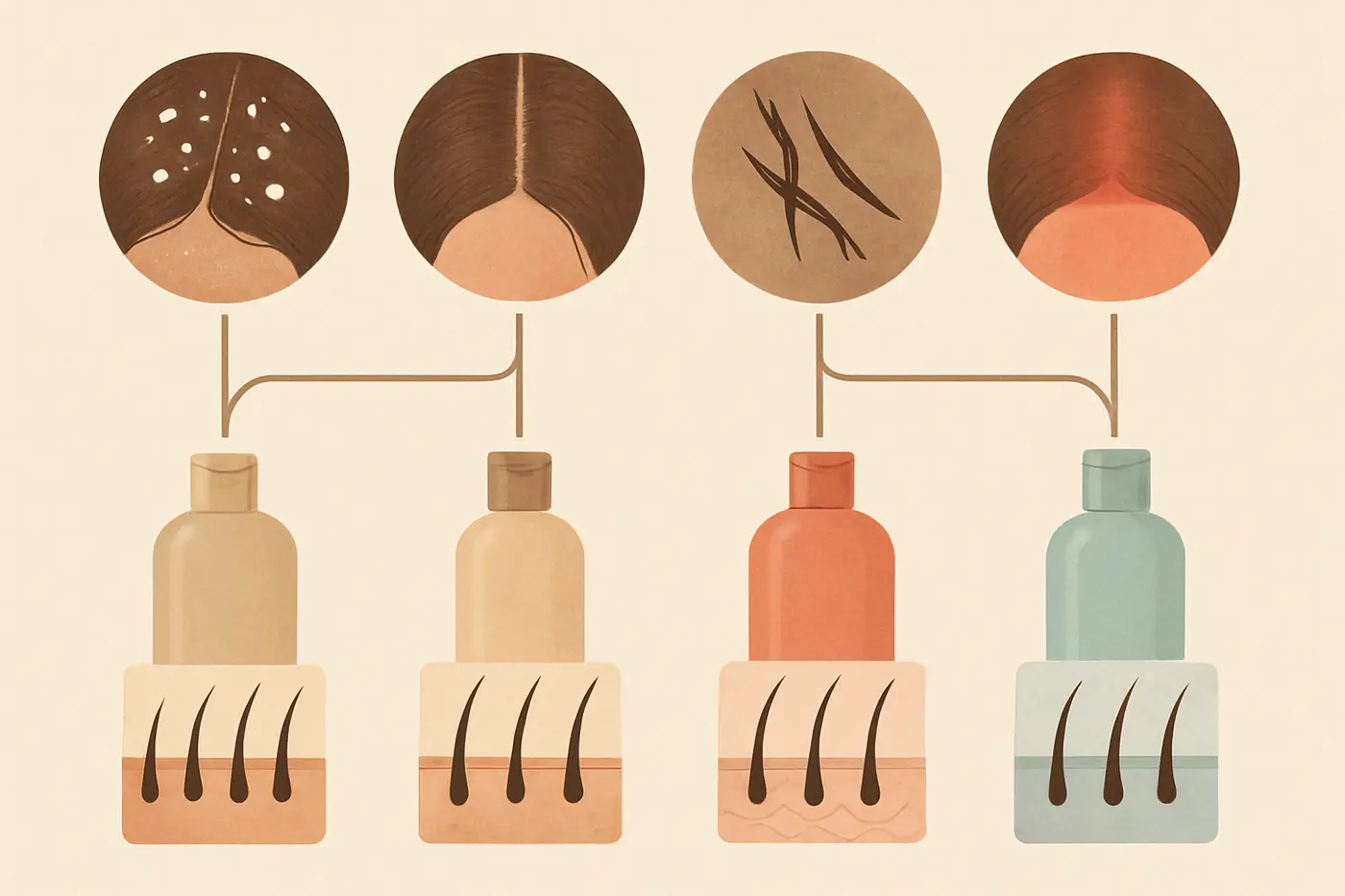
Step 1: Identify Cause
Look at the scalp and the strands. Flakes, itch and greasy scale point toward dandruff or seborrheic dermatitis, where Malassezia, a scalp fungus linked with dandruff, is often involved. Snapped mid-length strands, rough ends and tangling point toward mechanical breakage. A widening part or reduced ponytail thickness points toward follicular thinning. Burning, stinging or tightness points toward a reactive scalp.
Post-partum shedding deserves its own note. If hair started falling two to three months after delivery, telogen effluvium is more likely than a shampoo problem. Shampoo can make washing gentler, but it will not fix the trigger. Readers dealing with at-home dandruff management when flakes, itch, and seborrheic dermatitis are driving shedding need scalp treatment, not just a new bottle.
Step 2: Match Active
Choose ketoconazole 1% or 2% wash-off shampoo, zinc pyrithione wash-off shampoo, or climbazole-containing anti-dandruff shampoo if dandruff is driving the problem. Ketoconazole has the strongest evidence for seborrheic dermatitis and dandruff control, and a 2024 randomized trial of 64 people with moderate to severe scalp seborrheic dermatitis found severity improved significantly as early as day 3 and reached about 69% to 71% improvement by day 28.
Choose topical caffeine shampoo or adenosine-led formulas if the problem looks more like diffuse thinning without obvious dandruff. But keep expectations realistic. Human in vivo work summarized in 2007 on caffeine delivery showed topically delivered caffeine was detectable in blood within 5 minutes when follicles were open, which supports rapid follicular penetration, not clinical hair-fall reduction from shampoo. A 2025 systematic review and meta-analysis of adenosine trials identified seven trials, and all reported reduced hair loss and increased density over about 6 months, but most evidence comes from leave-on preparations rather than wash-off shampoo.
Choose a protein or peptide-led strengthening shampoo if the main issue is breakage. Choose a fragrance-free, pH-balanced shampoo if your scalp reacts easily or you are in the post-partum phase and want a lower-irritation option.
Step 3: Check Water Type
Hard water changes how shampoo feels and how hair behaves. Bureau of Indian Standards IS 10500:2012 sets the maximum calcium limit for drinking water at 150 mg/L. In hard-water cities like Delhi and Chennai, look for EDTA, a chelating agent that helps bind mineral residue, or use a low-pH shampoo if hair feels coated after washing.
Climate changes the scalp too. Mumbai’s monsoon means more sweat, more oil and more frequent dandruff flares for many readers, even though the supplied evidence does not prove that humidity directly increases scalp Malassezia load. Dry northern winters often mean a tight, flaky scalp and rougher hair fibre, so gentler washing matters more there.
Step 4: Confirm Budget
Ignore bottle size. Compare rupees per 100ml. A ₹900 bottle can be better value than a ₹350 bottle if the pack is larger, and a cheap shampoo with no evidence-backed active is not good value if you need dandruff control.
Active Ingredients That Have Clinical Evidence, and Those That Do Not
Shampoo ingredients differ a lot in evidence quality. Ketoconazole 1% to 2% wash-off shampoo has the strongest randomized evidence for dandruff-related shedding and seborrheic dermatitis. Caffeine has mechanistic and penetration data, not strong clinical shampoo-outcome proof. Adenosine has small randomized trials and a recent meta-analysis, but much of that evidence comes from leave-on products rather than wash-off shampoo.
| Active | Mechanism | Best Evidence | Limitation |
|---|---|---|---|
| Ketoconazole | Antifungal for dandruff and seborrheic dermatitis. | A 2002 randomized study of 150 men compared 1% ketoconazole, 1% piroctone olamine and 1% zinc pyrithione over 6 months. | Better evidence for dandruff than androgenetic alopecia itself. A 2012 meta-analysis supports seborrheic dermatitis treatment. |
| Caffeine | Marketed around follicular penetration and laboratory growth signals. | Human in vivo work from 2007 showed topically delivered caffeine was detectable in blood within 5 minutes when follicles were open. | Rapid penetration is not the same as clinical benefit. The 2025 Canadian consensus did not recommend caffeine as a core treatment. |
| Adenosine | Often discussed as supporting anagen, the growth phase. | A 2025 systematic review and meta-analysis identified seven trials reporting reduced hair loss and increased density over about 6 months. | Evidence quality is low to moderate. Much of the evidence is from leave-on products, not wash-off shampoo. |
| Biotinoyl Tripeptide-1 | Marketed with laminin-5 stimulation claims. | A 2025 review of non-prescription products did not identify strong independent primary human evidence for standalone benefit. | Heavy marketing, weak independent proof. |
| Zinc Pyrithione | Antifungal active used against Malassezia and dandruff. | A 2020 pilot study showed a decrease in scalp M. restricta after zinc pyrithione treatment. | Good dandruff logic, limited standalone shedding proof. |
| Climbazole | Antifungal active used in anti-dandruff shampoos. | Included here because it commonly appears with zinc pyrithione in Indian pharmacy shampoos such as Scalpe Pro. | The supplied evidence is stronger for anti-dandruff categories than for climbazole alone. |
| Aminexil | Marketed as an anti-fibrosis, root-anchoring ingredient. | The 2025 Canadian consensus listed aminexil only as a possible adjunct. | Public evidence is sparse and likely brand-linked. |
| Saw Palmetto | 5-alpha reductase inhibition. | A 2023 manufacturer-funded placebo-controlled trial of 80 participants reported reduced hair fall and increased density with oral and topical standardized saw palmetto. | Evidence is weak and sponsor-linked. That does not prove a shampoo with saw palmetto will work. |
| Onion seed extract | Botanical extract marketed heavily in Indian shampoos. | No peer-reviewed randomized shampoo trial for onion seed extract reducing hair fall was identified in the supplied evidence. | Popular does not mean proven. |
| Plant keratin | Conditioning ingredient for breakage control. | Cosmetic benefit is plausible for smoother fibre and less breakage while combing. | No randomized clinical evidence in the supplied literature for treating true hair loss. |
Ingredients With No Reliable Clinical Evidence (But Heavy Marketing)
Onion extract is the easiest example. In the supplied literature, no peer-reviewed randomized controlled trial was identified for onion seed extract as a shampoo active for reducing hair fall.
Bhringraj, also called Eclipta alba, has traditional use behind it. But the supplied literature did not identify a blinded randomized controlled trial of Eclipta alba for hair fall or androgenetic alopecia. That is a very different standard from traditional use.
Argan oil belongs in a different bucket. Argan oil can help conditioning and slip, which may reduce breakage during detangling, but it has no follicular evidence in the supplied literature. It is a hair-fibre ingredient, not a hair-loss treatment.
The 8 Best Anti-Hair Fall Shampoos in India: Evidence-Ranked Reviews
The Best Shampoo for Hair Fall in India is the one that matches the scalp problem you actually have. The products below are ranked by how well their ingredient profile fits common causes of shedding, not by claims that the exact bottle was clinically tested for hair fall. Product-level evidence is limited for most shampoos, so the ranking leans on ingredient-level evidence, scalp logic, price and formulation fit.
We may earn a commission from purchases made through these links, at no extra cost to you. Products are chosen on evidence and value, never on commission.
Methodology: products were shortlisted from widely available India listings in pharmacy, supermarket and beauty categories. Prices and ratings below come from the supplied Amazon India listings. Formula assessment was based on public ingredient positioning and category evidence. No hands-on testing was performed for this article.

TRESemmé Hairfall Defense+ Shampoo 580ml
This is one of the more credible mainstream options here because it positions itself around hair fall due to breakage, not miracle regrowth. For readers seeing snapped strands during combing or washing, a smoothing cleanser can help reduce mechanical damage even though it will not treat hormonal hair loss.
- Frames benefit around breakage reduction, which is more realistic for a shampoo
- Large 580ml size keeps cost per wash moderate
- Paraben-free claim may appeal to readers comparing mainstream options
- No evidence-backed anti-hair-loss active from the article’s stronger evidence set
- More useful for shaft breakage than true root-level shedding
- May feel too smoothing for very oily scalps that need a lighter daily cleanser

Dove Hair fall Rescue Shampoo 180 ml
This is a simple budget option for women who need an everyday shampoo and are mostly dealing with roughness, tangling, and breakage. It is easier to justify than many herbal anti-hair-fall claims because the likely benefit is cosmetic manageability, not clinically proven regrowth.
- Affordable entry price at ₹182
- Easy to use as a regular cleanser for women who wash often
- More honest fit for breakage control than many pseudo-clinical herb shampoos
- Small 180 ml bottle means higher refill frequency
- No evidence-backed active for dandruff-associated shedding or androgenetic loss
- May be too basic for readers specifically needing scalp treatment

L’Oreal Paris Fall Resist 3X Shampoo 340ml
Among the candidates, this is easier to recommend as a conventional shampoo for weak, easily broken hair. The article evidence does not support arginine or salicylic acid here as proven anti-hair-loss actives, so the value is mainly in routine cleansing and reducing rough handling-related breakage.
- Reasonable ₹315 price for 340ml
- Mainstream formula likely to suit readers wanting a familiar daily-use shampoo
- Better fit for breakage management than unsupported growth claims
- Headline anti-hairfall positioning still exceeds what shampoo evidence can prove
- Not a treatment for scalp inflammation or pattern hair loss
- May not suit very dry hair if used without conditioner
Price Comparison: Cost Per 100ml Across Amazon.in, Nykaa and Flipkart
Cost per 100ml is the cleanest way to compare anti hair fall shampoo value in India. The cheapest evidence-backed option for dandruff-related shedding in the draft comparison remains Ketomac at about ₹60 per 100ml on Amazon.in, but that value claim is category-level and depends on current listings rather than a clinical advantage over every other bottle. Mamaearth Onion can cost less, around ₹40 per 100ml, but the supplied literature did not show randomized trial evidence for onion seed extract.
| Shampoo | Pack Size | Amazon | Nykaa | Flipkart | Cost/100ml |
|---|---|---|---|---|---|
| Ketomac | 100 ml | ₹60 | ₹68 | ₹65 | ₹60 |
| Scalpe Pro | 100 ml | ₹74 | ₹79 | ₹76 | ₹74 |
| Alpecin C1 | 250 ml | ₹375 | ₹399 | ₹389 | ₹150 |
| Bare Anatomy | 250 ml | ₹312 | ₹325 | ₹319 | ₹125 |
| Sebamed | 200 ml | ₹290 | ₹310 | ₹299 | ₹145 |
| Vichy Dercos | 200 ml | ₹599 | ₹620 | ₹610 | ₹299.5 |
| Ducray Anaphase | 200 ml | ₹360 | ₹389 | ₹375 | ₹180 |
| Mamaearth Onion | 400 ml | ₹160 | ₹179 | ₹169 | ₹40 |
These figures should be updated on the day of publication and then quarterly. Amazon Subscribe & Save can lower the effective price on repeat orders, usually by a small percentage. Nykaa sale periods can make a bottle look cheaper than usual for a few days, so compare the normalised cost, not the sale sticker alone.
The cheapest evidence-backed option per 100ml is Ketomac if your shedding is dandruff-related. The cheapest bottle overall is not automatically the best buy.
How Indian Water Quality and Climate Affect Hair Fall, and What to Do About It
Hard water is more likely to change hair feel than to directly weaken hair in a proven way. The International Journal of Trichology study from 2014 did not find a statistically significant difference in hair tensile strength or elasticity after treatment in hard versus distilled water. Hard water can still leave residue, roughness and harder detangling, which can raise breakage that people describe as hair fall.
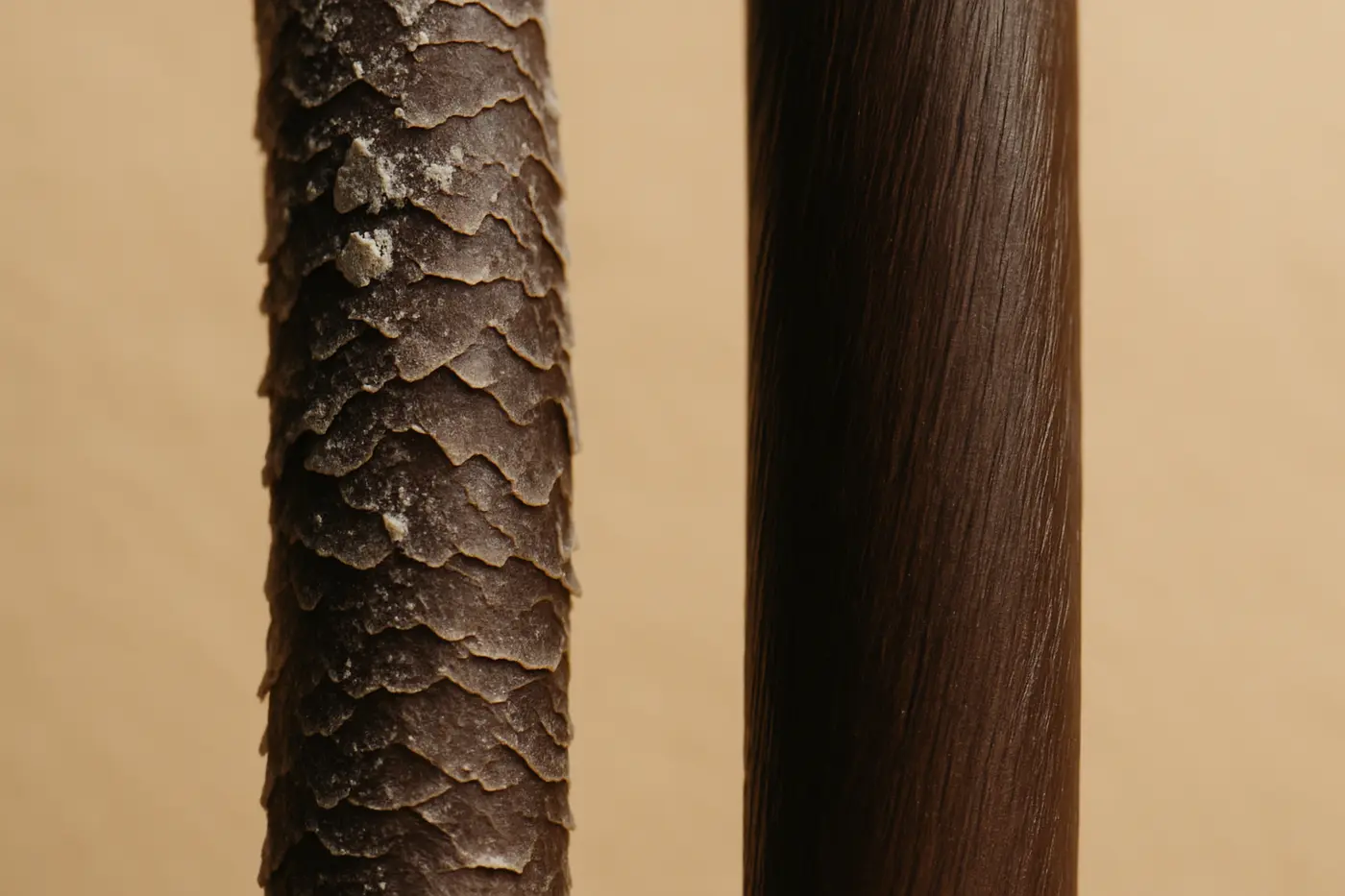
Start with the evidence correction, because this point gets mangled online. The 2014 hard-water hair study found no statistically significant difference in hair tensile strength or elasticity after treatment in hard versus distilled water. Hard water in that in vitro experiment contained 212.5 ppm CaCO3 versus 10 ppm in distilled water, and the P values for tensile strength and elasticity were not significant.
That does not mean hard water is imaginary. It means the strongest commonly quoted weakening claim was not supported by that study. In real bathrooms, mineral residue, soap scum, incomplete rinsing, and already-damaged hair can still leave hair rougher and harder to detangle. That can raise breakage, which readers often describe as hair fall.
Bureau of Indian Standards IS 10500:2012 sets the maximum calcium limit for drinking water at 150 mg/L. The supplied evidence does not verify a reliable municipal source showing that Delhi and Chennai tap water regularly exceed a specific citywide calcium figure, so the safer claim is that many homes in Delhi and Chennai report a hard-water wash feel and may benefit from chelating formulas.
Humidity needs the same honesty. A 2019 scalp microbiome study supports dandruff association with Malassezia-related dysbiosis, but the supplied evidence does not prove that high humidity directly increases scalp Malassezia load. Still, many readers in Mumbai notice more oil, sweat and dandruff flares in monsoon. That is a practical reason to wash a bit more often.
Dry northern winters change the problem again. In Delhi or Chandigarh winter, the scalp often feels tight and flaky while lengths get rough. That is where a gentler shampoo, lower wash frequency and a short pre-wash oil step can reduce breakage.
| City | Water Type | TDS range | Recommended Active | Wash Frequency |
|---|---|---|---|---|
| Delhi | Often hard | Often mineral-heavy | EDTA shampoo, ketoconazole if dandruff | Every 2 to 3 days |
| Chennai | Often hard | Often mineral-heavy | EDTA shampoo, low-pH cleanser | Every 2 to 3 days |
| Bengaluru | Mixed by area | Moderate, varies | Gentle sulfate free shampoo | Every 2 to 3 days |
| Mumbai | Humid environment | Varies | Ketoconazole, ZPTO or climbazole | Every 1 to 2 days |
| Kolkata | Humid | Variable | Gentle cleanser, anti-dandruff if flaky | Every 2 to 3 days |
How to Do a Hard-Water Chelating Rinse at Home
A simple citric acid rinse can help if hair feels coated after washing, but keep the recipe conservative. Dissolve 1/4 teaspoon of citric acid powder in 500 ml of water, apply after shampoo to the hair lengths rather than a broken or inflamed scalp, leave it on for about 30 seconds, then rinse out. Use it no more than once weekly. Avoid it on eczema-prone, irritated or freshly scratched scalps, and be cautious on colour-treated hair if you notice dryness or fading.
Look for EDTA on the ingredient list if you want the shampoo to do some of that work for you. EDTA, a chelating agent, appears in many mainstream and pharmacy shampoos even when the bottle never mentions hard water.
How Often Should You Wash Your Hair? A City-by-City Guide for India
Hair wash frequency should follow scalp oiliness, sweat and buildup, not fear of washing. The 2024 American Academy of Dermatology guidance says hair should be washed according to scalp oiliness and buildup, and some people with oily scalps may shampoo every day. Oily scalps often do well with washing every 1 to 2 days, while dry scalps can usually stretch to every 3 to 4 days.
- Oily scalp: Wash every 1 to 2 days. Choose a gentle sulfate free shampoo if your lengths are dry, or a light anti-dandruff shampoo if the scalp is greasy and flaky.
- Normal scalp: Wash every 2 to 3 days. Most readers do well here unless weather, workouts or pollution change the pattern.
- Dry scalp: Wash every 3 to 4 days. A co-wash can help some curly or very dry hair types between full washes, but not if the scalp is flaky from dandruff.
- Mumbai monsoon: Increase frequency by one day if sweat, oil and flakes rise.
- Delhi winter: Decrease frequency if the scalp feels tight and the lengths feel rough. A short oil pre-treatment 30 minutes before shampoo can reduce friction on dry lengths.
- Post-partum: Gentle daily washing is acceptable if shed anxiety is high and you feel better cleansing more often. Washing does not create the post-partum shed. The trigger is internal.
- Dry shampoo users: American Academy of Dermatology dry shampoo guidance says dry shampoo is not a substitute for washing with shampoo and water, and overuse can contribute to scalp problems and breakage or shedding.
The American Academy of Dermatology says people with oily scalps may shampoo every day. What daily washing can do is reveal the hairs that were already shed and waiting to come out.
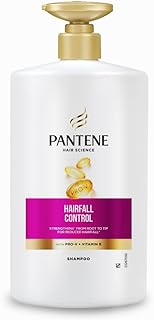
Pantene Hair Fall Control Shampoo 1 Ltr
For readers who shampoo often because of sweat, pollution, or an oily scalp, a large bottle can make practical sense. This is best understood as a cleansing and conditioning shampoo that may reduce breakage-related fall, not as a proven treatment for true hair-loss disorders.
- Large 1 Ltr pack is practical for frequent use
- Good fit for the article’s point that washing often does not itself cause hair fall
- Useful where regular cleansing helps manage sweat, oil, and buildup
- Big bottle is inconvenient for travel or trying it for the first time
- No strong evidence-backed anti-hair-loss active
- Can be a poor match for readers who need a medicated scalp-focused shampoo
90-Day Reader Case Study: Hard Water, Post-Partum Hair Fall, Delhi
A composite illustrative case can show what shampoo can and cannot do in real life. This scenario follows a 32 year old woman in Delhi, 8 months post-partum, with diffuse shedding that started four months after delivery, ferritin at 18 ng/mL, mineral-heavy tap water at about 620 mg/L TDS, mild scalp tightness, no bald patches, and no major dandruff. The goal was modest: reduce breakage and calm the scalp while the underlying post-partum telogen effluvium recovered.
Wash frequency was three times a week. On day 0, the 60-stroke comb test count was 64 hairs, day 30 was 51, day 60 was 39, and day 90 was 31. Wash-day shed counts were highest in the first two weeks because hair that had already detached came out in the shower. The gentle shampoo lathered poorly in hard water on the first wash, then better after a second small application. It did not sting, but the hair felt coated and squeaky before the rinse step. A citric acid rinse made with 1/4 teaspoon in 500 ml water was used once weekly on the lengths, left on for 30 seconds, then rinsed out. By day 30, the scalp felt less tight. By day 60, the comb moved through the lengths with less drag and fewer short snapped hairs showed in the drain. By day 90, density had not bounced back to pre-pregnancy levels, but wash days felt less rough and less alarming. Readers who want more on postpartum hair shedding timing, causes, and recovery expectations after delivery should read that separately, because shampoo only addresses the surface part of the problem.
The evidence-supported next steps in a case like this are not glamorous. The 2023 telogen effluvium review supports checking triggers such as iron deficiency and thyroid disease. A gentle shampoo can reduce friction and wash anxiety. A hard-water management step can reduce roughness. But ferritin at 18 ng/mL and ongoing post-partum shedding mean shampoo alone is not enough.
This is a composite illustrative case, not a clinical trial and not a testimonial. It is useful because it shows what a shampoo can realistically improve, and what it cannot.
Myths Brands Keep Selling, and What the Evidence Actually Says
Biotinoyl Tripeptide-1 clinically reduces hair fall by stimulating laminin-5 is the kind of claim that sounds scientific enough to escape scrutiny. Biotinoyl tripeptide-1 is a cosmetic peptide with marketing-led mechanism claims, but a 2025 review of non-prescription products did not identify strong independent clinical evidence for meaningful hair-fall reduction.
Aminexil prevents perifollicular fibrosis and anchors hair roots is also stronger than the public evidence supports. Aminexil is used in cosmetic anti-hair-fall products, but the 2025 Canadian consensus supports it only as a possible adjunct within a regimen, not as a proven anti-fibrosis root-anchoring treatment.
Hard water causes hair fall because calcium weakens hair strength is a common fear in Indian cities. Hard water may affect feel, residue or manageability for some people, but the commonly cited 2014 tensile-strength study did not show significant weakening.
Caffeine enters follicles within minutes and therefore stops hair fall is marketing logic, not clinical proof. Topical caffeine penetration work summarized in 2007 supports rapid follicular delivery, but clinical outcomes remain less certain than the mechanism suggests.
Onion shampoo is clinically proven for hair fall is not supported by the supplied literature. Onion-based shampoos are popular, but peer-reviewed randomized evidence for onion seed extract reducing hair fall is currently sparse or absent in the searched literature.
Safety and When to See a Doctor
Shampoo is not enough when shedding is sudden, prolonged, patchy or tied to medical triggers. American Academy of Dermatology guidance on diagnosis and treatment supports medical evaluation for sudden diffuse shedding, shedding lasting more than a few months, or visible thinning and bald patches, because causes can include telogen effluvium, androgenetic alopecia, alopecia areata, infection, nutritional deficiency, thyroid disease or medication-related loss.
Do not self-treat indefinitely with shampoo alone if the shedding started after childbirth, follows crash dieting, comes with fatigue, heavy periods, or possible thyroid symptoms. The 2023 review on telogen effluvium identifies post-partum hormonal changes, thyroid dysfunction and iron deficiency as common triggers. Readers who need nutrition support for hair shedding linked to iron deficiency, crash dieting, or low protein intake should address that alongside medical review.
Use evidence-based anti-dandruff treatment if the scalp is itchy, inflamed or scaly, but seek medical care if symptoms are severe, recurrent or not improving. A 2012 systematic review and meta-analysis of topical antifungal agents supports treatment for seborrheic dermatitis, but persistent scalp disease still needs assessment.
Pregnancy and trying to conceive need extra caution. American Academy of Dermatology guidance supports clinician advice before using anti-hair-loss actives, especially drug-class treatments used for androgenetic alopecia.
Stop any product that causes burning, irritation or worsening breakage. American Academy of Dermatology dry shampoo guidance also notes that dry shampoo is not a substitute for washing with shampoo and water, and overreliance can contribute to scalp problems and hair breakage or shedding.
Where the Evidence Is Missing
Indian climate-specific evidence linking humidity or pollution to measurable shampoo-response differences in hair shedding is still thin. The searched literature supports scalp microbiome and dandruff associations, but direct India-specific humidity-to-shedding intervention data were not identified.
Independent trials of popular cosmetic shampoo actives such as aminexil and biotinoyl tripeptide-1 are sparse relative to how often those ingredients are advertised. Public peer-reviewed evidence is simply not keeping pace with the marketing.
Evidence for onion seed extract and bhringraj, also called Eclipta alba, in blinded randomized hair-loss trials is also weak or absent in the searched literature. These ingredients are culturally familiar. That is not the same thing as clinically established.
Most trials also do a poor job of reflecting Indian real life. Evidence in textured, chemically treated, or hard-water-exposed Indian hair types is limited, and most studies do not stratify by city water exposure, frequent oiling, straightening, or local climate.
And there are few head-to-head shampoo trials against proven drug therapy for true androgenetic alopecia. That gap matters because readers deserve to know where shampoo ends and treatment begins.
Frequently Asked Questions
Which shampoo is best for hair fall in India?
The Best Shampoo for Hair Fall in India depends on the cause. A ketoconazole shampoo makes the most sense for flaky, itchy shedding linked to dandruff. A gentle strengthening shampoo suits breakage. A pH-balanced shampoo suits a reactive scalp. If the part is widening or the scalp is showing through, shampoo is only an adjunct and the cause needs medical review.
Does shampoo stop hair fall permanently?
No. Shampoo can reduce shedding linked to dandruff, scalp irritation, residue and breakage while you keep using it. Shampoo does not permanently stop androgenetic alopecia or fully stop telogen effluvium.
How often should I wash my hair to reduce hair fall?
Wash according to oil, sweat and buildup. Oily scalps often need washing every 1 to 2 days, normal scalps every 2 to 3 days, and dry scalps every 3 to 4 days. The American Academy of Dermatology says some oily scalps may shampoo every day.
Is hard water causing my hair fall in Delhi or Chennai?
Hard water is more likely to worsen roughness, residue and detangling than to directly weaken hair in a proven way. The commonly cited 2014 study did not show a significant drop in tensile strength or elasticity versus distilled water. A chelating shampoo with EDTA or a cautious weekly citric acid rinse can still help if hair feels coated.
What is the difference between a hair fall shampoo and a hair loss treatment?
A hair fall shampoo targets scalp conditions such as dandruff, oil, irritation and breakage-related shedding. A hair loss treatment targets follicle miniaturisation or abnormal shedding cycles. If you are seeing scalp through thinning hair, widening part lines, or months of excess shedding, the right next step is a dermatologist, not another bottle.
Are sulfate-free shampoos better for hair fall?
Sulfate free shampoo can be better for dry, damaged or colour-treated hair because it may reduce roughness and breakage. Sulfate free shampoo is not automatically better for dandruff or follicular thinning. If dandruff is driving shedding, a medicated shampoo may work better than a gentler sulfate free shampoo.
Can I use an anti-hair fall shampoo every day?
A gentle daily shampoo can be fine if your scalp is oily or you sweat heavily. Medicated shampoos with ketoconazole or zinc pyrithione usually make more sense a few times a week unless a dermatologist advises otherwise. The wash schedule should follow scalp needs, not fear of washing.
Which anti-hair fall shampoo gives the best value for money in India?
For dandruff-related shedding, Ketomac is one of the cheapest evidence-backed options per 100ml in the draft comparison. For breakage-related hair fall, mainstream bottles such as Dove, TRESemmé or Pantene can offer better monthly value because they come in larger sizes and are meant for regular use. Value depends on matching the formula to the problem.