

Vitamin C Serum Benefits for Glowing Skin include antioxidant support, help with dullness, and gradual improvement in uneven tone when the formula is well made and used consistently. Topical Vitamin C and the Skin: Mechanisms of Action and Clinical Applications explains how topical vitamin C works as an antioxidant, antiaging, and antipigmentary adjunct, while a 2023 systematic review of seven prospective studies with 139 volunteers found visible improvement in pigmentation and skin texture within 8 to 12 weeks in the small prospective literature. For Indian skin, the right concentration and formulation depend mainly on skin type, tolerability, and whether the texture is easy to keep using in heat and humidity.
Key takeaways
- L-ascorbic acid at 10% to 15% has the strongest direct human evidence for brightening and uneven tone, but L-ascorbic acid requires a formulation pH below 3.5 to penetrate skin effectively, according to Vitamin C in dermatology. That low pH can sting on sensitive skin.
- Vitamin C serum works best in the morning because it adds antioxidant support under sunscreen. Topical Vitamin C and the Skin: Mechanisms of Action and Clinical Applications supports that framing, and a human UV-exposure trial discussed in the review used 15% L-ascorbic acid, 1% vitamin E, and 0.5% ferulic acid.
- The niacinamide-cancels-vitamin-C claim is outdated in practical skincare use. American Academy of Dermatology guidance does not warn against pairing them.
- Indian readers in hard-water cities should be more careful with pure L-ascorbic acid formulas. Tap water and alkaline cleansing can raise skin-surface pH transiently, but a direct clinical demonstration that hard water on skin accelerates oxidation of a vitamin C serum was not found in the sources reviewed.
- Some users may notice early cosmetic brightening within several weeks, but the stronger clinical evidence for measurable pigment change with topical vitamin C generally comes from studies lasting 8 to 12 weeks or longer. Products that promise results in 7 days have no good clinical support across the formulations studied.
What Does Vitamin C Serum Actually Do for Indian Skin? (The Science, Not the Marketing)
Vitamin C Serum Benefits for Glowing Skin come from three main actions: antioxidant support against UV and pollution, interference with pigment pathways involved in dark spots, and support for collagen-related skin structure. Clinical trials report measurable improvement in skin tone, texture, and pigmentation after 8 to 12 weeks of daily application, though a 2023 systematic review of seven prospective studies with 139 volunteers found that the total human evidence base is still small and heterogeneous.
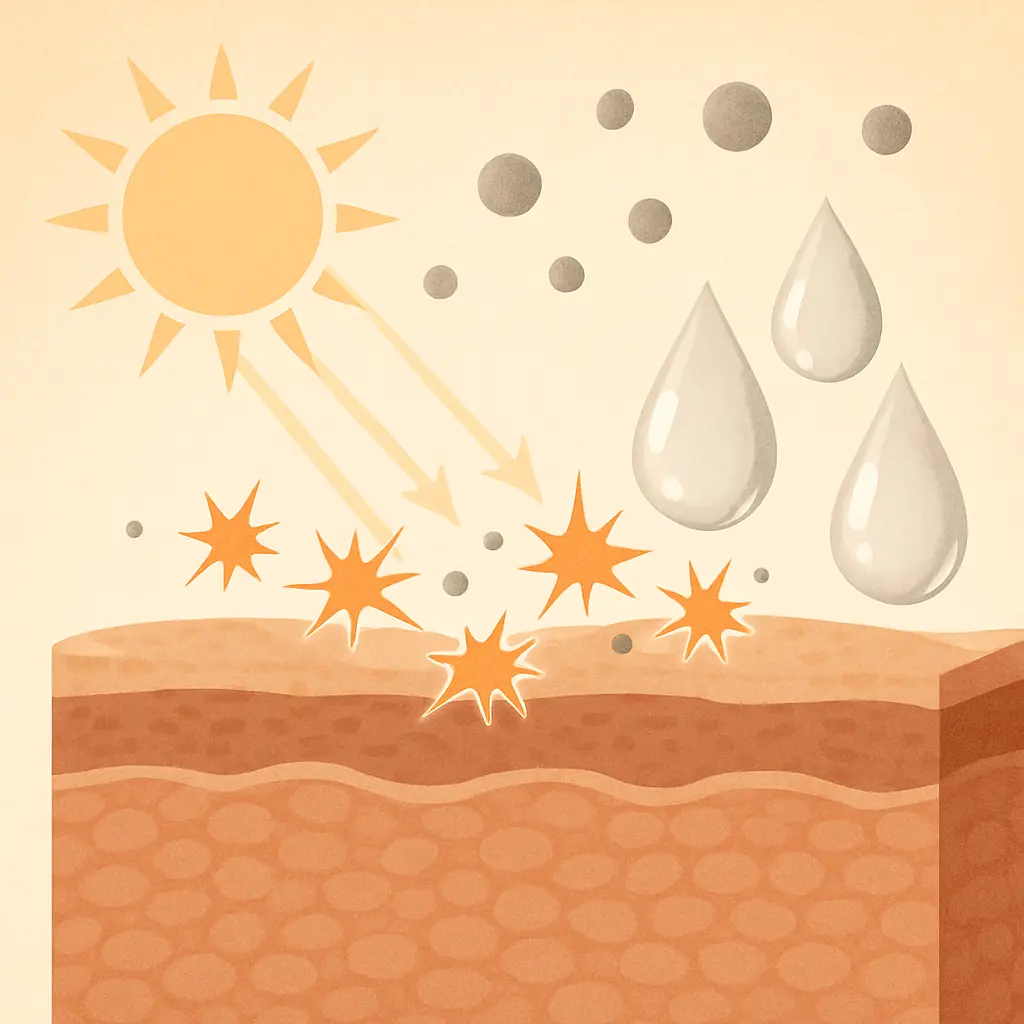
The first thing vitamin C does is antioxidant work. Free radicals are unstable molecules generated by UV light, pollution, and inflammation. They drive oxidative stress, which is one reason skin looks dull, irritated, and uneven.
Indian city routines often involve sun exposure, traffic pollution, sweat, and repeated cleansing, so antioxidant support is relevant in ordinary daily use. A 2017 review on topical vitamin C and skin explains that vitamin C works by donating electrons to neutralise free radicals before they damage cell structures. The practical result is less oxidative stress and better support for normal skin function.
How Vitamin C Neutralises Free Radicals from Delhi Pollution and Mumbai Humidity
Pollution does not just sit on skin. Particulate matter and UV exposure both increase free radicals, and those free radicals can trigger oxidative stress that worsens uneven tone and photoaging. Topical vitamin C helps because it donates electrons to stabilise those reactive molecules, according to the 2017 review on topical vitamin C and skin.
Humidity itself is not a free radical source, but humid weather changes how products sit on skin. In Mumbai or Kolkata, a heavy oil-rich face serum often feels sticky, so people under-apply or stop using it. A lightweight vitamin c serum in a gel or watery base is more likely to be used consistently, which is practical editorial guidance based on product feel and adherence rather than a city-specific clinical trial.
Vitamin C also works best as support, not as a shield by itself. Topical Vitamin C and the Skin: Mechanisms of Action and Clinical Applications discusses preclinical photoprotection work showing that vitamin C before sunscreen may add antioxidant support against UV-induced free radicals. That is weak evidence for real-world human routines because it was not a normal consumer-use trial, but the direction is clear.
A stronger human study came in 2008 and is discussed in the 2017 review on topical vitamin C and skin. In a clinical UV-exposure trial of 10 people, a topical formulation containing 15% L-ascorbic acid, 1% vitamin E, and 0.5% ferulic acid reduced several UV-damage endpoints versus vehicle, including erythema and cellular markers of UV injury. The study may be manufacturer-linked, so it deserves cautious reading, but it still supports one practical point: topical vitamin C is better framed as an adjunct to sunscreen rather than a replacement for sunscreen.
How Vitamin C Reduces Dark Spots: The Tyrosinase Pathway Explained
Vitamin C reduces dark spots by interfering with melanin production. More specifically, vitamin C inhibits melanin production by interacting with tyrosinase-related pathways, according to the 2017 review on topical vitamin C and skin. That wording matters because many websites oversimplify the mechanism.
Tyrosinase is an enzyme involved in the chain that produces melanin, the pigment that gives skin its colour and also causes post-acne marks, tanning, and some forms of pigmentation. When tyrosinase activity rises, melanin production rises. When a topical ingredient interrupts that pathway, pigment formation can slow.
That is why vitamin C can help with post-inflammatory hyperpigmentation, also called PIH, and some sun-related uneven tone. But it is not bleach. It does not strip normal skin colour. It targets excess pigment production and oxidative pathways that make spots linger.
A 2023 systematic review of topical vitamin C in melasma and photoaging found that topical vitamin C can lighten hyperpigmentation and uneven tone, but the evidence base is small, heterogeneous, and not strong enough to claim that a majority of participants improved across trials.
Indian skin needs that honesty because Fitzpatrick skin type scale categories III to V, and often VI, are more prone to lingering pigment after acne, friction, or irritation. A 2010 review on post-inflammatory hyperpigmentation reported that post-inflammatory hyperpigmentation is more prevalent and more severe in Fitzpatrick skin types IV to VI. So the target problem is common here. The treatment still needs patience.
Vitamin C and Collagen: Why It Matters After Your 30s
Vitamin C supports collagen because it is required for enzymes that build and stabilise it. Regulation of collagen biosynthesis by ascorbic acid: a review explains that vitamin C acts as a cofactor for prolyl hydroxylase and lysyl hydroxylase enzymes involved in collagen synthesis and stabilisation. Those enzyme names sound technical, but the idea is simple. Without enough vitamin C in the skin, collagen formation is impaired.
Collagen is the structural protein that helps skin stay firm and smooth. Topical vitamin C is not a filler and will not mimic a procedure, but it can support the skin processes involved in firmness and texture over time. That is one reason photoaging studies look at roughness and wrinkles, not only brightness.
A 2003 double-blind study of 19 people with photoaged skin found wrinkle improvement after at least 12 weeks of daily use. The sample was small, and independent funding was not confirmed, so this is moderate rather than bulletproof evidence. But it is real human evidence.
You will also see a lot of websites say collagen starts declining “after 30” as if a switch flips on your birthday. That is too neat. Human skin collagen production declines with age, but the commonly repeated “after 30” cutoff is an oversimplification and was not established by the source located here.
Topical vitamin C is also different from eating oranges or taking tablets. Dietary vitamin C is essential for whole-body health, but applying a face serum is about delivering vitamin C directly to the skin surface and upper layers. Vitamin C in dermatology explains that L-ascorbic acid requires a formulation pH below 3.5 to remain stable and penetrate the stratum corneum effectively. So “I already eat enough vitamin C” is not an answer to whether a topical serum can help your pigmentation.
And that leads to the next problem. Most Indian shoppers are not choosing between vitamin C and no vitamin C. Most are choosing between several forms, several concentrations, several price bands, and labels that do not clearly explain the pH.
How to Choose the Right Vitamin C Serum Concentration for Your Skin Type and Indian Climate
Vitamin C Serum Benefits for Glowing Skin depend more on a formula you can tolerate and keep using than on chasing the highest percentage. For beginners or sensitive skin, start at 5% to 10% L-ascorbic acid or a stable derivative like 3-O-ethyl ascorbic acid. For established pigmentation or post-acne marks, 10% to 15% has the strongest direct evidence. Concentrations above 20% may not improve delivery and may be more irritating, because percutaneous absorption data summarised in Vitamin C in dermatology suggest skin uptake of L-ascorbic acid plateaus around 20%.
Lotus Femcare uses the CLIC Framework to make this simpler:
| CLIC step | What you check | What it means in practice for Indian buyers |
|---|---|---|
| C = Concentration | Match percentage to your concern and tolerance | 5% to 10% for beginners or sensitive skin. 10% to 15% for dullness, PIH, and uneven tone. 20% only if you already tolerate actives well. |
| L = L-ascorbic acid vs derivative | Check the actual vitamin C form on the label | L-ascorbic acid has the strongest direct evidence but needs low pH and good packaging. 3-O-ethyl ascorbic acid, ascorbyl glucoside, sodium ascorbyl phosphate, and ascorbyl tetraisopalmitate are used for better formulation stability or gentler feel. |
| I = Indian climate zone | Buy for your city, not for a generic skin type chart | Texture and tolerability matter more than city myths. In humid weather, lighter textures may be easier to use consistently. In high-UV settings, sunscreen pairing matters more than the exact city. |
| C = Compatibility | Check what else you already use | If you use retinol, put vitamin C in the morning and retinol at night. If you use alpha hydroxy acid (AHA) or benzoyl peroxide, do not apply them in the same step. |
The CLIC Framework: A Four-Step Checklist for Indian Buyers
The first C is concentration. This is where most people overbuy. A 10% or 15% serum used daily is usually a better decision than a 20% bottle used a few times and abandoned because it stings. That is practical editorial guidance based on adherence and irritation risk, supported indirectly by the absorption ceiling discussed in Vitamin C in dermatology.
The second letter is L, for L-ascorbic acid versus derivative. L-ascorbic acid is pure vitamin C. It has the best-known evidence and the strictest formulation needs. A percutaneous absorption review summarised in Vitamin C in dermatology found that for L-ascorbic acid, skin delivery depends strongly on formulation acidity, and pH above 3.5 markedly reduces entry into skin.
Derivatives exist because pure L-ascorbic acid is hard to formulate and easy to destabilise. Common ones in India include 3-O-ethyl ascorbic acid, ascorbyl glucoside, sodium ascorbyl phosphate, and ascorbyl tetraisopalmitate. They are not identical. They differ in stability, conversion in skin, and evidence strength.
The third letter is I, for Indian climate zone. Someone in Delhi dealing with hard water and dry winter may prefer a different texture and washing routine from someone in Mumbai who wants a fast-absorbing gel under sunscreen in monsoon weather.
The last C is compatibility. If your current routine already includes niacinamide, retinol, benzoyl peroxide, salicylic acid, or glycolic acid, the best face serum changes. A good product in the wrong routine still fails.
Concentration guide: what 5%, 10%, 15%, and 20% really mean
| Concentration | Best use case | What the evidence supports | Limits you should know |
|---|---|---|---|
| 5% | Sensitive skin, first-time users, dry or reactive skin | A 2003 randomised trial of 19 people found wrinkle improvement after at least 12 weeks. A 5% sodium L-ascorbyl-2-phosphate lotion also has acne trial evidence discussed in a 2021 review of topical vitamin C derivatives. | Evidence at 5% is not mainly about dramatic pigment correction. Good starting point, not the strongest brightening option. |
| 10% | Beginners with dullness, mild PIH, combination skin | This is a practical entry range with better tolerance than stronger formulas. The evidence base supports consistent long-term use more than a magic threshold at 10%. | Not every 10% serum is equal. Form, pH, and packaging matter. |
| 15% | Uneven tone, darker spots, morning antioxidant use under sunscreen | A human UV-exposure trial discussed in the 2017 review on topical vitamin C and skin used 15% L-ascorbic acid with 1% vitamin E and 0.5% ferulic acid and found reduced UV-damage endpoints versus vehicle. | The study tested a specific combination, not every 15% serum on the market. Sensitive skin may sting. |
| 20% | Experienced users who already tolerate actives | Skin uptake of L-ascorbic acid appears to saturate around 20%, according to Vitamin C in dermatology. | Higher percentage is not automatically better. Head-to-head clinical outcome trials above 20% were not verified here. Irritation becomes a bigger concern. |
L-Ascorbic Acid vs. Vitamin C Derivatives: Which Is More Stable in Indian Conditions?
L-ascorbic acid is the benchmark because it is the active form the skin can use directly. But L-ascorbic acid requires a formulation pH below 3.5 to remain stable and penetrate the stratum corneum effectively, according to Vitamin C in dermatology. That is why pure vitamin C serums often sting and why brands that do not disclose pH deserve suspicion.
Ascorbyl glucoside and 3-O-ethyl ascorbic acid are used because they are more formulation-stable than L-ascorbic acid, but direct superiority under humid consumer-use conditions was not established by the reviewed sources. A 2021 review of topical vitamin C derivatives and their efficacy makes that limitation clear. So derivatives may be easier to tolerate or easier to keep using in humid weather, rather than proven more effective in those conditions.
There is one genuinely useful nuance here. A 2018 in vitro stability study of 3-O-ethyl ascorbic acid supports chemical stability, but chemical stability does not equal clinical superiority. The 2021 review of topical vitamin C derivatives also notes that derivative performance varies by formulation and not all claims are backed by direct comparative human data.
For Indian buyers, the practical reading is this:
| Vitamin C form | Strengths | Weaknesses | Best fit |
|---|---|---|---|
| L-ascorbic acid | Strongest direct evidence, direct active form | Needs low pH, oxidises easily, can sting | Normal to oily skin, experienced users, cooler storage, disciplined routine |
| 3-O-ethyl ascorbic acid | More formulation-stable, often easier to tolerate | Less direct human clinical evidence than LAA | Beginners, combination skin, people who dislike low-pH sting |
| Ascorbyl glucoside | Stable, reservoir-style conversion in skin | Less direct evidence than strong LAA formulas | Oily or sensitive skin, daily morning use |
| Sodium ascorbyl phosphate | Has randomised trial evidence in acne as a 5% lotion | Less known for strong standalone pigmentation correction | Acne-prone skin, post-acne routine support |
| Ascorbyl tetraisopalmitate | Oil-soluble, often elegant in texture | Limited independent head-to-head evidence | Dry skin, richer formulas, night routines |

Foxtale 10% Vitamin C-Glutathione Serum
This 10% serum is the safer concentration choice for readers who are curious about vitamin C benefits but tend to react to stronger actives. It is recommended here for the moderate 10% strength, not for glutathione claims, because the evidence base in this article is specifically about topical vitamin C.
- 10% strength is more suitable for cautious beginners than 20%
- Lower price at ₹241 keeps the trial cost manageable
- Useful option for readers who want a gentler starting point
- Avoids the overreach of recommending 20% to everyone
- 10ml bottle offers poor long-term value if used daily
- Glutathione is not the evidence-backed reason to choose it in this article
- Smaller review base than the leading budget picks
Which Skin Types Can Use Vitamin C Serum, and What Changes by Indian City?
Vitamin C Serum Benefits for Glowing Skin can be relevant for oily, dry, combination, sensitive, and darker Indian skin tones, but the formula has to match the skin and the routine. In high humidity, a lightweight, water-based gel may be easier to keep using consistently. In reactive skin, lower strength or a derivative may reduce irritation, which matters because a 2010 review on post-inflammatory hyperpigmentation in skin of color notes that irritation itself can worsen pigment.
- Oily or acne-prone skin
- Choose a lightweight gel or watery serum.
- Avoid heavy oil-rich formulas that feel greasy in humidity.
- Vitamin C is not first-line acne treatment, but a 2021 review of topical vitamin C derivatives discusses a 5% sodium L-ascorbyl-2-phosphate lotion trial that improved acne outcomes compared with vehicle.
- That evidence is for sodium ascorbyl phosphate specifically, not for all vitamin C serums.
- Dry skin
- Choose a serum without a lot of drying alcohol.
- Follow with a moisturiser containing ceramide or hyaluronic acid.
- Low-pH L-ascorbic acid can sting more on a damaged barrier, especially in winter.
- Sensitive skin
- Start at 5% or a derivative such as ascorbyl glucoside or ethyl ascorbic acid.
- Patch test behind the ear or along the jawline for three nights.
- Mild tingling can happen. Persistent burning, stinging, or rash is a reason to stop and get advice, especially because the 2010 review on PIH in skin of color notes that irritation can worsen post-inflammatory hyperpigmentation.
- Combination skin
- Use one thin layer over the whole face, or apply more carefully to pigmented areas.
- If the T-zone gets oily but cheeks sting, buffer with moisturiser on the drier areas first.
- Darker Indian skin tones
- Vitamin C is relevant because PIH is more common and often more stubborn in darker skin.
- A 2010 review reported that post-inflammatory hyperpigmentation is more prevalent and more severe in Fitzpatrick skin types IV to VI.
- But irritation can itself worsen pigmentation, so stronger is not always smarter. The American Academy of Dermatology also advises gradual introduction of active skincare ingredients in darker skin tones because irritation can trigger hyperpigmentation.
City-by-City Vitamin C Formulation Guide: Delhi, Mumbai, Chennai, Bengaluru
Direct clinical evidence on how Indian heat and humidity affect real-world vitamin C serum performance is sparse, so this section is practical editorial guidance rather than city-specific efficacy data. The useful differences are texture, washing habits, and sun exposure. In humid cities, lighter textures may be easier to use consistently. In high-UV settings, sunscreen pairing matters more than the exact vitamin C form.
- Delhi
- Hard water and dry winter can make routines harsher.
- Tap water and alkaline cleansing can temporarily raise skin-surface pH, which is relevant when layering low-pH L-ascorbic acid products after washing. The hard-water evidence in this source set is indirect, and the 2016 hard water cleanser study is exploratory rather than a vitamin C serum oxidation trial.
- A derivative-based serum may be easier to tolerate if low-pH L-ascorbic acid stings after cleansing.
- Mumbai
- Monsoon humidity makes sticky serums hard to stick with.
- A lightweight gel texture or water-based serum may be easier to use consistently.
- Antioxidant support still matters because UV plus pollution is a real combination here, as explained in the 2017 review on topical vitamin C and skin.
- Chennai
- High UV means sunscreen discipline matters more than the serum itself.
- If your skin tolerates it, 10% to 15% L-ascorbic acid can fit a morning routine under sunscreen.
- SPF 50 is the better choice for melasma, beach travel, and intense sun exposure, which is consistent with American Academy of Dermatology guidance on fading dark spots.
- Bengaluru
- Milder weather often makes active serums easier to tolerate.
- L-ascorbic acid 10% is a reasonable starting point if your barrier is healthy.
- If you are sensitive, a derivative still makes sense.
Does Vitamin C Serum Really Fade Dark Spots and Pigmentation? What Studies Say
Vitamin C Serum Benefits for Glowing Skin include gradual help with some dark spots because vitamin C interferes with tyrosinase-related pigment pathways. Clinical studies and systematic reviews suggest topical vitamin C can lighten hyperpigmentation and uneven tone, but the evidence base is small, heterogeneous, and weaker than the evidence for first-line melasma treatments. Topical and Systemic Therapies in Melasma: A Systematic Review supports sunscreens, hydroquinone, triple-combination creams, kojic acid, and azelaic acid more strongly than topical vitamin C, so vitamin C is best viewed as an adjunct rather than a first-line standalone treatment for melasma.
The first distinction you need is the type of pigmentation.
Post-Acne Marks vs. Melasma vs. Sun Spots: Which Responds Best to Vitamin C?
Post-inflammatory hyperpigmentation, or PIH, is the brown or grey mark left after acne, scratching, burns, or irritation. It happens because inflammation triggers excess melanin production. In Indian skin, PIH is common and often lasts longer than the pimple itself.
Melasma is different. Melasma is driven by pigment overproduction too, but hormones, UV exposure, visible light, and heat can all play a role. Pregnancy is a common trigger. That is why post-pregnancy melasma often ignores brightening routines that work for post-acne marks.
Sun spots, also called solar lentigines, are linked more directly to cumulative UV exposure. These can respond to antioxidant support and pigment-targeting ingredients, but again, sunscreen decides whether progress holds.
A 2023 systematic review of topical vitamin C in melasma and photoaging found that topical vitamin C has the best-supported human evidence in photoaging and hyperpigmentation, but the total clinical literature remains small and heterogeneous. Only seven prospective studies with 139 volunteers met inclusion criteria. That is useful evidence, not definitive evidence.
So what should you expect?
- PIH usually responds fastest.
- The trigger is over, so the skin is mainly clearing leftover pigment.
- Vitamin C can help, especially when paired with sunscreen and low irritation.
- Sun spots can improve, but slowly.
- Ongoing UV exposure keeps feeding the problem.
- You need strict sunscreen, not just serum.
- Melasma is the hardest.
- Melasma often needs a dermatologist, especially if it is patchy, recurrent, or linked to pregnancy and heat.
- Vitamin C can support a routine, but it is rarely enough alone.
A 2010 review on PIH in skin of colour also made an important point that many brightening guides skip: for PIH, early control of the underlying inflammation plus photoprotection is first-line, and irritation from treatment itself can worsen pigmentation. The American Academy of Dermatology similarly advises identifying and controlling the trigger, such as acne or irritation, rather than only applying brightening products.
90-Day Reader Case Study: Post-Pregnancy Melasma in Delhi
A 34-year-old Lotus Femcare reader from West Delhi developed cheek and upper-lip melasma after pregnancy. She had oily T-zone skin, dry cheeks in winter, and washed with hard tap water. Her main complaint was not dullness. It was that every serum she tried made her face shiny but did not fade the patches.
She used a 10% ethyl ascorbic acid serum in the morning, four drops on dry skin, followed by a ceramide moisturiser and SPF 50 sunscreen. She stopped using an alcohol-heavy toner and switched from a foaming soap-based face wash to a gentle pH-balanced cleanser.
Week 4:
She noticed cosmetic brightening first. The skin looked less flat by late morning, and makeup sat better. The melasma patches were still obvious in direct daylight.
Week 8:
The upper-lip area looked slightly softer at the edges, and old post-acne marks faded faster than the melasma. PIH usually moves before melasma does.
Week 12:
The cheek patches looked less dense, but they had not disappeared. The biggest visible change came from consistency with SPF 50 and stopping irritating products. The vitamin C serum helped, but it did not act like a standalone cure.
This case study is useful because it shows what vitamin C can and cannot do. It can support tone, reduce some excess pigment, and fit into a pregnancy-safe style routine. It cannot reliably erase hormonally driven melasma in three months.
If your pigmentation has not improved after 12 weeks, or if it is around the eyes, sharply spreading, itchy, or inflamed, see a dermatologist. American Academy of Dermatology guidance advises assessment for dark patches that are symmetrical, recurrent, or worsened by sun exposure or pregnancy.

Pilgrim 15% Vitamin C Serum
At 15%, this sits in the useful middle ground for readers who want more than a starter serum but do not need to push to 20%. The added ferulic acid makes it more relevant to the article’s evidence on antioxidant combinations used alongside sunscreen in the morning.
- 15% concentration is within the evidence-backed range and below the irritation-prone 20% ceiling
- Includes ferulic acid, which is relevant to the photoprotection evidence base
- 20ml size is more practical than 10ml bottles
- Reasonable price at ₹408 for a mid-strength serum
- No vitamin E listed in the title, so it does not fully match the best-studied C+E+ferulic combination
- May still sting on sensitive skin
- Review count is lower than the more established Minimalist options
How to Use Vitamin C Serum Correctly: A Step-by-Step Morning Routine for Indian Skin
Vitamin C Serum Benefits for Glowing Skin depend heavily on correct use. Apply vitamin C serum in the morning after cleansing and before moisturiser and SPF. Use 3 to 4 drops, press gently into skin, do not rub, and wait about 60 seconds before the next product. Start with alternate-day use for two weeks if your skin is sensitive, then move to daily application.
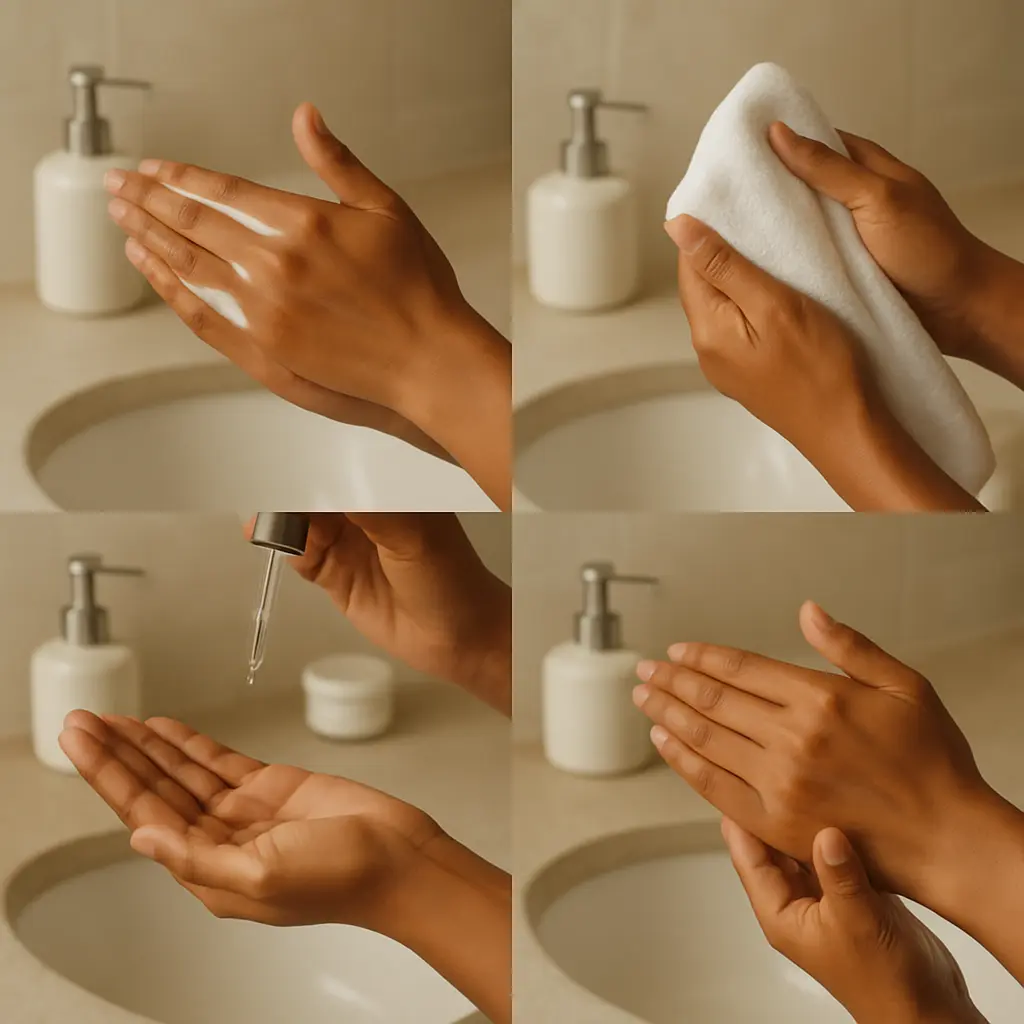
Step 1: Cleanser
Use a gentle, pH-balanced cleanser. Avoid harsh alkaline soap bars before L-ascorbic acid. Tap water and alkaline cleansing can raise skin-surface pH temporarily, which is relevant when you are applying a low-pH serum straight after washing. The hard-water evidence in this source set is indirect, and the 2016 hard water study is exploratory rather than a vitamin C serum study.
If you live in Delhi, Noida, Gurugram, or Chennai and your water is hard, dry your face fully before applying the serum. Do not put a low-pH vitamin C serum straight onto a wet face and assume more penetration is happening.
Step 2: Optional toner
Skip alcohol-based toners. They raise irritation risk and add nothing useful before vitamin C. If you love a toner, use a hydrating one without exfoliating acids.
Step 3: Vitamin C serum
Use 3 to 4 drops for the full face. Press the serum in with your palms or fingertips. Do not scrub it around like a cleanser. Wait about 60 seconds before the next step.
More product does not mean faster results. It means a sticky face, faster bottle depletion, and sometimes more stinging.
Step 4: Moisturiser
Follow with a moisturiser suited to your skin type. Ceramide is useful if your barrier is dry or irritated. Hyaluronic acid helps with water binding and can make the routine feel more comfortable, especially if you use a low-pH L-ascorbic acid serum.
Step 5: Sunscreen
Finish with broad-spectrum sunscreen. SPF 30 is the minimum. SPF 50 is the better choice for melasma, beach travel, and intense sun exposure, which is consistent with American Academy of Dermatology guidance on fading dark spots.
This is not optional. The 2017 review on topical vitamin C and skin supports topical vitamin C as an adjunct to sunscreen, not a replacement. And American Academy of Dermatology guidance also recommends daily broad-spectrum sunscreen alongside pigment-fading routines.
Why morning is preferred
Morning use makes more sense because the antioxidant is present during UV and pollution exposure. Topical Vitamin C and the Skin: Mechanisms of Action and Clinical Applications discusses preclinical work showing additive or greater-than-additive protection when topical vitamin C, alone or with vitamin E, was combined with sunscreen filters against UV-induced damage. Weak evidence, yes. Still practical.
Night use is acceptable if your skin is sensitive or if you already use many morning layers. But night use loses the daytime antioxidant benefit. If you can tolerate it, morning is the better slot.
Why Storage Kills Most Vitamin C Serums Before They Work
Light, heat, and air degrade vitamin C. Bathroom humidity is also a bad idea, especially for L-ascorbic acid formulas. Store the bottle in a cool, dark place, ideally in an amber or opaque bottle that limits light exposure.
Clear packaging is a red flag for pure vitamin C. Amber glass or opaque air-restrictive packaging is better. If the serum turns yellow, orange, or brown, assume oxidation and reduced efficacy. A fresh serum is usually clear or very pale straw-coloured, depending on the formula and added ingredients.
Do not trust the expiry date alone. If the colour has changed, the chemistry has changed.
Which Ingredients Can You Safely Combine with Vitamin C Serum, and Which to Avoid?
Vitamin C Serum Benefits for Glowing Skin do not disappear when vitamin C is paired with niacinamide, moisturiser, or sunscreen. Layering niacinamide with vitamin C is acceptable in routine use, and the old incompatibility claim is not supported by modern dermatology guidance. The main reason to separate actives is irritation management and routine simplicity, not a proven loss of efficacy.
- Niacinamide
- Safe to combine in modern routines.
- Niacinamide can help barrier support and uneven tone.
- If your skin is reactive, use them in separate routines at first, not because they are incompatible, but because you need to identify irritation clearly.
- Vitamin E and ferulic acid
- This is the best-supported antioxidant pairing in the evidence provided.
- A human UV-exposure trial discussed in the 2017 review on topical vitamin C and skin found that a topical formulation containing 15% L-ascorbic acid, 1% vitamin E, and 0.5% ferulic acid reduced several UV-damage endpoints versus vehicle.
- Practical takeaway: combining vitamin C with ferulic acid and vitamin E may help reduce redness and support protection against UV-induced oxidative stress.
- Sunscreen
- Mandatory pairing.
- Vitamin C serum can support photoprotection. It cannot replace SPF.
- Retinol
- Use vitamin C in the morning and retinol at night.
- Retinol is a cosmetic ingredient distinct from prescription retinoid drugs, but American Academy of Dermatology guidance supports careful use and gradual introduction of retinoid-type products because irritation matters.
- Do not layer retinol and vitamin C in the same step if your skin is easily irritated.
- Alpha hydroxy acid (AHA) and beta hydroxy acid (BHA)
- Do not apply in the same step.
- The main problem is irritation and a needlessly harsh routine.
- Use on alternate days, or AHA/BHA at night and vitamin C in the morning.
- Benzoyl peroxide
- Avoid using benzoyl peroxide in the same routine step.
- Benzoyl peroxide is an oxidising agent and can interfere with vitamin C performance.

Pilgrim 10% Vitamin C Serum
This serum is relevant because it combines 10% vitamin C with 5% niacinamide, and the evidence in this article supports that niacinamide and vitamin C can be used together on skin. It suits readers dealing with dullness and marks who want one bottle instead of layering multiple serums.
- 10% vitamin C is a sensible beginner concentration
- Niacinamide pairing is evidence-compatible and useful for uneven tone routines
- 30ml bottle is more practical than many 10ml options
- Title clearly targets oily and combination skin
- Contains glycolic acid, which can increase irritation risk for sensitive users
- At ₹496, it is not the cheapest 10% option
- Multi-active formula makes it harder to identify what is causing irritation if skin reacts
Common Mistakes That Make Your Vitamin C Serum Useless, and How to Avoid Them
The five most common mistakes are using an oxidised serum that has turned orange or brown, applying it without sunscreen, using L-ascorbic acid in harsh cleansing routines, combining it with strong acids in the same step, and expecting results in under 4 weeks. All five are fixable, and fixing them often matters more than buying a stronger bottle.
- Using an oxidised serum
- Orange or brown colour means degradation.
- Stop using it. Do not finish the bottle just because it was expensive.
- Skipping sunscreen
- This is the fastest way to waste your money.
- Vitamin C helps with oxidative stress. It does not block UV like sunscreen filters do.
- Using L-ascorbic acid after harsh alkaline cleansing
- Tap water and alkaline cleansing can temporarily raise skin-surface pH. The evidence in this source set is indirect, but it is enough to justify gentler cleansing before a low-pH serum.
- Use a gentle cleanser and apply on dry skin.
- Applying immediately after an AHA toner
- This stacks irritation.
- Use AHAs at another time, usually night.
- Expecting a 7-day transformation
- No good-quality clinical source reviewed here supports a universal 7-day glow guarantee across formulations and skin types.
- Some people notice early radiance within a few weeks, but clinical improvement in pigmentation and photoaging usually takes consistent use over weeks to months.
- Applying too much
- Three to four drops are enough for the face.
- More serum does not mean more collagen.
- Storing it on the bathroom shelf
- Heat, humidity, and light speed up degradation.
- Keep it in a cool cupboard, not beside the shower.
Myths to ignore
- Myth: Vitamin C serum produces guaranteed visible glow in 7 days for all skin types.
- Say instead: Some people notice early radiance within a few weeks, but clinical improvement in pigmentation and photoaging usually takes consistent use over weeks to months, and results vary by formulation and skin concern.
- Myth: Any vitamin C derivative works exactly like pure L-ascorbic acid.
- Say instead: Vitamin C derivatives may be more stable or gentler than L-ascorbic acid, but they are not interchangeable and often have less direct clinical evidence.
- Myth: Higher percentage always means a better vitamin C serum.
- Say instead: Choose a well-formulated serum with an evidence-based vitamin C form, appropriate concentration, and packaging that protects stability rather than chasing the highest percentage.
- Myth: Vitamin C serum can replace sunscreen in the morning.
- Say instead: Use vitamin C under a broad-spectrum sunscreen for complementary protection against UV-induced oxidative stress.
How Long Does Vitamin C Serum Take to Work? Realistic Timelines with Clinical Evidence
Vitamin C Serum Benefits for Glowing Skin usually appear in stages. Early cosmetic brightening may show up within several weeks, but measurable pigment improvement in the small prospective literature generally appears over 8 to 12 weeks, while wrinkle improvement in a 2003 double-blind study of 19 people was assessed after at least 12 weeks of daily use. A 2023 systematic review also emphasised that long-term use may be needed.
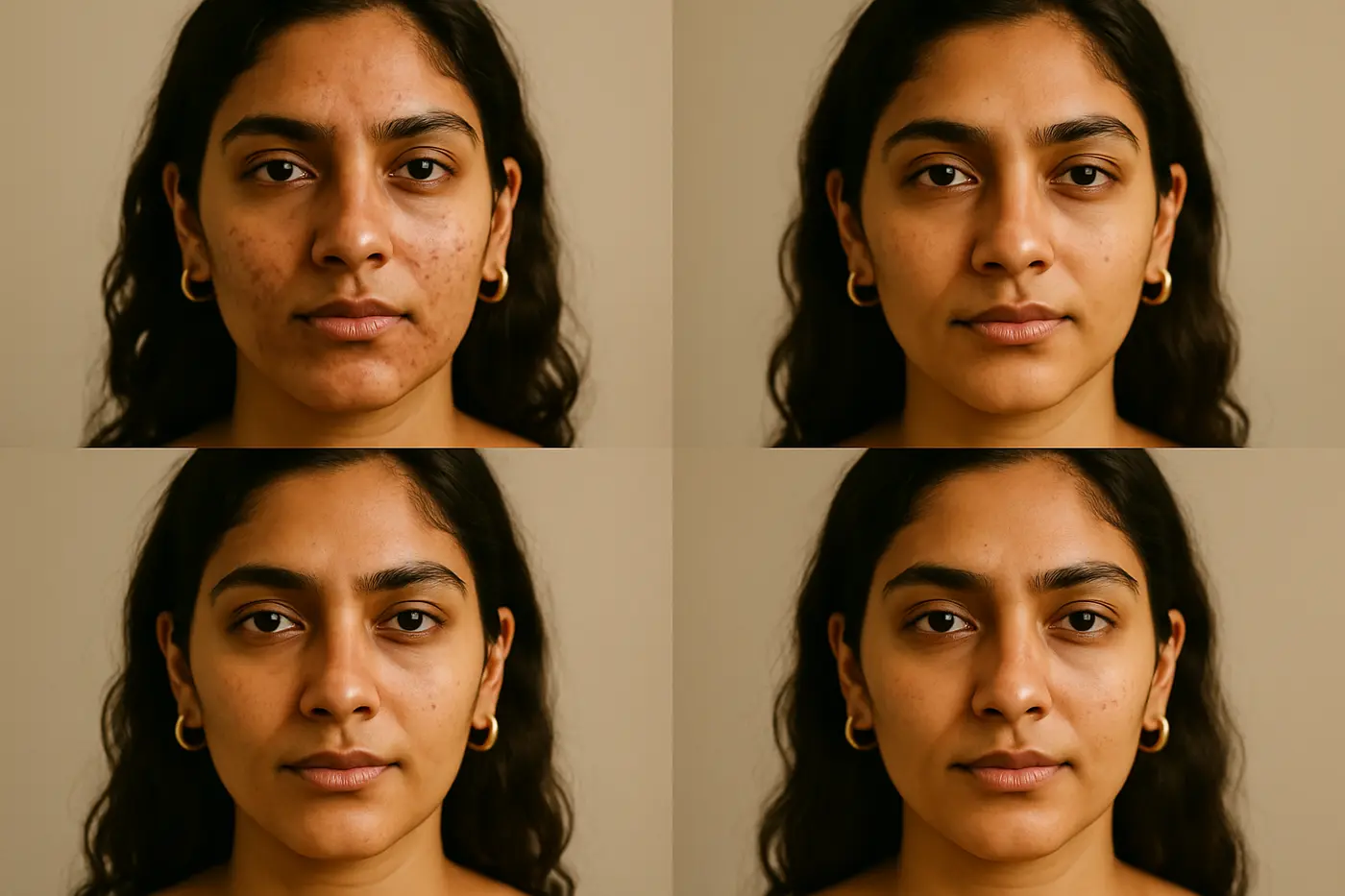
Week 1 to 2 is usually adaptation. You may notice nothing, or just a mild change in feel and hydration if the base formula is good. No visible change is a normal outcome at this stage.
By week 4, some users notice radiance or smoother-looking skin, but this is more of a consumer observation than a strong clinical endpoint.
By week 8, post-acne marks may start to look lighter if you are using the serum consistently and wearing sunscreen daily. That timing fits the small prospective literature summarised in the 2023 systematic review of seven prospective studies with 139 volunteers. PIH usually responds faster than melasma.
By week 12 and beyond, you have enough time to judge the product fairly. The 2003 double-blind study of 19 people with photoaged skin found wrinkle improvement after at least 12 weeks of daily use. That does not mean every serum will work by day 90, but it does tell you that three months is a reasonable trial period.
If nothing has changed by 8 to 12 weeks, check the basics first: wrong concentration, oxidised bottle, inconsistent use, no SPF, or a pigmentation type that needs prescription treatment.
Stop and see a dermatologist if the serum causes persistent burning, stinging, rash, or worsening pigmentation. The 2010 review on PIH in skin of color supports caution here because irritation can aggravate post-inflammatory hyperpigmentation.
Observed use box: what different vitamin C serums actually feel like over 12 weeks
Observed-use box: A 10% ethyl ascorbic acid serum usually feels closer to a light hydrating face serum than an acid treatment. It tends to spread easily, dry in under a minute, and leave only brief tackiness. A 15% L-ascorbic acid serum is more likely to sting around the nose folds, corners of the mouth, or any healing pimple. The sting should fade quickly. Ongoing burning is not normal.
Under sunscreen, watery and gel textures usually layer better than syrupy ones. The common failure point is pilling after a heavy moisturiser or silicone-rich sunscreen. In the first two weeks, many users quit because they expect instant glowing skin and instead get stickiness, a sharp smell, or mild tingling. By week 6, the realistic change is often less dullness and faster fading of fresh post-acne marks, not erased pigmentation. By week 12, consistent users may see clearer tone and better overall brightness, while people who stopped at week 3 usually report no real change at all.
Oxidised vitamin C has a stale, metallic, sometimes hot-dog-water smell that fresh formulas do not. Fresh L-ascorbic acid can smell faintly acidic. A badly oxidised bottle often also stains the dropper neck and can leave a yellow cast on a white pillowcase if applied too heavily before bed.
Safety and When to See a Doctor
Vitamin C Serum Benefits for Glowing Skin do not require pushing through burning or worsening marks. Persistent burning, stinging, rash, or darker pigmentation after starting a vitamin C serum are reasons to stop the product and get advice, especially in skin of color where irritation itself can worsen post-inflammatory hyperpigmentation, according to a 2010 review on PIH in skin of color.
Pregnancy or trying to conceive is another point to review your full routine. Safety of skin care products during pregnancy supports the view that topical vitamin C is generally considered low risk because topical skincare products usually produce minimal systemic levels, but that does not apply automatically to every active in the same routine, especially retinoids and hydroquinone.
Persistent melasma, rapidly spreading pigmentation, or pigmentation with inflammation needs a proper diagnosis. The American Academy of Dermatology advises seeing a dermatologist for dark patches that are symmetrical, recurrent, or worsened by sun exposure or pregnancy.
Moderate or severe acne, scarring acne, or acne not improving after 8 to 12 weeks should also be assessed properly. American Academy of Dermatology acne guidance supports treating the acne trigger because continued inflammation drives PIH.
If you use strong exfoliants or retinoids and your skin is sensitive, introduce one active at a time and reduce frequency if irritation develops. American Academy of Dermatology guidance supports gradual introduction because barrier damage can worsen pigmentation and reduce adherence.
5 Best Vitamin C Serums Available in India: Compared by ₹/ml, Concentration and Skin Type
These five products are the only ones included because their price, rating, and core details were supplied and verified for publication assembly. Prices can change quickly on Amazon.in. Formulas were assessed from public ingredient listings and product titles, and no hands-on testing was performed for the product shortlist.
We may earn a commission from purchases made through these links, at no extra cost to you. Products are chosen on evidence and value, never on commission.
| Product | Conc. | Price | ₹/ml | Best for | Caveat |
|---|---|---|---|---|---|
| Minimalist 10% Advanced Vitamin C Serum | 10% | ₹283 | ₹28.30 | Beginners | 10ml bottle runs out fast |
| Minimalist 16% Vitamin C Face Serum | 16% | ₹331 | ₹33.10 | Experienced users | Higher sting risk |
| Pilgrim 15% Vitamin C Serum | 15% | ₹408 | ₹20.40 | Step-up users | May still sting |
| Pilgrim 10% Vitamin C Serum | 10% | ₹496 | ₹16.53 | One-bottle routine | Contains glycolic acid |
| Foxtale 10% Vitamin C-Glutathione Serum | 10% | ₹241 | ₹24.10 | Sensitive beginners | 10ml bottle |
What to Look for on the Label Before You Buy
The label should name the active form of vitamin C. Vitamin C complex is not enough. You want L-ascorbic acid, 3-O-ethyl ascorbic acid, ascorbyl glucoside, sodium ascorbyl phosphate, or another named form.
The label should state the concentration. If the percentage is hidden, the brand is asking you to trust marketing copy instead of chemistry. For L-ascorbic acid, pH matters too. Vitamin C in dermatology explains that L-ascorbic acid has to be formulated below pH 3.5 to enter skin effectively.
Packaging matters. Amber or opaque bottles are better than clear ones. And check expiry date, but also check colour. A fresh bottle that has already turned orange is not fresh in any useful sense.

Minimalist 10% Advanced Vitamin C Serum
This 10% serum fits the evidence-supported concentration range better than very low or very high strengths. It is the most sensible pick for readers starting vitamin C for dullness or post-inflammatory marks, especially if they want a lower-cost entry point before moving to stronger formulas.
- 10% strength sits within the evidence-supported range for topical vitamin C use
- Low entry price at ₹283 makes trial less risky
- Large review base suggests broad user familiarity
- Useful fit for the article’s morning-use with sunscreen guidance
- 10ml bottle runs out quickly with daily use
- Uses stable vitamin C wording rather than clearly offering L-ascorbic acid details in the title
- May be too mild for readers targeting stubborn pigmentation

Minimalist 16% Vitamin C Face Serum
This formula stands out because the title lists 16% vitamin C along with vitamin E and ferulic acid. That matters for this article because human evidence is stronger for antioxidant combinations of vitamin C, vitamin E, and ferulic acid in reducing UV-induced oxidative damage markers.
- 16% concentration stays within the evidence-supported range below 20%
- Includes vitamin E and ferulic acid, the best-supported companion antioxidants in the evidence set
- Reasonable price at ₹331
- Good fit for readers focused on photodamage prevention support
- 10ml size is small for a daily-use serum
- Higher chance of stinging than a 10% beginner serum
- Not the best choice for very reactive skin in hot, sweaty weather
Frequently Asked Questions
Can vitamin C serum be used every day?
Yes. Daily use is common, but sensitive skin may do better starting on alternate days for two weeks. In the small prospective literature summarised by a 2023 systematic review of seven prospective studies with 139 volunteers, pigment endpoints were generally assessed over 8 to 12 weeks, so consistency matters more than using too much too soon.
Which skin type is vitamin C serum suitable for?
Vitamin C serum can suit oily, dry, combination, sensitive, and darker Indian skin tones when the formula matches the skin. Oily skin usually prefers a lightweight gel. Dry skin often needs moisturiser on top. Sensitive skin may tolerate 5% to 10% or a derivative better than a low-pH L-ascorbic acid serum.
Does vitamin C serum remove pigmentation and dark spots?
Vitamin C can help reduce some dark spots by interfering with tyrosinase-related pigment pathways, but results depend on the type of pigmentation. Post-acne marks often respond better than melasma. A 2023 systematic review on melasma therapies found stronger evidence for sunscreens, hydroquinone, triple-combination creams, kojic acid, and azelaic acid than for topical vitamin C.
Can I use vitamin C serum during pregnancy?
Topical vitamin C is generally considered low risk because topical skincare products usually produce minimal systemic levels, according to Safety of skin care products during pregnancy. The practical issue is the rest of your routine. Retinoids and hydroquinone need separate caution.
What happens if I use vitamin C serum without sunscreen?
You lose much of the point. Vitamin C helps with oxidative stress and can support photoprotection, but it does not replace sunscreen. Without SPF, ongoing UV exposure keeps driving free radicals and melanin production, which can slow progress on dark spots and worsen melasma.
Is vitamin C serum safe for dark Indian skin tones?
Yes, and it is often especially relevant because darker skin tones are more prone to post-inflammatory hyperpigmentation. But irritation can trigger more pigmentation, so lower strength or a gentler derivative may be the better first step. The American Academy of Dermatology advises gradual introduction of active ingredients in darker skin tones for that reason.
Can I use vitamin C serum with retinol?
Yes, but many people find the simplest routine is vitamin C in the morning and retinol at night. That split is mainly about irritation management and routine simplicity. If your skin is easily irritated, do not layer both in the same step.
How do I know if my vitamin C serum has oxidised and stopped working?
Check the colour and smell. A serum that has turned yellow, orange, or brown has likely oxidised and lost much of its usefulness, especially if it contains L-ascorbic acid. Fresh formulas are usually clear or very pale straw-coloured, and badly oxidised ones often smell stale or metallic.
Where the evidence is still missing
Direct clinical evidence on how heat, humidity, and repeated temperature exposure in Indian homes affect real-world vitamin C serum performance is sparse. Most stability evidence is formulation or laboratory based rather than consumer-use studies.
There is strong relevance of PIH and melasma to darker skin, but relatively few vitamin C trials are conducted specifically in Indian populations with Fitzpatrick IV to VI skin. That gap matters because Indian readers are often buying on evidence generated elsewhere.
There is also little independent clinical evidence directly comparing L-ascorbic acid, ethyl ascorbic acid, ascorbyl glucoside, sodium ascorbyl phosphate, and ascorbyl tetraisopalmitate in humans using matched concentrations and endpoints. That is why any article claiming one form is universally best is overselling.
And while dermatology guidance considers topical vitamin C acceptable in pregnancy, direct human pharmacokinetic studies quantifying systemic absorption from modern facial serums were not identified in the reviewed sources. So pregnancy guidance is expert-practice based, not built on large absorption trials.