Why Lower Back Stretches Are Essential
Lower back pain is one of the most common issues that people are facing worldwide. According to epidemiological data from the Global Burden of Disease Study, nonspecific low back pain (NSLBP) affects nearly 540 million people at any given time and is a leading cause of disability. “Nonspecific” means that the pain cannot be traced back to a single identifiable disease (like a fracture or tumor), but instead results from functional and mechanical factors.
To understand the problem better, it’s important to distinguish between:
- Acute pain – often linked to trauma such as lifting a heavy object incorrectly or sudden twisting. It usually lasts a few days to weeks and is often caused by muscle strain or ligament sprain.
- Chronic pain – typically develops slowly due to factors like poor posture, prolonged sitting, weak core muscles, or repetitive stress. It persists for more than 12 weeks and is often harder to manage without lifestyle changes.
This distinction helps set realistic expectations: while stretches can provide quick relief for stiffness, addressing chronic pain requires consistent stretching, strengthening, and lifestyle adaptation.
Understanding the Anatomy of the Lower Back
The lower back is made up of lumbar vertebrae which are usally 5 in number(L1 to L2). These vertebrae are separated by intervertebral discs that act like shock absorbers. Together, they provide stability and mobility while supporting most of the body’s weight.
Key anatomical structures relevant to stretching:
- Quadratus lumborum (QL): It’s one of the muscle of deep muscle group of back which mainly responsible for side to side bending of back.
- Erector spinae: A group of muscles running vertically along the spine that extend and stabilize it.
- Iliopsoas (hip flexor): A strong muscle that connects the lower spine to the femur; prolonged sitting shortens it, pulling the pelvis forward.
- Gluteal muscles: Provide stability to the pelvis; weakness leads to compensatory strain in the lower back.
Understanding these structures helps explain why stretching and strengthening specific muscles is essential for spinal health.
What Really Causes Lower Back Pain?
Most people who seek medical advice for low back pain suffer from nonspecific low back pain, meaning no single structural damage explains the discomfort. Instead, multiple biomechanical factors contribute:
- Poor posture: Slouching shifts the load unevenly on vertebrae and discs. Over time, the erector spinae muscles tighten to compensate, creating pain.
- Sedentary lifestyle: Prolonged sitting leads to shortening of the hip flexors (iliopsoas) and weakening of the gluteal muscles. This imbalance tilts the pelvis forward (anterior pelvic tilt), increasing strain on the lumbar spine.
- Overuse or strain: Lifting with a rounded back or twisting suddenly overloads ligaments and paraspinal muscles, often causing micro-tears that result in acute pain.
- Disc problems: Degenerative disc disease or herniation compresses spinal nerves, creating localized pain or radiating sciatica.
- Muscle imbalances: When any person have weak abdominal muscles then he or she can feel lower back instability. Overactive hamstrings and tight hip flexors worsen the load.
- Stress and tension: Emotional stress activates the sympathetic nervous system, leading to muscle guarding (increased tension), particularly in the lower back.
- Age-related changes: Osteoarthritis, facet joint degeneration, and spinal stenosis reduce flexibility and increase stiffness.
Medical warning: If your pain radiates down the legs, is accompanied by numbness, tingling, or muscle weakness, or follows a fall/accident, it should be examined by a doctor to rule out serious causes such as a herniated disc.
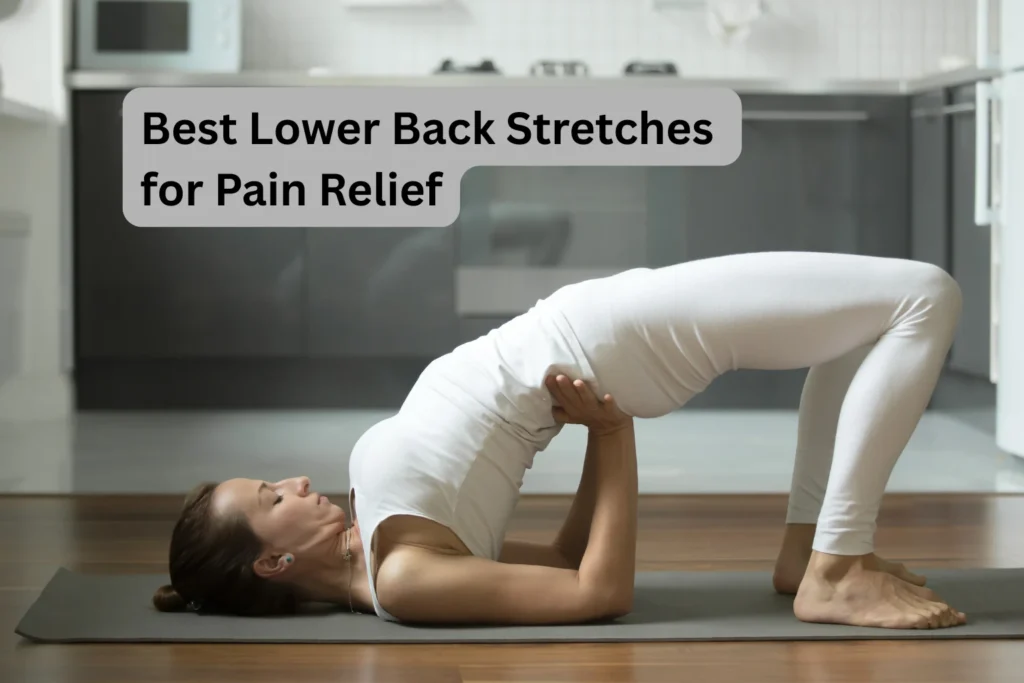
9 Best Lower Back Stretches For Pain Relief
Following are the best lower exercise selected to reduce back pain and maintain flexibility. Each includes: anatomical focus, step-by-step instructions, breathing guidance, and common mistakes.
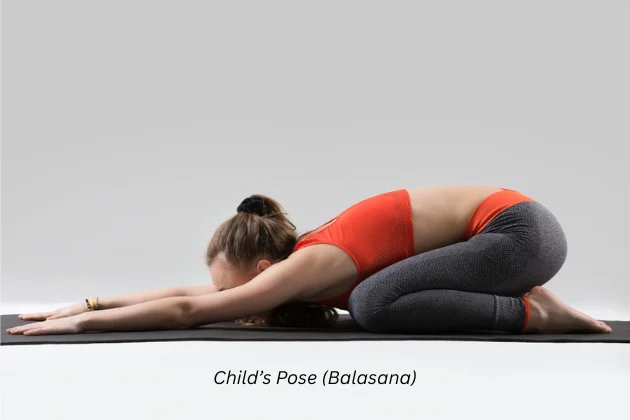
1. Child’s Pose (Balasana)
Anatomical focus: Stretches the erector spinae, latissimus dorsi, and gluteal muscles.
How to do it:
- Kneel with big toes together, knees apart.
- Sit back on heels and reach arms forward.
- Rest forehead on the floor.
- Hold for 30–60 seconds.
Breathing: Breathe slowly into your belly; with each exhale, let your chest sink deeper.
Common mistakes:
- Forcing hips to heels despite stiffness.
- Holding the breath instead of relaxing.
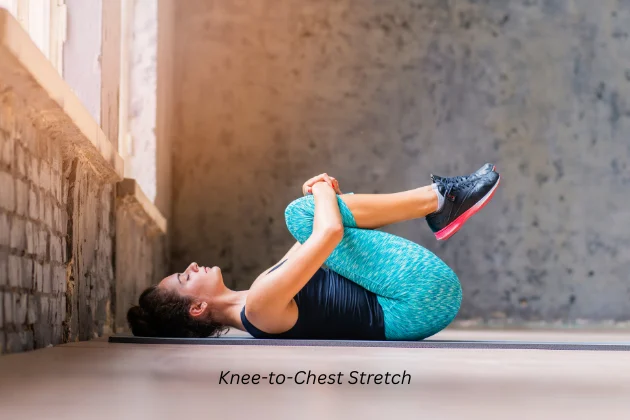
2. Knee-to-Chest Stretch
Anatomical focus: Targets the gluteus maximus, hamstrings, and lower lumbar paraspinals.
How to do it:
- Lie on your back with knees bent.
- Pull one knee gently to your chest, other foot on floor.
- Switch sides.
Breathing: inhale while you are going to starts the exercise and exhale while you completely stretch your knee
Common mistakes:
- Arching the lower back off the floor.
- Pulling the knee too forcefully.
3. Piriformis Stretch
Anatomical focus: Piriformis muscle, gluteus medius, and deep hip rotators.
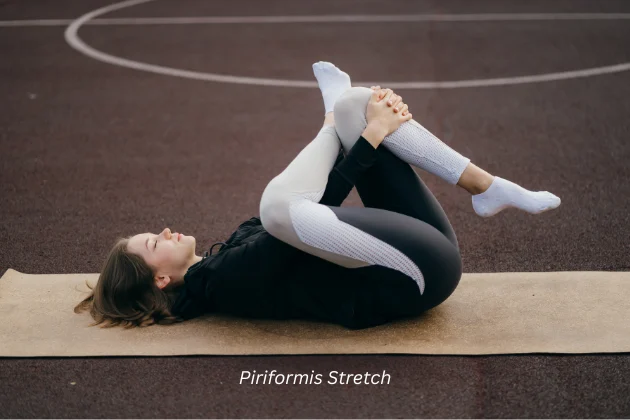
How to do it:
- Lie on your back.
- Cross right ankle over left thigh.
- Pull left leg toward chest.
- Switch sides.
Breathing: Breathe deeply into your hips, exhaling to release tension.
Common mistakes:
- Lifting the head/neck off the ground.
- Twisting pelvis instead of keeping it neutral.
4. Seated Spinal Twist
Anatomical focus: Targets obliques, erector spinae, and quadratus lumborum.
How to do it:
- Sit tall with legs extended.
- Cross right foot over left thigh.
- Place right hand behind you, left elbow outside right knee.
- Twist gently.
Breathing: Inhale to lengthen spine, exhale to deepen twist.
Common mistakes:
- Slouching shoulders.
- Forcing the twist too far.
5. Pelvic Tilt
Anatomical focus: Strengthens rectus abdominis, transversus abdominis, and engages pelvic stabilizers.
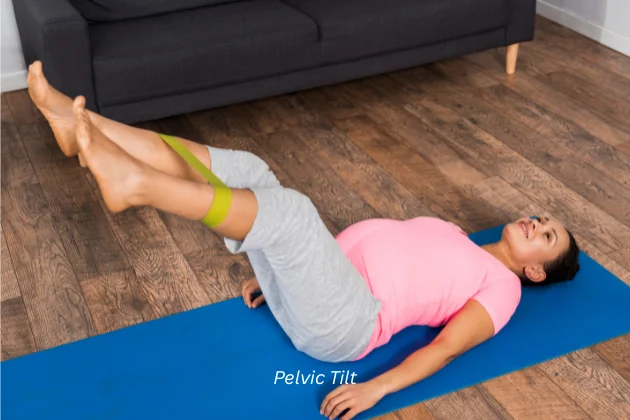
How to do it:
- Lie on back, knees bent.
- Flatten lumbar spine against floor.
- Hold 5 seconds, release. Repeat 10–12 times.
Breathing: Exhale during tilt, inhale when relaxing.
Common mistakes:
- Overarching neck or pressing too hard.
- Using glutes instead of abdominal activation.
6. Cat-Cow Stretch
Anatomical focus: Mobilizes the entire spinal column; stretches erector spinae and abdominals.
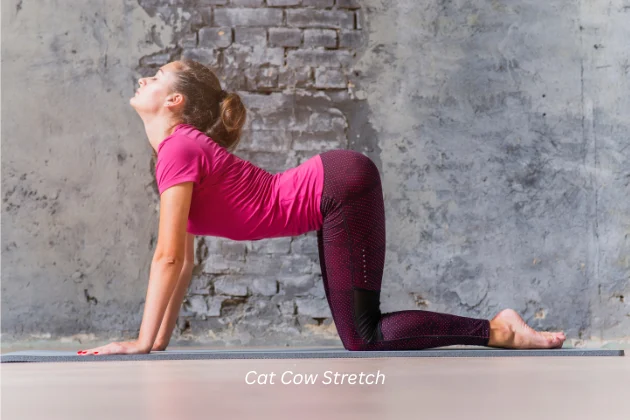
How to do it:
- On hands and knees.
- Inhale: arch back (Cow).
- Exhale: round spine (Cat).
Breathing: Follow breath rhythm—inhale extend, exhale flex.
Common mistakes:
- Moving too fast.
- Dropping head too far down.
7. Sphinx Stretch
Anatomical focus: Engages erector spinae and stretches abdominal wall.
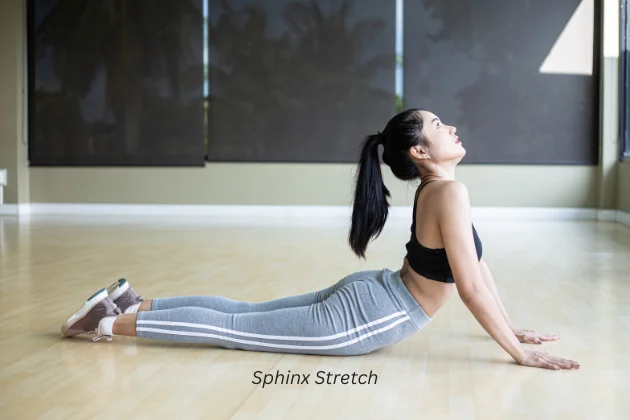
How to do it:
- Lie face down, forearms under shoulders.
- Lift chest while pelvis stays grounded.
Breathing: Slow diaphragmatic breathing; relax shoulders on exhale.
Common mistakes:
- Overextending neck.
- Forcing lower back into discomfort.
8. Standing Forward Fold
Anatomical focus: Hamstrings, calves, spinal extensors.
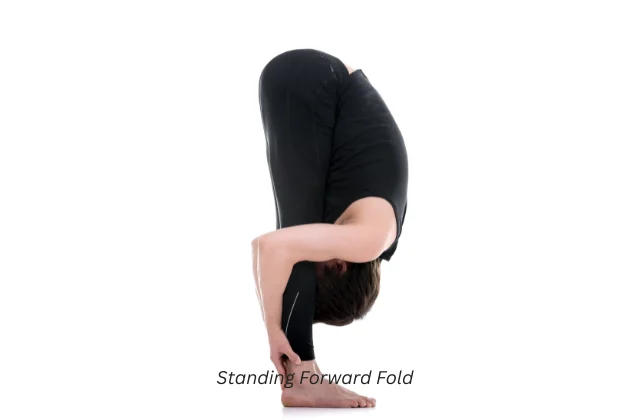
How to do it:
- Stand with feet hip-width apart.
- Bend forward from hips, let arms dangle.
Breathing: Exhale into the fold; inhale to elongate spine.
Common mistakes:
- Locking knees.
- Rounding back aggressively.
9. Figure-Four Stretch
Anatomical focus: Piriformis, gluteus maximus, and hip capsule.
How to do it:
- Lie on back.
- Cross ankle over opposite thigh.
- Pull uncrossed leg toward chest.
Breathing: Deep exhale to relax hips.
Common mistakes:
- Pushing knee with hand instead of relaxing.
- Tilting pelvis unevenly.
Why Strengthening Is Just as Important
Stretching provides mobility, but without stability, pain often returns. This is due to muscular imbalance: when one muscle group (e.g., hip flexors) is tight, and its antagonist (e.g., glutes, abs) is weak, the spine compensates, leading to strain.
This is where the principle of lumbopelvic stability comes in. The core muscles—transversus abdominis, obliques, multifidus, glutes—work together to stabilize the pelvis and lumbar spine. A stable base reduces pressure on discs and joints.
👉 Combine stretching with strengthening (bridges, bird-dogs, planks) for long-term relief.
Real-Life Case Study
Markus, 42, Logistics Worker
Markus experiences pulling pain in his lumbar spine after long shifts of standing and lifting. He rates it 6/10 on the Visual Analogue Scale (VAS).
Process:
- After work: 10-minute routine of Knee-to-Chest, Piriformis, and Child’s Pose.
- Morning: 2 minutes of Cat-Cow before leaving for work.
- Added core strengthening (bridges, bird-dogs) twice a week.
Results:
- After 4 weeks: Pain reduced to 2/10, significantly less morning stiffness.
- After 3 months: Almost symptom-free with improved posture and endurance at work.
This illustrates how consistent, structured stretching plus strengthening can deliver measurable relief.
When Stretching Is Harmful: Contraindications and Warning Signs
Not all back pain should be managed with stretching. Red flags requiring immediate medical evaluation include:
- Radiating pain down the legs (possible sciatica).
- Numbness or tingling in feet or legs.
- Loss of muscle strength or bladder/bowel control.
- Sudden pain after trauma (fall, accident).
- Pain that worsens at night or without movement.
In these cases, stretching may worsen the condition. Always consult a physician.
Static vs. Dynamic Stretching: Which to Use?
- Static stretching –Hold the stretch position for atleast 30second to 1 minute. Best after exercise or for relaxation. Improves flexibility.
- Dynamic stretching – Controlled movements through range of motion (e.g., leg swings). Best before workouts. Prepares muscles for activity.
Recommendation: Use dynamic stretching before workouts and static stretches after workouts or during breaks to reduce back tension.
Important Terms Explained Simply
- Lumbar spine (LWS): The lower part of the spine, made up of five vertebrae.
- Piriformis muscle: A deep hip muscle that, when tight, can irritate the sciatic nerve.
- Muscular imbalance: When one muscle group is too tight and its opposite is too weak, causing strain.
- Lumbopelvic stability:The strength and ability of muscles of abdomen and pelvis to stabilise lower back during movement
- Nonspecific low back pain (NSLBP): Back pain without a clear medical cause like fracture or tumor, usually mechanical or muscular.
FAQs on Lower Back Stretches
Q1. What are the best stretches for lower back pain?
Child’s Pose, Knee-to-Chest, Piriformis Stretch, and Cat-Cow are among the most effective.
Q2. How often should I do lower back stretches?
Aim for at least 5–10 minutes daily. Consistency is more important than intensity.
Q3. Should I stretch before or after workouts?
Do dynamic stretches before exercise and static stretches after. For back pain, gentle stretches anytime are beneficial.
Q4. Can stretching alone cure back pain?
Stretching relieves symptoms, but long-term relief requires strengthening and lifestyle changes.
Q5. How do I know if I’m overstretching my lower back?
If you feel sharp pain, numbness, or tingling, stop immediately. Stretches should feel relieving, not painful.
Final Thoughts
Lower back pain doesn’t have to control your life. By making lower back stretches a daily habit, you can reduce stiffness, improve flexibility, and prevent future pain. Combine stretching with strengthening and smart lifestyle habits for the best results.
Start with just 10 minutes a day. Over weeks, you’ll notice better posture, fewer aches, and more energy. Remember, the key is consistency—small steps every day add up to a healthier, pain-free back.